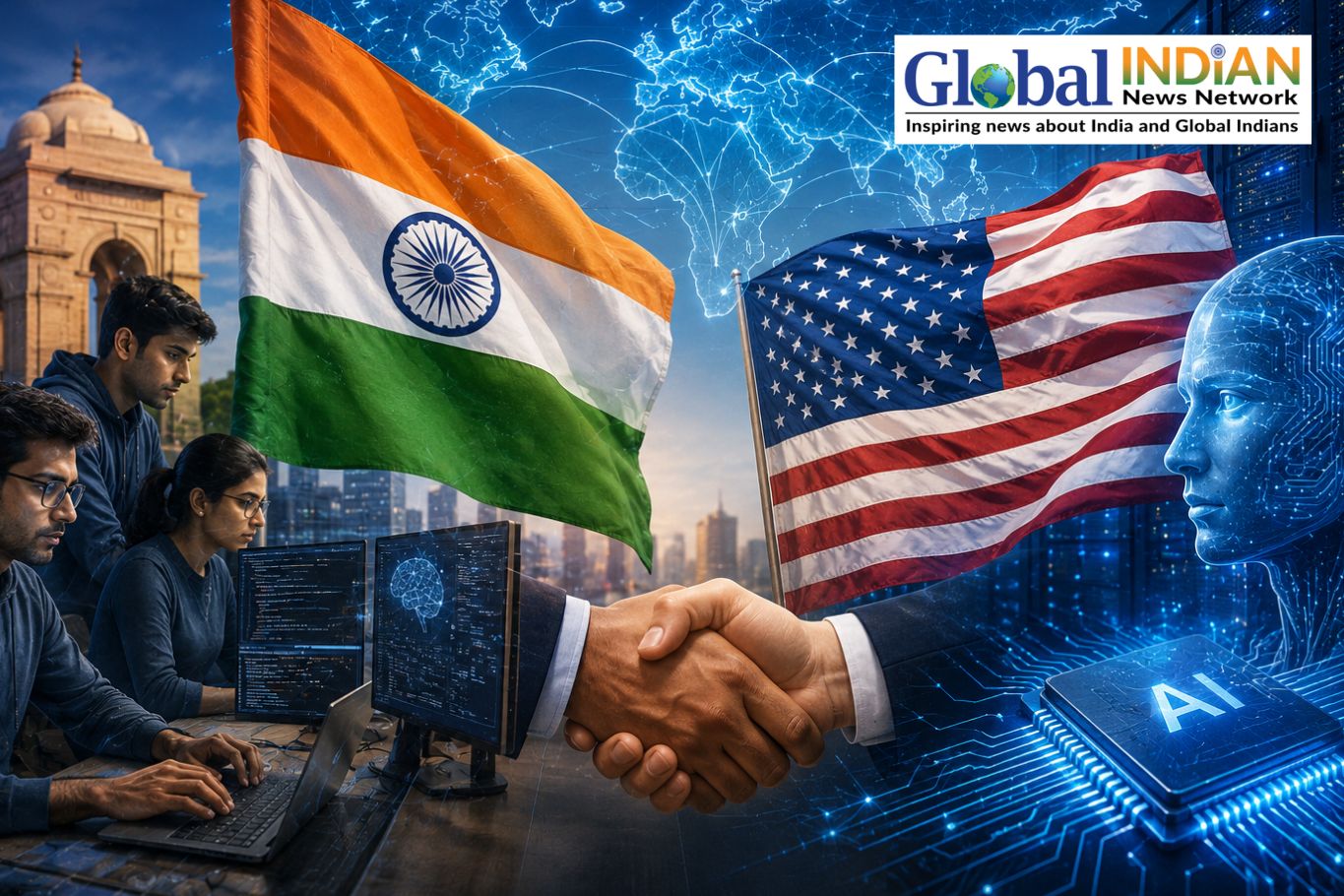
 India is increasingly being seen as a key partner that could strengthen the United States’ position in the global artificial intelligence race, according to an analytical report highlighted in international media. The discussion points to growing investments by major American technology companies such as Google, Microsoft, and Amazon, which are building large-scale AI infrastructure and innovation hubs across India.
These investments are aimed at integrating US-developed technologies into one of the world’s fastest-growing digital economies. The report suggests that if global AI systems are built on a strong US-India technological foundation, it could help maintain an open and secure digital ecosystem worldwide. In contrast, reliance on alternative closed technology systems could reshape global digital governance in less predictable ways.
While the United States continues to lead in advanced AI models and high-performance computing, the analysis notes that China remains a strong competitor in innovation and technology deployment. In this context, India is viewed as a critical partner that can contribute both large-scale data access and a growing pool of skilled professionals.
India’s population-scale digital environment, with nearly 1.5 billion people, provides vast datasets that can support real-world AI training across sectors such as agriculture, healthcare, education, and urban development. This diversity makes India a valuable testing ground for AI applications in varied socio-economic conditions.
The country’s AI workforce is also projected to expand significantly, with estimates suggesting it could exceed 1.25 million professionals by 2027. This growing talent base is seen as an important asset for sustaining long-term innovation and development in AI technologies.
However, the analysis also highlights that India must further align skills with industry requirements to fully unlock its potential. Bridging this gap is described as essential for deeper integration with global AI ecosystems led by the United States.
The report proposes closer US-India cooperation across four key areas: linking startup ecosystems, building resilient supply chains, developing high-skill talent networks, and aligning technology standards and cybersecurity frameworks. These steps, it argues, could help both nations accelerate innovation while reducing friction in their partnership.
Overall, the perspective underscores India’s emerging role as a strategic contributor in shaping the future of global artificial intelligence development.