India has announced an economic assistance package worth $1.62 billion for flood-hit Nepal, marking one of its largest financial commitments to its Himalayan neighbour. The assistance aims to support post-disaster reconstruction, restore damaged infrastructure, strengthen energy cooperation and accelerate Nepal’s long-term economic development.
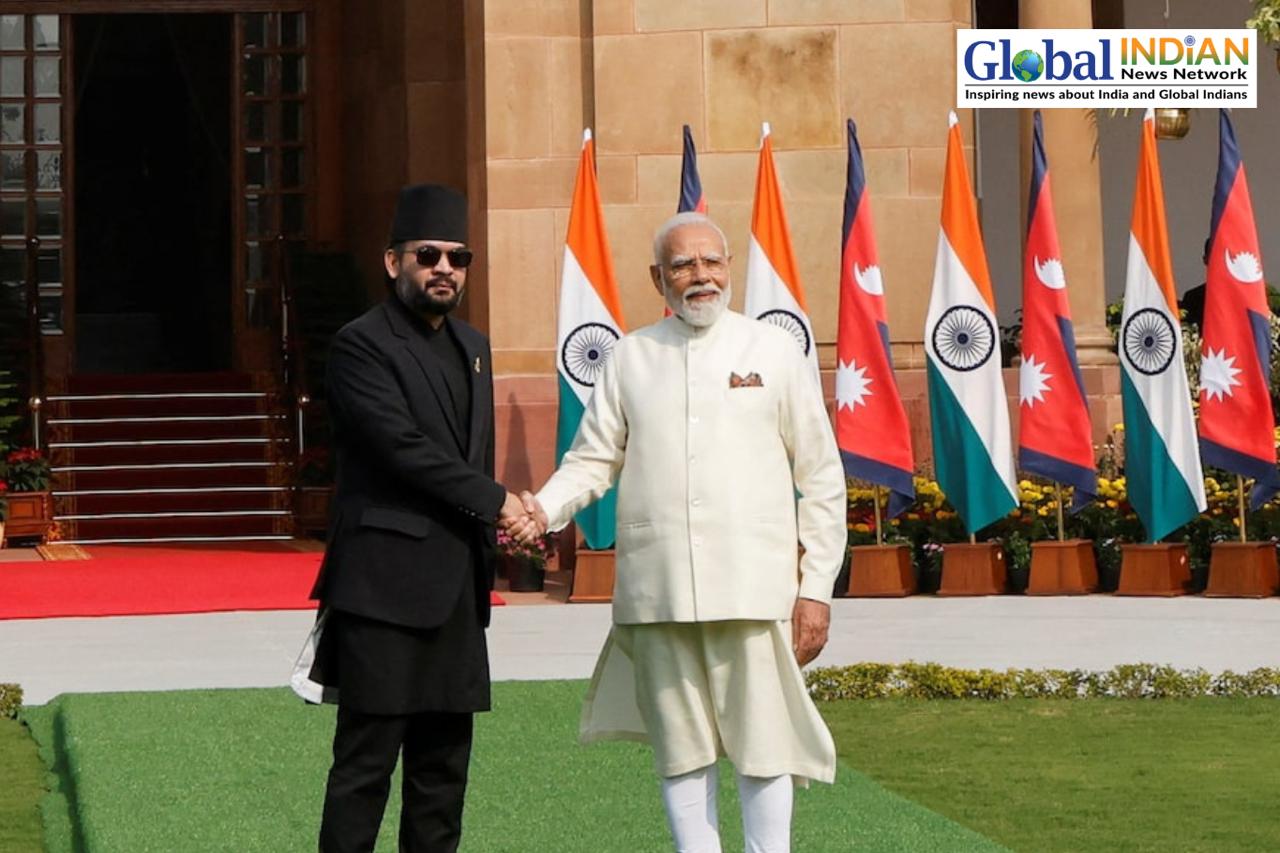
The announcement followed bilateral talks between Indian Prime Minister Narendra Modi and Nepalese Prime Minister Balendra Shah in New Delhi. The visit marked Shah’s first bilateral foreign trip since assuming office in March and came nearly three months after devastating floods caused widespread destruction across Nepal.
The financial package includes a $377 million grant for post-disaster reconstruction and infrastructure development, along with a $1.24 billion line of credit for energy-related projects. According to the joint statement issued by the two countries, specific projects and the terms of development assistance will be finalised through mutual consultations.
Addressing the media after the meeting, Modi said India’s commitment was to help affected families rebuild their lives, create new economic opportunities and strengthen Nepal’s capacity to deal with future natural disasters.
The assistance comes after catastrophic Himalayan floods in August caused extensive damage to Nepal’s roads, bridges, schools, residential areas and power infrastructure. The disaster reportedly killed around 1,500 people, while another 5,200 remained missing and were presumed dead.
The floods also severely affected Nepal’s hydropower sector, damaging more than a dozen projects and reducing the country’s electricity generation capacity by approximately 10%. The disruption forced Nepal to suspend electricity exports and rely on India to meet domestic energy requirements.
Rebuilding the damaged infrastructure has become a major economic challenge for Nepal. Shah had earlier indicated that the country’s post-disaster recovery requirements could amount to nearly 10% of its gross domestic product, highlighting the scale of financial support needed.
India’s assistance builds on its longstanding economic, cultural and diplomatic relationship with Nepal. As Nepal’s largest trading partner and a major development assistance provider, India has played an important role in supporting the country’s infrastructure and economic development.
New Delhi was also the first to provide emergency assistance following the August floods, dispatching relief supplies and helping restore communication links disrupted by the disaster.
During the discussions, Shah expressed appreciation for India’s continued support during natural disasters and difficult circumstances. He also invited Indian investors to explore business and investment opportunities in Nepal, emphasising the potential for stronger economic cooperation between the neighbouring countries.
Beyond disaster recovery, the two leaders discussed expanding cooperation across several strategic sectors. India and Nepal signed agreements covering education and research, satellite communications and sustainable urban development.
The leaders also jointly inaugurated a cross-border railway link, reflecting continued efforts to improve regional connectivity and facilitate trade, transportation and people-to-people exchanges.
The development comes against the backdrop of growing strategic competition between India and China for economic and diplomatic influence in South Asia. Nepal’s geographical position between the two countries makes its regional partnerships particularly significant.
India’s latest financial commitment highlights New Delhi’s continued emphasis on its neighbourhood development policy, combining emergency assistance, infrastructure investment and economic cooperation to strengthen relationships with neighbouring countries.
For Nepal, the package offers financial support for rebuilding communities, restoring electricity generation and improving critical infrastructure damaged by the floods. For India, it provides an opportunity to deepen economic engagement and reinforce its longstanding partnership with Kathmandu.
The success of the initiative will depend on the timely implementation of reconstruction projects, effective utilisation of financial assistance and continued cooperation between the two governments. As Nepal moves towards recovery, the latest agreement represents an important step in strengthening bilateral economic ties and regional connectivity.