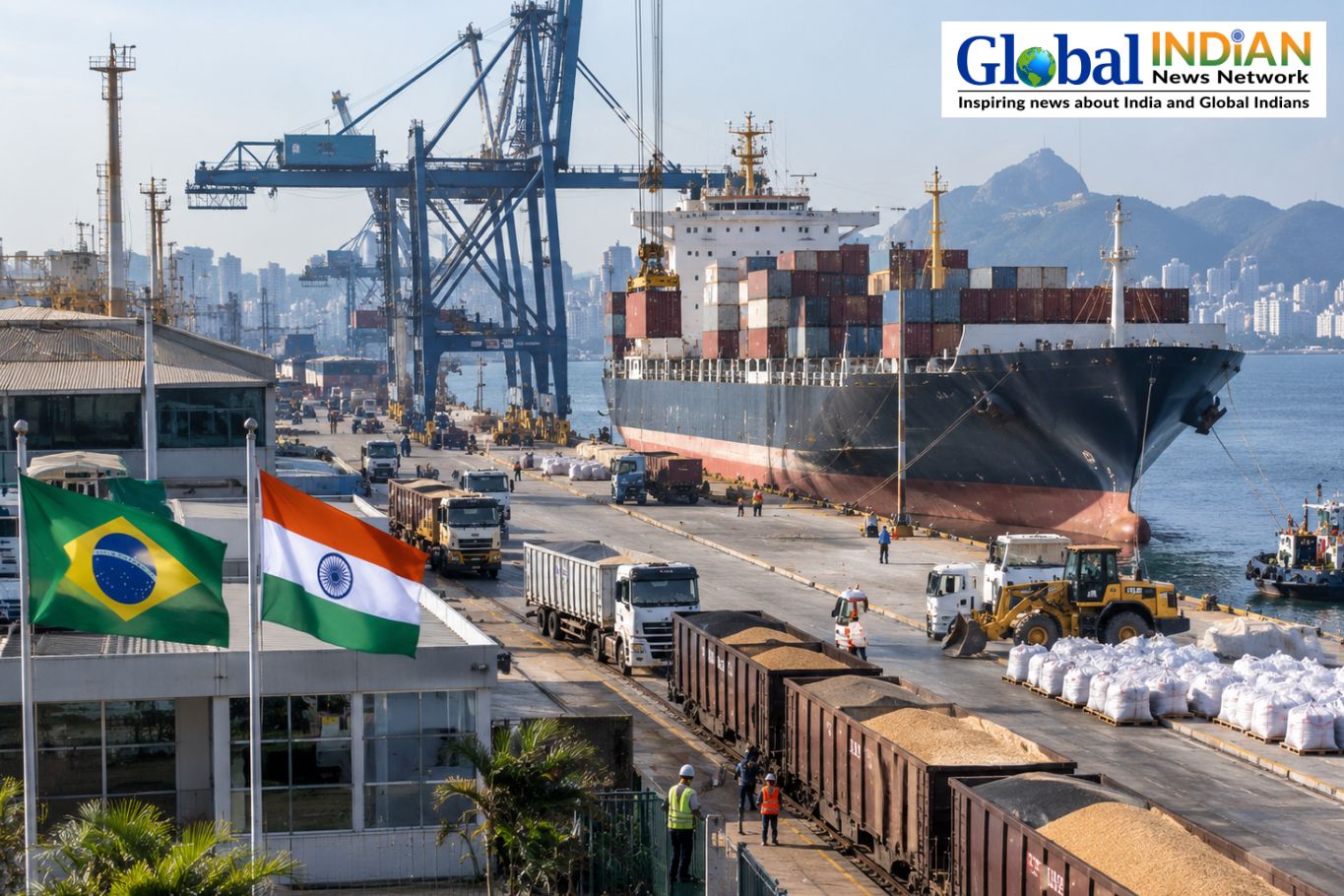
Brazil is expanding its trade ties with India and other Asian economies as it seeks to diversify its global markets while maintaining relationships with existing trading partners, Brazilian Development, Industry, Trade and Services Minister Marcio Elias Rosa has said.
Speaking on the sidelines of the G20 Trade Ministers’ Meeting in Milwaukee, Rosa said Brazil’s strategy was focused on adding new markets rather than replacing established partners. He said stronger economic engagement with Asian countries, including India, had contributed to significant growth in trade.
“Brazil is not practising an exclusion policy. Brazil is just adding,” Rosa said, stressing that the diversification strategy was not intended to exclude any trading partner.
According to Rosa, the expansion of trade with Asian economies has helped compensate for a contraction in Brazil’s economic relationship with the United States over the past 18 months.
The minister also said Brazil was heading towards a historic trade performance, with the country expected to record its largest trade surplus ever this year.
India was specifically highlighted as an important market in Brazil’s expanding Asian trade network. Rosa described India as a highly important trading partner and said the two countries maintained good economic relations.
The comments come as India and Brazil continue efforts to deepen bilateral economic engagement, including through their cooperation with Mercosur. Trade between the two countries spans several sectors, including energy, agriculture, pharmaceuticals and automobiles, while both sides are exploring additional opportunities in investment and technology.
Beyond trade, India and Brazil have identified areas such as defence, digital technologies, artificial intelligence, skills development and investment for greater cooperation. The two countries also work together through platforms including BRICS, IBSA and the G20.
Brazil’s broader trade strategy reflects an effort to strengthen commercial links across multiple regions while continuing to support multilateral trade and universal trading rules. The country’s growing engagement with India and other Asian economies forms part of that wider effort to expand market opportunities amid changes in global trade patterns.