An Indian-American Army surgeon has helped introduce a groundbreaking surgical technique that allows doctors to remove certain brain tumors through the nasal passage instead of opening the skull. The innovative procedure, developed by Major Jagatkumar Patel alongside US Army neurosurgeon Lt. Col. Charles Miller, represents a significant advancement in treating tumors located at the base of the skull while reducing recovery time and surgical trauma for eligible patients.
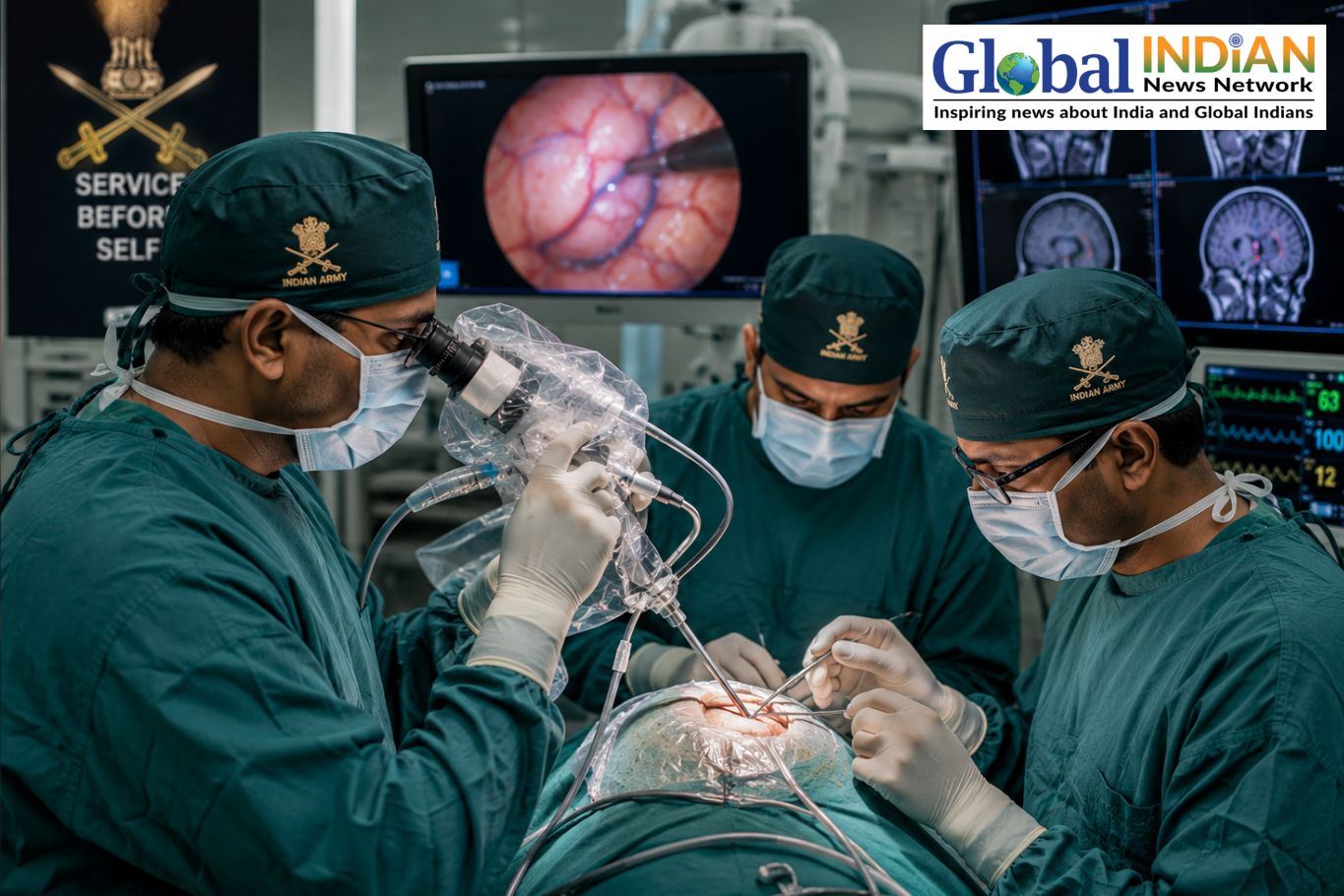
The technique focuses on carefully selected tumors based on their size and location. Rather than performing traditional open-brain surgery, the medical team reaches the tumor through the patient’s nose using specialized endoscopic equipment. This approach eliminates the need for large incisions, offering patients a less invasive option with the potential for quicker healing and fewer visible signs of surgery.
According to Patel, conventional skull-opening procedures have long been the standard treatment for these types of tumors, making recovery more difficult for patients. Advances in surgical technology and imaging, however, have made it possible to safely access many tumors through the nasal cavity. He noted that when the tumor meets the necessary criteria, the minimally invasive method often provides surgeons with excellent access while improving the chances of complete removal.
The procedure was recently performed on US Marine Staff Sgt. Andy Archer, who had endured severe headaches for more than 15 years. After he began experiencing vision problems, doctors ordered an MRI scan that revealed a tumor measuring about 4.4 centimeters positioned near the pituitary gland and pressing against his optic nerve.
At Walter Reed Army National Military Medical Center in Bethesda, Maryland, Patel and Miller successfully removed the entire tumor through the nasal passage. Patel designed the surgical pathway by skillfully navigating the complex anatomy of the nose while operating an endoscopic camera that delivered magnified, high-definition images throughout the operation. The enhanced visualization allowed Miller to precisely separate and remove the tumor while protecting nearby critical structures.
Patel emphasized that the procedure depends on close teamwork, explaining that each surgeon’s expertise complements the other’s throughout the operation. Their coordinated approach helped achieve a successful outcome for the patient.
Within just two days of surgery, Archer was sitting upright in the intensive care unit with no visible signs of major brain surgery. His vision had already started to improve, highlighting the potential benefits of the minimally invasive technique. Patel believes the specialized collaboration behind the procedure is unique within the Defense Health Agency and could expand treatment options for patients with appropriately positioned skull base tumors.