 India is intensifying its defense capabilities following a deadly terror attack in Pahalgam, Jammu and Kashmir, which claimed the lives of 26 people. The Indian Navy and the Indian Air Force (IAF) have launched significant drills, reflecting the heightened tensions between India and Pakistan.
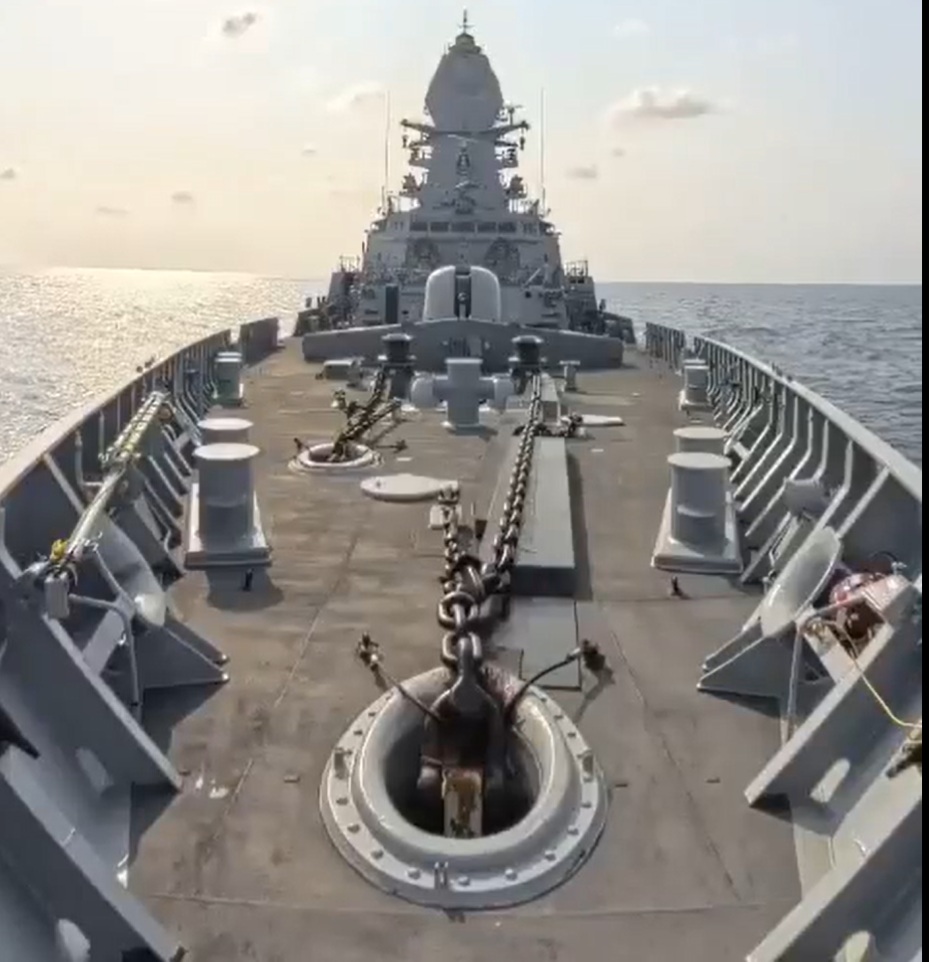
The Indian Navy’s INS Surat, a guided missile destroyer, successfully tested a medium-range surface-to-air missile, with an impressive range of approximately 70 km. This achievement highlights India’s growing self-reliance in military technology. The Navy’s successful missile engagement demonstrates its ability to defend national maritime interests and strengthen its defense capabilities.
At the same time, the IAF conducted ‘Exercise Aakraman,’ a major operational drill featuring its state-of-the-art Rafale fighter jets. The exercise, which took place in the central sector, included complex ground strike operations across diverse terrains. The IAF’s advanced weaponry, such as meteor air-to-air missiles and strike systems like Rampage and Rocks, were utilized to enhance the country’s military posture in the region.
These military operations come just days after the Pahalgam attack, and tensions between India and Pakistan have escalated as a result. India responded by suspending the Indus treaty, and Pakistan retaliated by halting the 1972 Simla Agreement. Prime Minister Narendra Modi pledged decisive action against terrorists and their backers, vowing to pursue and punish them globally. He reaffirmed India’s resolve to safeguard its people and uphold national sovereignty.
As the military drills and tests unfold, India is showcasing its military prowess and readiness. The recent successes in naval and air exercises underscore the country’s progress in building a self-sufficient defense infrastructure, aligning with the national initiative of Aatmanirbhar Bharat. The exercises also reflect India’s determination to maintain a robust defense strategy amidst increasing regional instability.