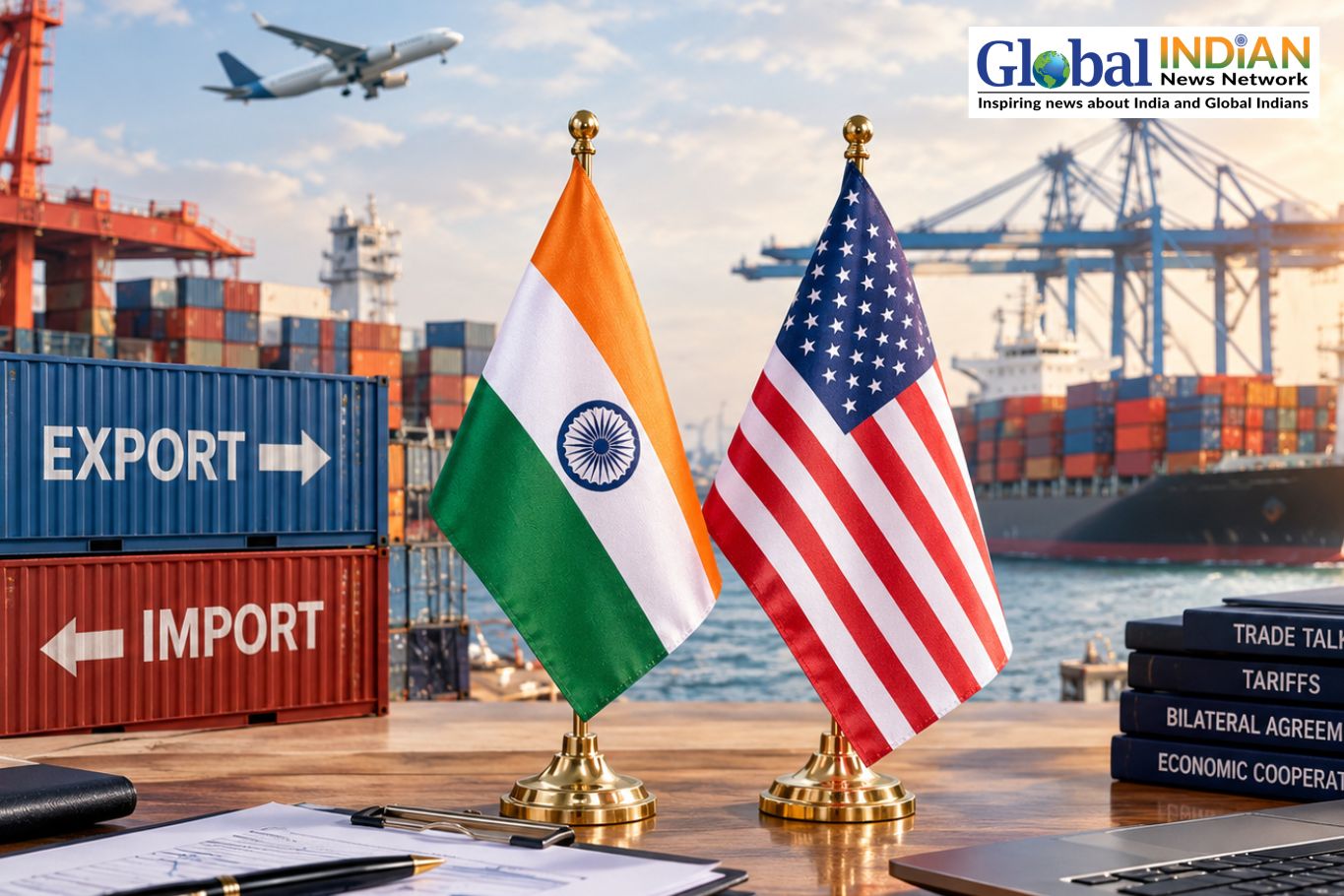
India’s merchandise exports to the United States increased by 11.1% to $50.81 billion during April-September 2026, demonstrating continued trade growth despite tariff-related uncertainty. Imports from the US also recorded a substantial increase, rising 26% to $32.33 billion during the same period, according to figures released by the Ministry of Commerce and Industry on October 15.
India exported goods worth $45.73 billion to the American market during the corresponding six-month period a year earlier. Meanwhile, imports from the US rose from $25.66 billion to $32.33 billion. Although trade flows expanded in both directions, India’s merchandise trade surplus with the US narrowed to $18.48 billion, compared with $20.07 billion in the previous year’s corresponding period.
The United States retained its position as India’s largest destination for merchandise exports during the first half of the 2026-27 financial year. The latest figures highlight the resilience of commercial ties between the two countries, even as businesses navigate uncertainty surrounding tariffs and market access.
Amid these developments, Commerce Secretary Rajesh Agrawal indicated that negotiations for a proposed India-US trade agreement were making encouraging progress. Speaking during a press briefing, he expressed optimism that the two sides could finalize and sign the agreement at the earliest opportunity.
However, the timing of the deal remains linked to developments in Washington’s broader tariff policy. Agrawal explained that the agreement would need to align with the finalization of the US tariff structure, with a parallel review underway under Section 301.
The ongoing work on Section 301 is relevant to the negotiations because changes to the American tariff framework could influence the terms under which goods enter the US market. Consequently, both sides are working through these broader considerations while pursuing the proposed bilateral agreement.
India is particularly focused on securing preferential access to the American market. Agrawal emphasized that trade agreements offer more than reciprocal entry into each country’s market: they can also provide advantages that help exporters compete against businesses from other trading partners.
He added that India’s relative market-access position compared with competing countries would be an important consideration in shaping the new tariff framework.
As negotiations continue, the expanding trade figures provide a backdrop for efforts to strengthen economic cooperation. The eventual agreement could influence market-access conditions for exporters in both countries, although its timing and final terms remain dependent on the ongoing discussions and developments in US tariff policy.