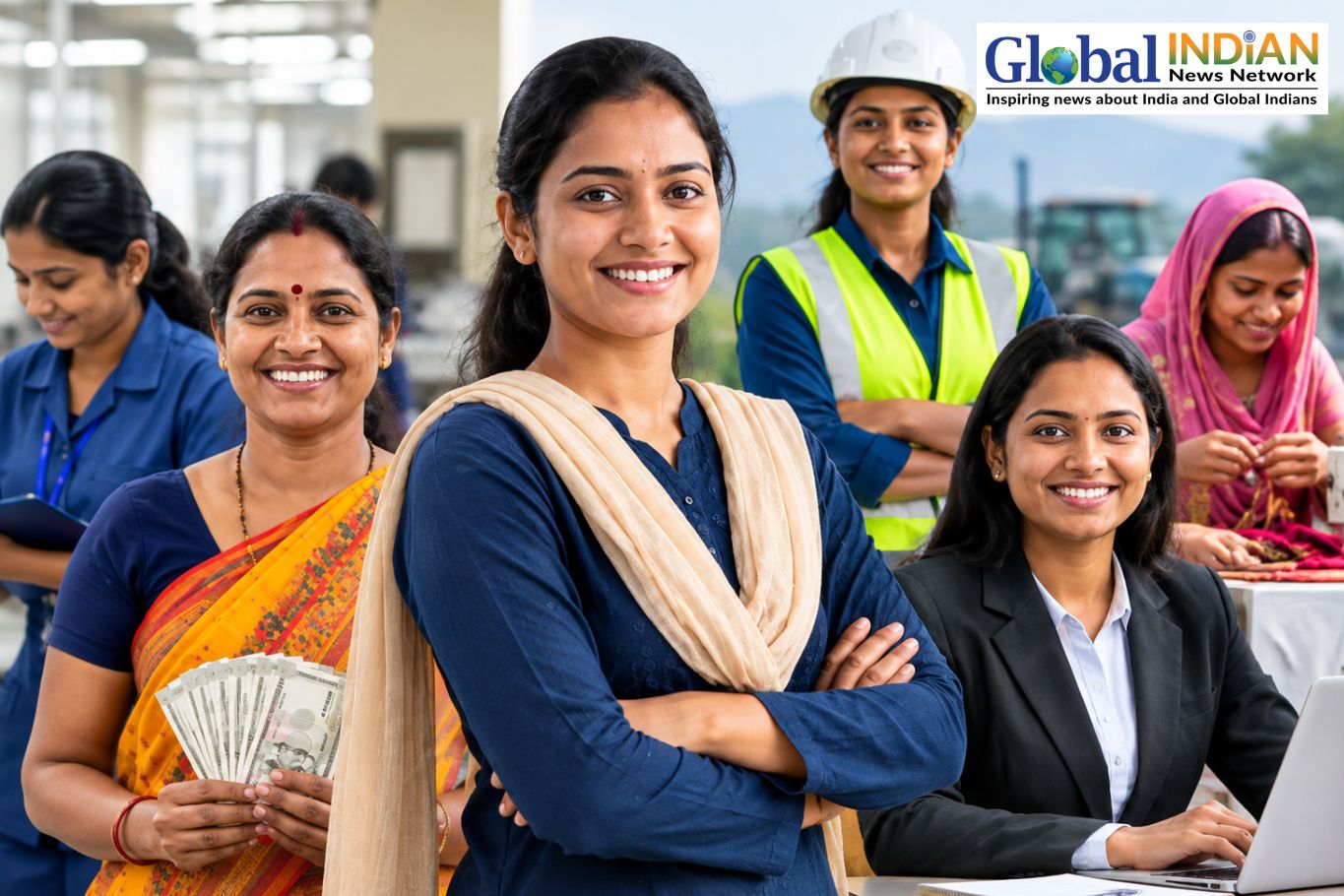
India is witnessing a significant expansion in women’s economic participation, with more women entering the workforce, establishing businesses and securing opportunities in technology-driven industries. According to figures from the Periodic Labour Force Survey, the Female Labour Force Participation Rate (FLFPR) climbed from 23.3% in 2017-18 to 40% in 2025. During the same period, the female Worker Population Ratio increased from 22% to 38.8%, reflecting broader participation in employment.
An estimated 200 million women aged 15 and older were employed in 2025. Women’s contribution to entrepreneurship has also grown considerably, with approximately 36.9 million women-owned micro, small and medium enterprises (MSMEs) registered as of October 2026. These businesses accounted for around 38% of all registrations. Additionally, more than 107,000 recognized startups had at least one woman director or partner as of March 2026.
Women are also gaining ground in manufacturing and other technology-intensive sectors. By July 2026, they represented nearly 70% of the direct workforce in India’s mobile phone manufacturing industry. This growing presence highlights the expanding role of women in industries that contribute to the country’s economic and technological development.
Government programs are helping strengthen these opportunities by improving access to financing, business markets and professional training. Under the Pradhan Mantri MUDRA Yojana, more than 577.9 million loans had been sanctioned by April 2026, with women entrepreneurs receiving approximately two-thirds of the total.
Financial assistance has also been extended through the Credit Guarantee Scheme for Micro and Small Enterprises. By February 2026, around 3.075 million guarantees worth $23.42 billion had been approved for women-owned enterprises, supporting their access to credit.
Market access is another priority. During fiscal year 2025-26, women-owned micro and small businesses secured government procurement contracts exceeding $3.17 billion through the Government e-Marketplace, representing a 27.6% increase from the previous year.
Meanwhile, initiatives such as NAVYA and AI Careers for Women are designed to equip women with skills relevant to emerging professions, including artificial intelligence and other technology-based occupations.
Workplace protections are also part of the broader effort. India’s four Labour Codes provide provisions concerning maternity benefits, occupational safety, equal treatment and safeguards for women working night shifts.
Together, these employment, entrepreneurship and skills-development measures aim to expand women’s economic opportunities and strengthen their contribution to India’s long-term development vision, Viksit Bharat 2047.