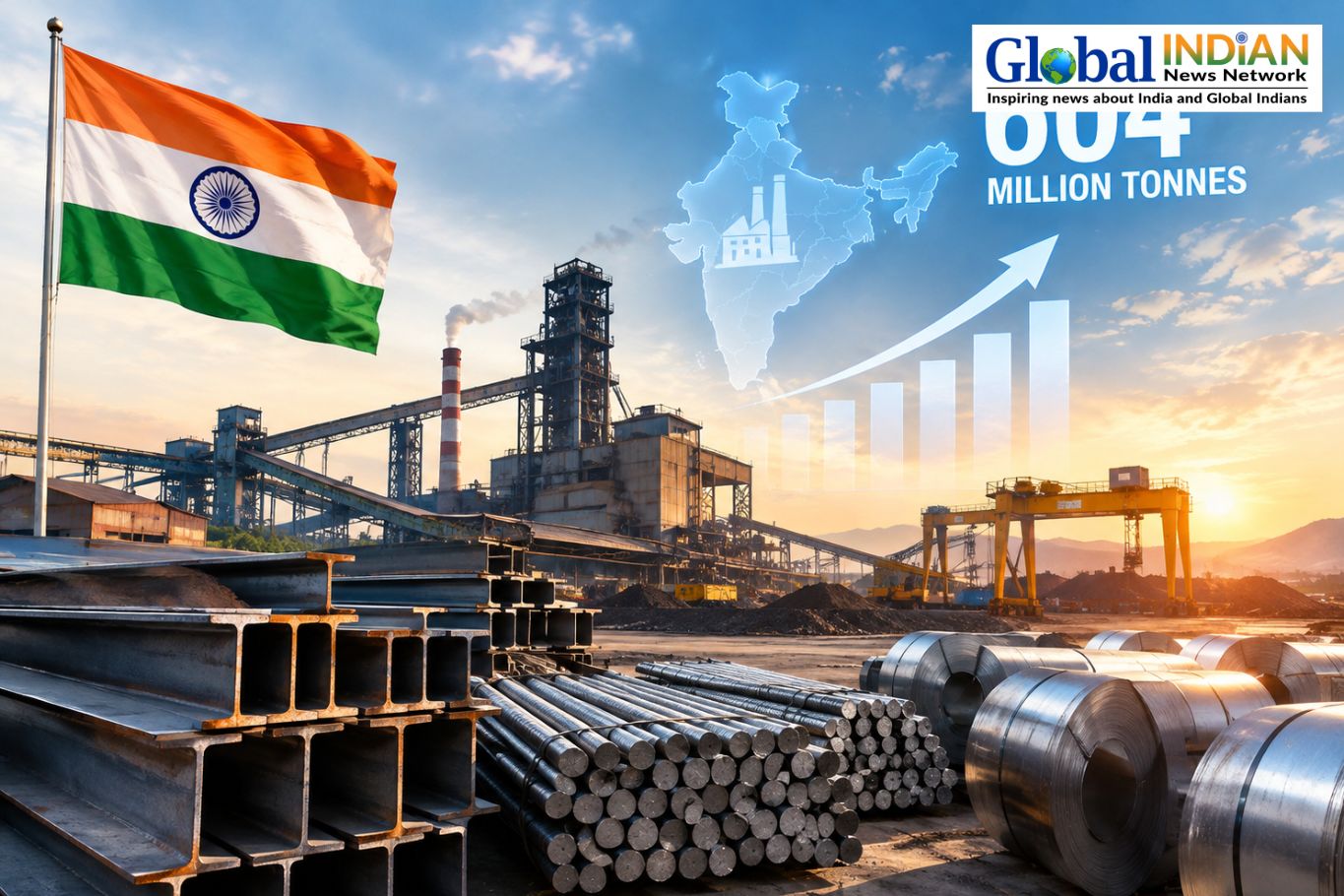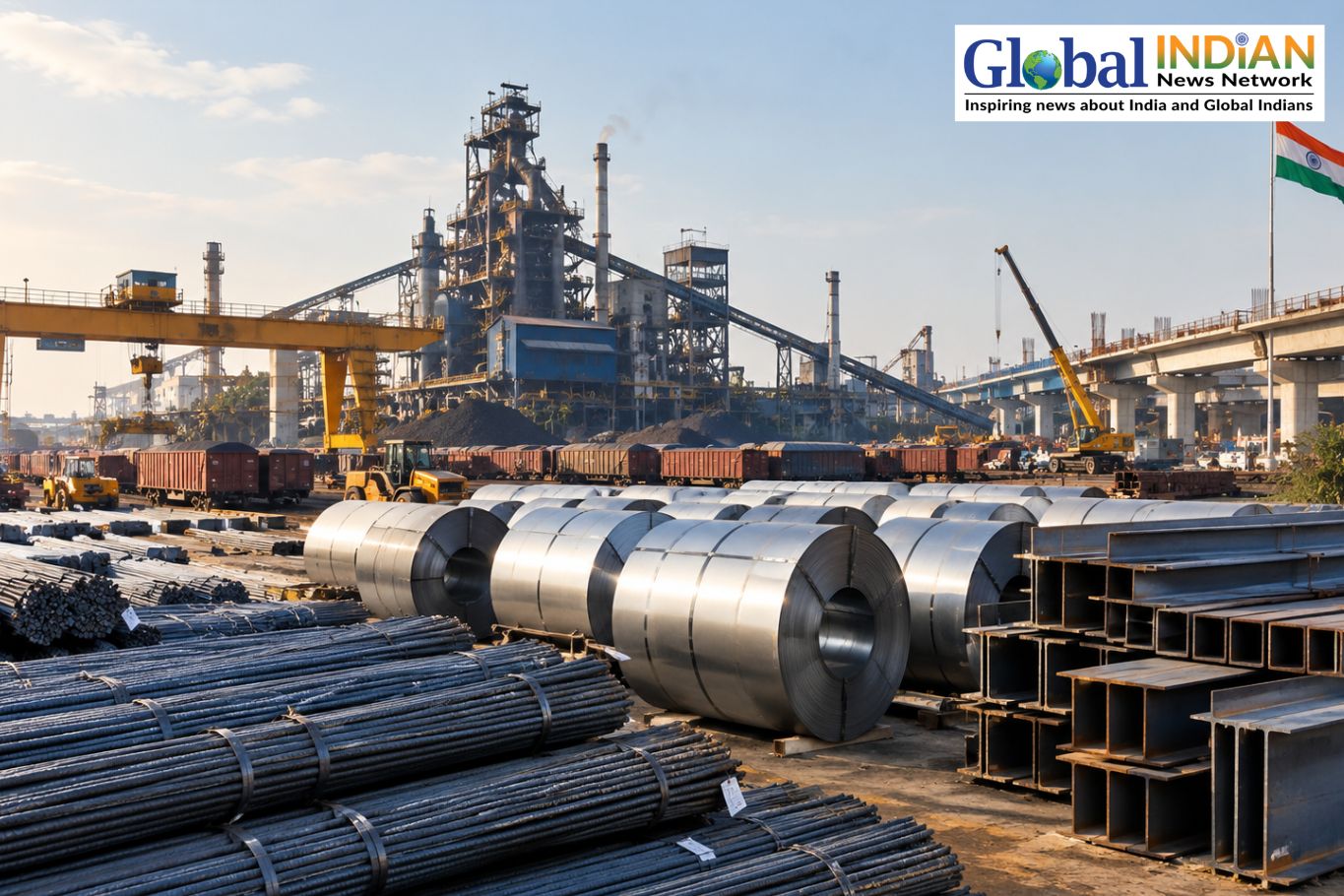
India is poised to maintain its position as the fastest-growing major steel market worldwide, supported by strong domestic economic activity and continued investment in infrastructure and industry. According to the World Steel Association’s October 2026 Short Range Outlook, Indian steel demand is expected to increase by 7.9% to 172.4 million tonnes in 2026. Growth is projected to accelerate further in 2027, with consumption rising by 8% to 186.2 million tonnes. These forecasts highlight the country’s growing importance to the global steel industry.
Infrastructure development remains a major contributor to India’s expanding steel requirements. Construction projects, urban development, and private investment in real estate are expected to sustain consumption. At the same time, the expansion of manufacturing facilities and the development of renewable energy projects are creating additional demand for steel across several industrial segments.
Investment in production capacity is also expected to stimulate demand for electrical and mechanical machinery. The automotive industry is contributing to this momentum through stronger domestic sales, export opportunities, and supportive government policies. Together, these developments are strengthening the connection between India’s industrial expansion and its growing need for steel.
India’s outlook contrasts with the more moderate growth expected across the global market. Worldwide steel demand is forecast to remain broadly stable at 1.722 billion tonnes in 2026 before increasing by 1.7% to 1.752 billion tonnes in 2027. The difference underscores India’s comparatively strong growth trajectory.
Other major economies are expected to experience varied market conditions. China’s steel demand is projected to contract by 2% in 2026, followed by a further 1% decline in 2027. In the United States, demand is forecast to increase by 2% in 2026, supported by investment in data centers, energy infrastructure, and selected manufacturing industries.
Europe faces a more challenging outlook, with apparent steel consumption across the European Union expected to fall by 0.3% in 2026 before recovering by 3.1% in 2027. A slower construction recovery and continued weakness in automotive demand are among the factors affecting the region. Meanwhile, steel demand in the Gulf region is projected to rebound by 11.3% in 2027 as geopolitical uncertainty eases and supply chains return to more stable conditions.
Against this varied international backdrop, India’s infrastructure investments, expanding manufacturing base, renewable energy development, and resilient domestic consumption are expected to support sustained steel demand. This growth could further strengthen the steel sector’s role in the country’s industrial development and broader economic progress.