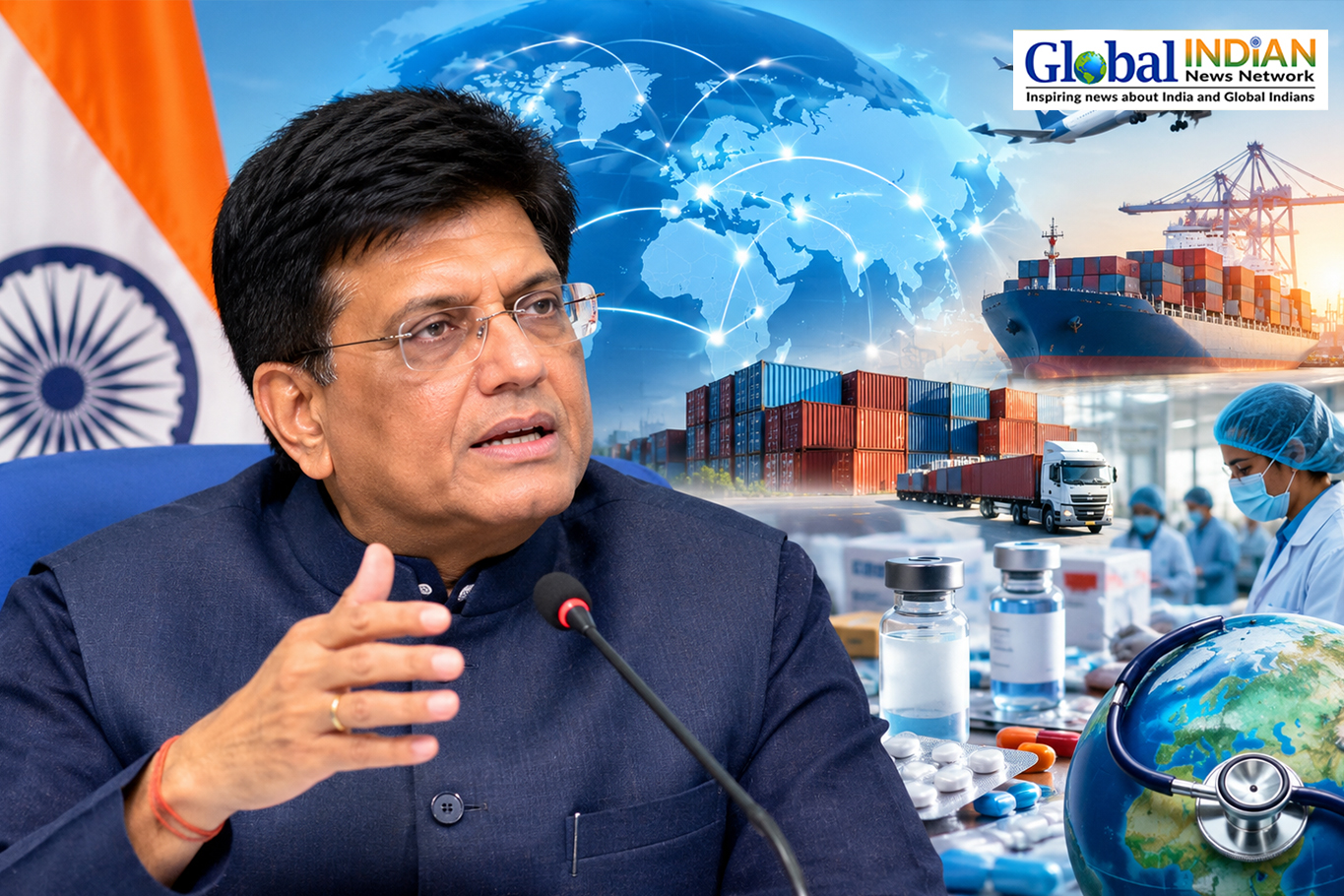
India’s economic momentum is expected to remain strong through fiscal year 2027, with growth projected to stay above 7% as investment and exports take on a larger role in driving expansion. A recent assessment by SBI Funds Management Research points to a changing structure of economic activity, with businesses and external demand increasingly contributing alongside household consumption.
The Indian economy recorded real GDP growth of 7.8% year over year during the first quarter of FY27. While consumer spending continued to support activity, investment and exports recorded significantly stronger growth. Real gross fixed capital formation and exports each expanded by about 12%, compared with 7.1% growth in consumption. The shift suggests that India’s next phase of expansion could rely more heavily on productive investment and international trade.
Nominal GDP growth is also expected to strengthen, potentially moving above 12% in the coming quarters. Corporate investment is expected to provide another important boost. Capital expenditure among BSE 500 companies is projected to rise 11% during FY27, following spending of approximately $117.69 billion in FY26.
The power industry is expected to account for the largest share of additional corporate investment, representing roughly 55% of the projected increase. Iron and steel and capital goods are also expected to attract substantial spending as companies expand capacity and respond to rising demand.
According to the research, the composition of India’s growth could change as the influence of domestic policy measures gradually fades and consumption becomes less evenly distributed across the economy. In this environment, the investment cycle and global trade activity are likely to become increasingly important. Export-oriented businesses, manufacturers, capital goods producers, and other sectors serving corporate demand could therefore benefit from the evolving economic landscape.
However, the outlook is not without challenges. Persistent inflation, elevated commodity prices, and tighter global financial conditions could place pressure on economic activity. Crude oil is one area of concern, with Brent prices potentially remaining elevated over the next six months. Factors cited in the assessment include China rebuilding its oil reserves, limited European gas storage, and declining US crude inventories.
Higher energy costs could complicate the inflation outlook and influence monetary policy. Globally, interest rates may remain elevated for an extended period if price pressures prove difficult to contain.
For India, the Reserve Bank of India could eventually move away from its current neutral policy position toward tighter monetary conditions. The research considers cumulative rate increases of around 50 basis points during FY27 possible, although the timing and scale would depend heavily on inflation, commodity prices, and broader economic conditions.
Overall, the report presents a positive but measured outlook, with investment, exports, and corporate expansion positioned to become increasingly important to India’s growth story.