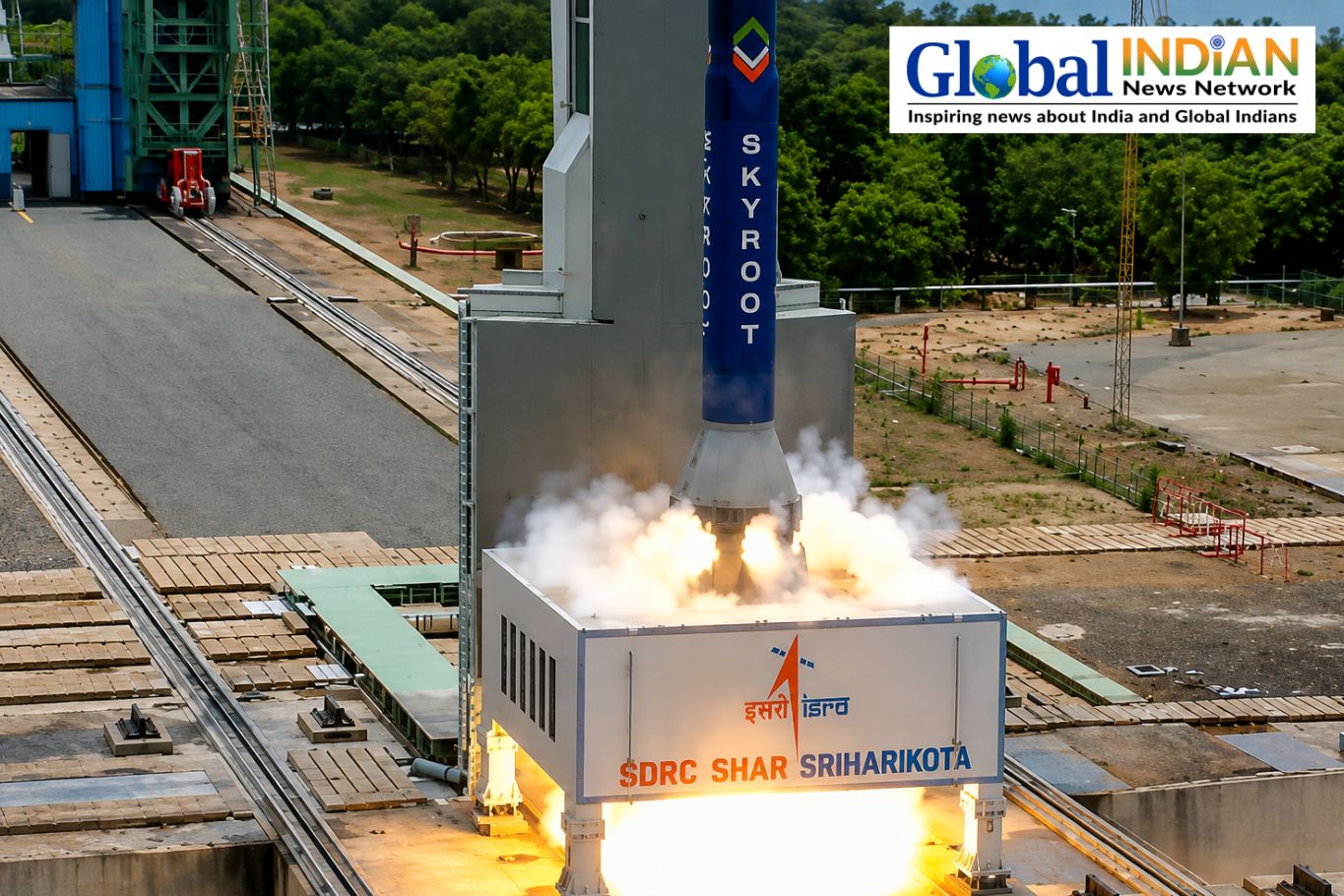
India’s private space sector has reached a significant milestone, with Skyroot Aerospace becoming the first Indian private company to place payloads into orbit using a domestically developed launch vehicle, according to a recent report.
The achievement marks a major development in India’s growing commercial space industry and places the country among an expanding group of nations competing in the global private launch market.
Skyroot Aerospace successfully deployed multiple payloads into low Earth orbit using its Vikram-1 rocket. The development has drawn attention in Europe, where several private launcher projects are yet to provide operational orbital launch services.
A report by The European Conservative highlighted the significance of India’s achievement despite the relatively modest size of the launch vehicle compared with systems operated by major space powers such as the United States, China and Russia.
The report suggested that India could provide additional launch capacity and create new opportunities for the European space industry. European operators could potentially collaborate with Indian companies for commercial, university and scientific payloads, helping diversify the international launch market.
Europe has expanded its launch capabilities with systems such as Ariane 6 and Vega-C, but its overall launch activity remains significantly smaller than that of the United States and China. The European Space Agency could also face capacity challenges for strategic programmes such as Galileo and Copernicus in the coming decades.
India’s space sector was dominated by the state for more than five decades, with ISRO leading the development of indigenous launch vehicles and major missions, including the Mars Orbiter Mission and Chandrayaan-3.
The government opened the space sector to private participation in 2020 and established IN-SPACe to facilitate private companies’ access to public infrastructure, testing facilities and launch sites. The 2023 space policy further strengthened the framework for a growing private space ecosystem.
India now has more than 400 space startups, reflecting the rapid expansion of the industry. The country is also targeting substantial growth in the value of its space economy, with ambitions to increase it from around $8.4 billion in 2022 to $44 billion by 2053, including a significant expansion in space-related exports.
The rise of private launch companies such as Skyroot Aerospace signals a broader transformation in India’s space programme, with domestic entrepreneurs increasingly contributing to the country’s ambitions in the global commercial space market.