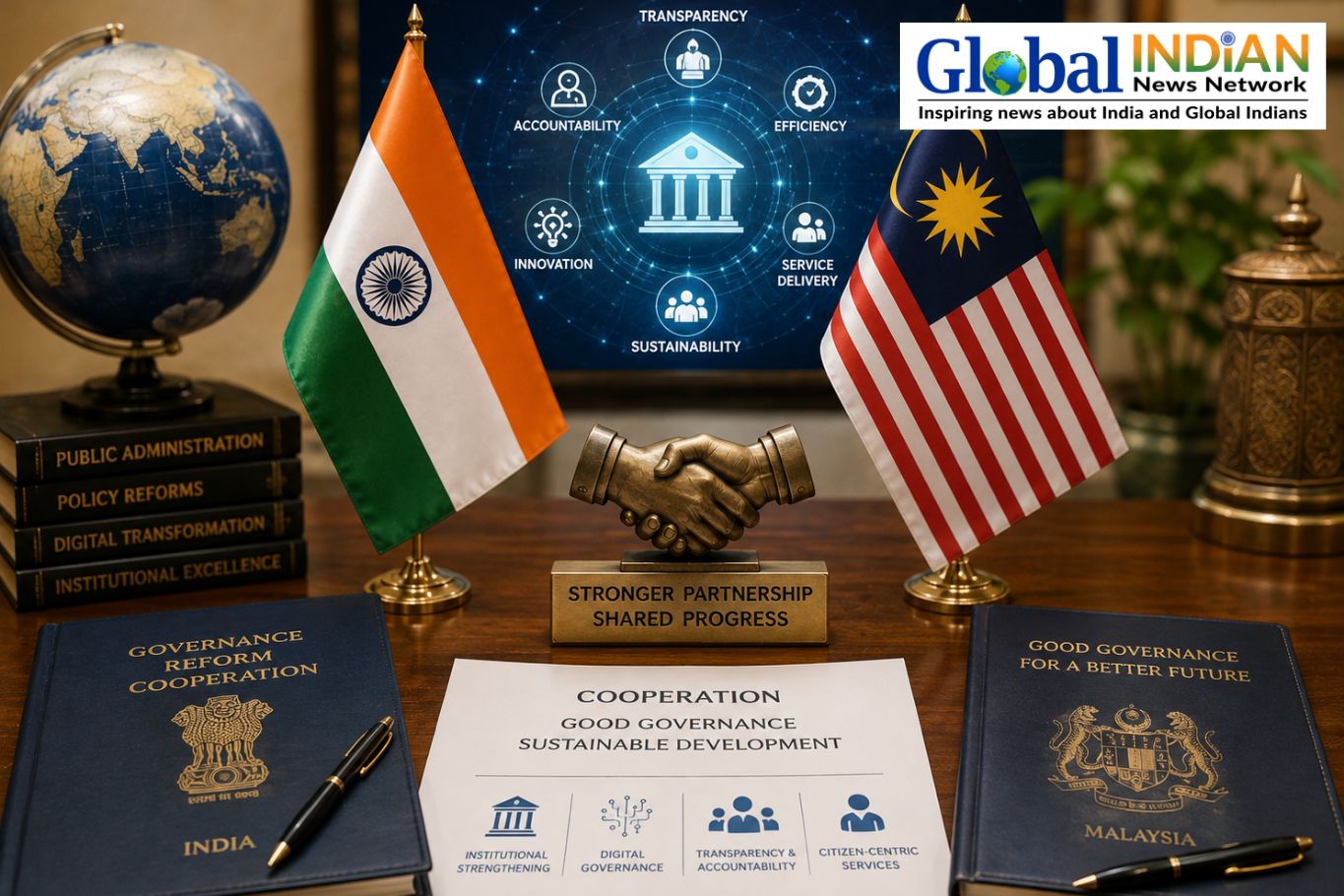
India and Malaysia are looking to expand cooperation in public administration and governance reforms following the second meeting of their Joint Working Group (JWG) on August 18, 2026. The discussions reviewed progress made since the group’s first meeting in November 2024 and focused on identifying practical areas where both countries can strengthen institutional ties.
The meeting was jointly led by Puneet Yadav, Additional Secretary in India’s Department of Administrative Reforms and Public Grievances (DARPG), and Datuk Dr. Mohd Bakhari bin Ismail, Deputy Director General of Public Service (Development) in Malaysia. Representatives from India’s DARPG, Ministry of External Affairs, High Commission in Kuala Lumpur and National Centre for Good Governance also participated.
As part of efforts to improve coordination, both sides agreed to appoint designated Points of Contact to oversee communication and help implement decisions reached through the working group. The discussions also examined capacity-building opportunities under India’s Indian Technical and Economic Cooperation (ITEC) program.
Malaysia shared positive feedback on its experience with ITEC, particularly regarding academic sessions, institutional and field visits and program coordination. Officials also considered potential training initiatives for 2026 and 2027, including specialized programs designed for senior Malaysian government officials.
Technology and public-sector modernization were central themes during the meeting. India and Malaysia exchanged experiences involving digital government, artificial intelligence, cloud technology, shared digital infrastructure, cybersecurity, blockchain and data-based decision-making.
India highlighted its Centralized Public Grievance Redress and Monitoring System (CPGRAMS), along with Samadhan Didi, an AI-powered voice chatbot introduced on May 30, 2026. The initiative is designed to make grievance services more accessible, multilingual and focused on citizens’ needs.
Malaysia, meanwhile, outlined its public-sector transformation strategy centered on People, Process and Technology, with innovation serving as a key driver. The country also presented the Malaysia-India Governance Partnership: 2027-2029 Strategic Roadmap.
Both countries agreed to pursue specific and results-oriented areas of cooperation while continuing to exchange successful practices and institutional knowledge. The meeting ended with a shared commitment to strengthening public institutions, expanding professional capacity, improving government services and creating a more responsive experience for citizens.