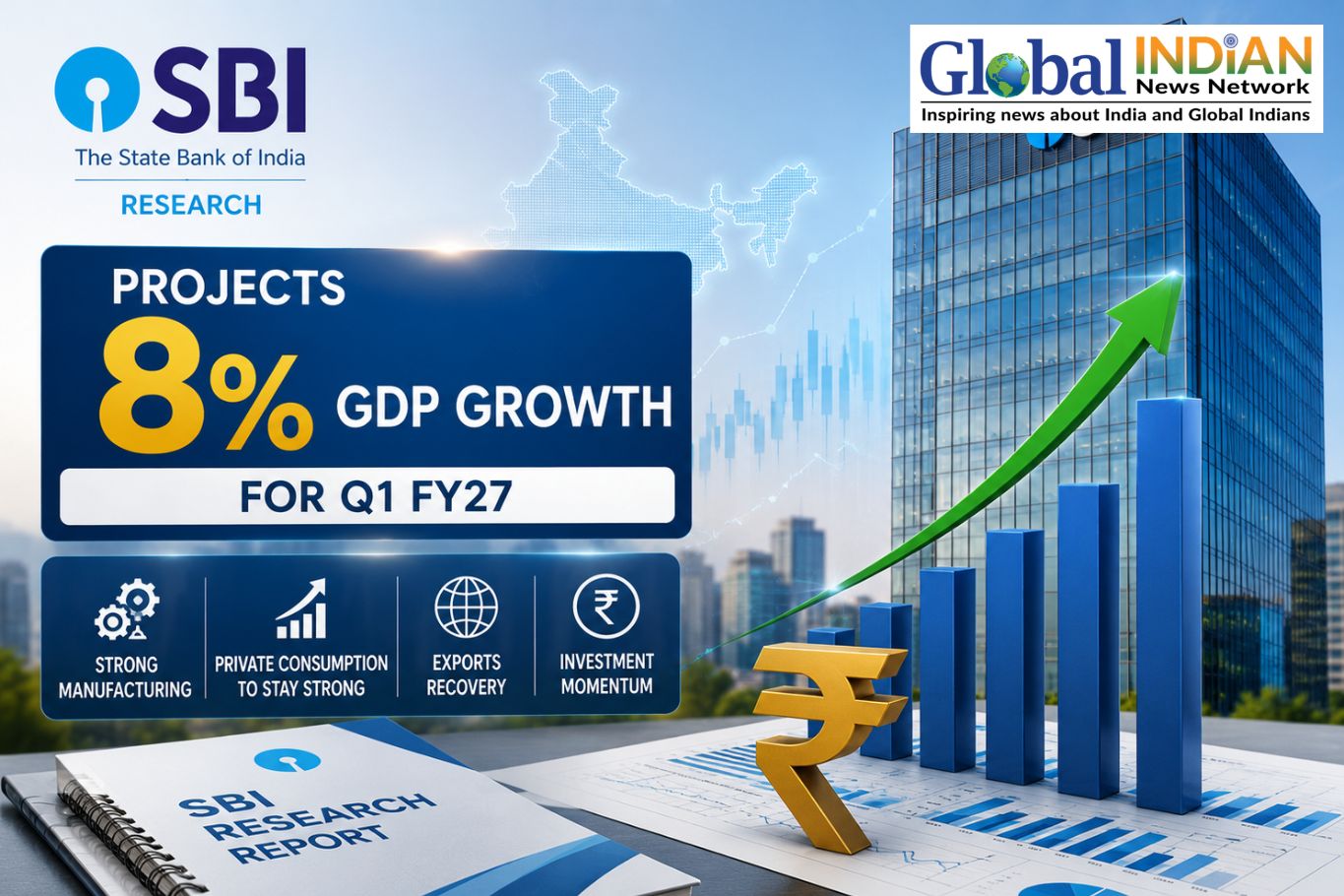
India’s economy could grow by 8% during the first quarter of fiscal year 2027, according to a new assessment by SBI Research. The estimate is more optimistic than the Reserve Bank of India’s projection of 7%, with the report pointing to resilient consumer demand, improving industrial activity, and continued government spending as key drivers of economic momentum.
SBI Research reached its estimate using a nowcasting model that tracks 54 high-frequency indicators covering agriculture, industry, and services. The report found that 86% of these indicators showed stronger activity during Q1 FY27, compared with 69% during the corresponding period of the previous financial year. The broader improvement suggests that economic growth is being supported across multiple areas rather than relying on a single sector.
Consumer demand has remained relatively strong, while industrial performance has also shown encouraging signs. The services sector, which accounts for the largest share of India’s economic output, continues to provide significant support to overall growth. While freight and passenger transportation indicators remained comparatively weaker, most other services-related measures pointed toward healthy activity during the quarter.
Government capital expenditure has also contributed to the positive outlook. Capital spending by 20 states reached 10.5% of their budget estimates during Q1 FY27, broadly close to the 10.9% recorded during the same period a year earlier. Continued public investment is expected to support infrastructure activity and overall economic demand.
Banking activity has provided another positive signal. Credit growth has continued to strengthen since the second quarter of FY26, with scheduled commercial bank credit expanding 17.7% during the fortnight ending July 15, 2026. Deposits increased 12.7% during the same period. SBI economists expect overall deposit growth of around 14.5% to 15% during FY27, while bank credit could expand between 16% and 17%.
Weather conditions have also improved significantly. India began June with a rainfall deficit of nearly 40%, but stronger monsoon activity in July and normal rainfall in August have helped narrow the shortfall to around 12%. SBI Research said developments in the monsoon could continue supporting economic activity during the second quarter.
The report noted that the Indian Ocean Dipole may partly reduce the adverse effects associated with El Niño, providing additional support to agricultural and broader economic conditions.
Despite the positive outlook, SBI Research flagged risks from the rupee’s depreciation. The currency recently moved beyond 96 against the US dollar before recovering and stabilizing around 95 to 95.5. The report urged policymakers to closely monitor the situation and called for stronger measures from the RBI to protect financial stability.
Overall, the report suggests India enters FY27 with broad-based economic momentum, although currency volatility and global uncertainties remain important risks.