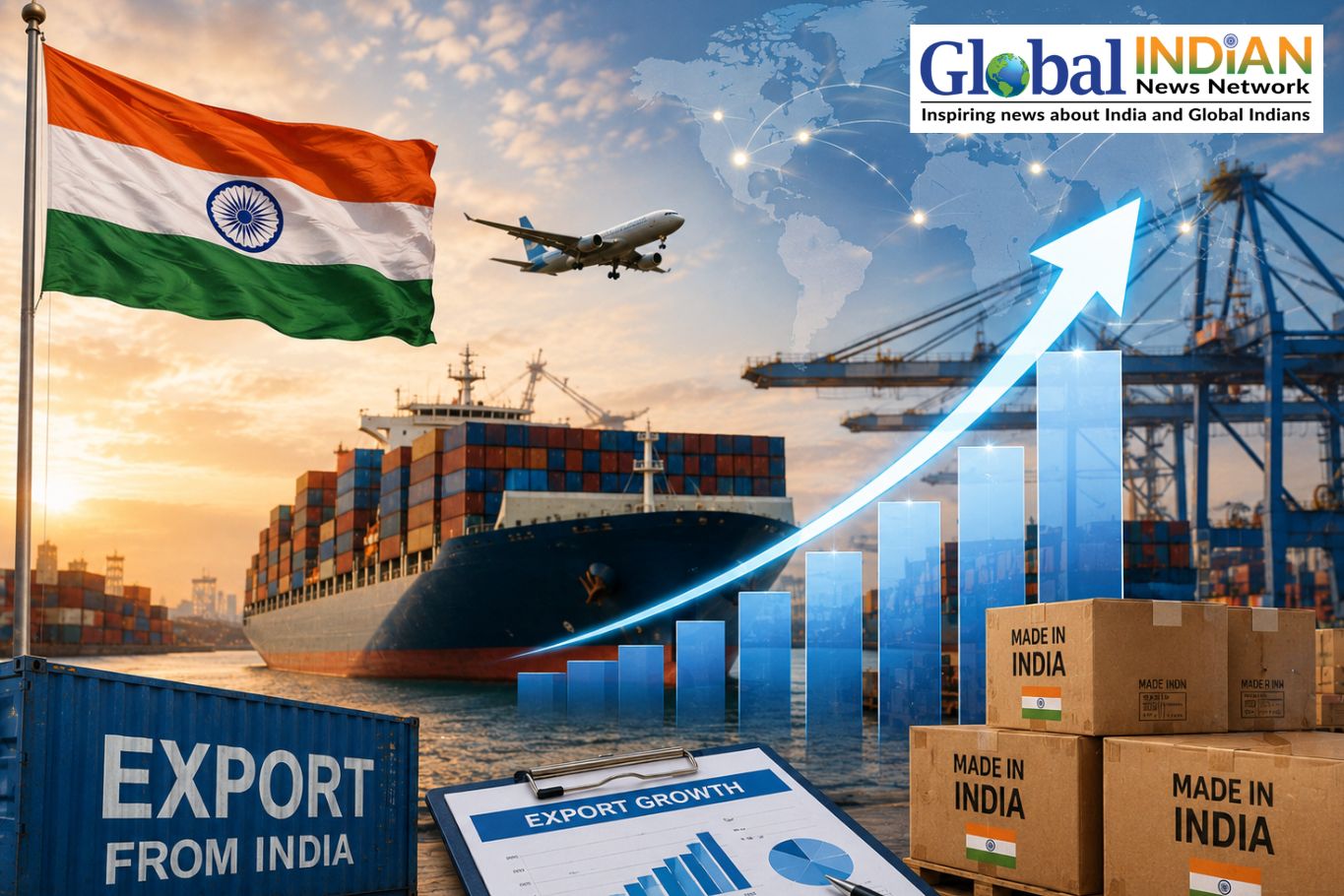
 India is maintaining strong momentum in international trade, with exports rising by about 15% during the first four months of fiscal year 2027. Union Commerce and Industry Minister Piyush Goyal said the country is now aiming to reach $1 trillion in total exports during the year, reflecting the government’s broader push to strengthen India’s position in global markets.
Speaking at the Bharatiya Vyapar Mahotsav 2026, Goyal emphasized the importance of expanding the scale and competitiveness of Indian businesses. The latest export performance comes despite a challenging global environment marked by economic uncertainty and geopolitical tensions.
India achieved record exports of approximately $863 billion in fiscal year 2026. Merchandise exports accounted for about $442 billion, while services contributed nearly $421 billion. Overall exports have increased by roughly 73% over the past six years, demonstrating the expanding role of Indian companies in international commerce.
The government is also seeking to widen market opportunities through trade agreements. India has signed nine free trade agreements over the last four years, covering economies with a combined gross domestic product of around $60 trillion. These agreements provide Indian businesses with preferential access to international trade markets valued at approximately $25 trillion.
Maintaining the current growth trajectory will require broader participation across India’s economy. Manufacturers, micro, small and medium-sized enterprises, farmers, fishermen, and service providers are being encouraged to explore international markets and build products that can compete globally.
The government is placing particular emphasis on quality, design, innovation, and modern production practices under the Make in India initiative. Businesses are being encouraged to expand beyond traditional domestic markets, adopt digital tools, improve manufacturing standards, and follow transparent and fair business practices.
Greater consumer support for locally produced goods could also help Indian companies increase production and achieve economies of scale. Higher domestic demand, combined with stronger export activity, could provide businesses with the capacity needed to compete more effectively in international markets.
Sustainability is another important part of the government’s export strategy. Companies are being encouraged to adopt recycling and reuse practices while developing business models that contribute to a circular economy. Such measures could help reduce resource dependence while making Indian supply chains more resilient.
With exports already showing significant growth early in FY27, the government’s $1 trillion target represents an ambitious next step. Expanding market access, encouraging innovation, strengthening businesses, and promoting sustainable production will be central to India’s efforts to achieve its export ambitions.