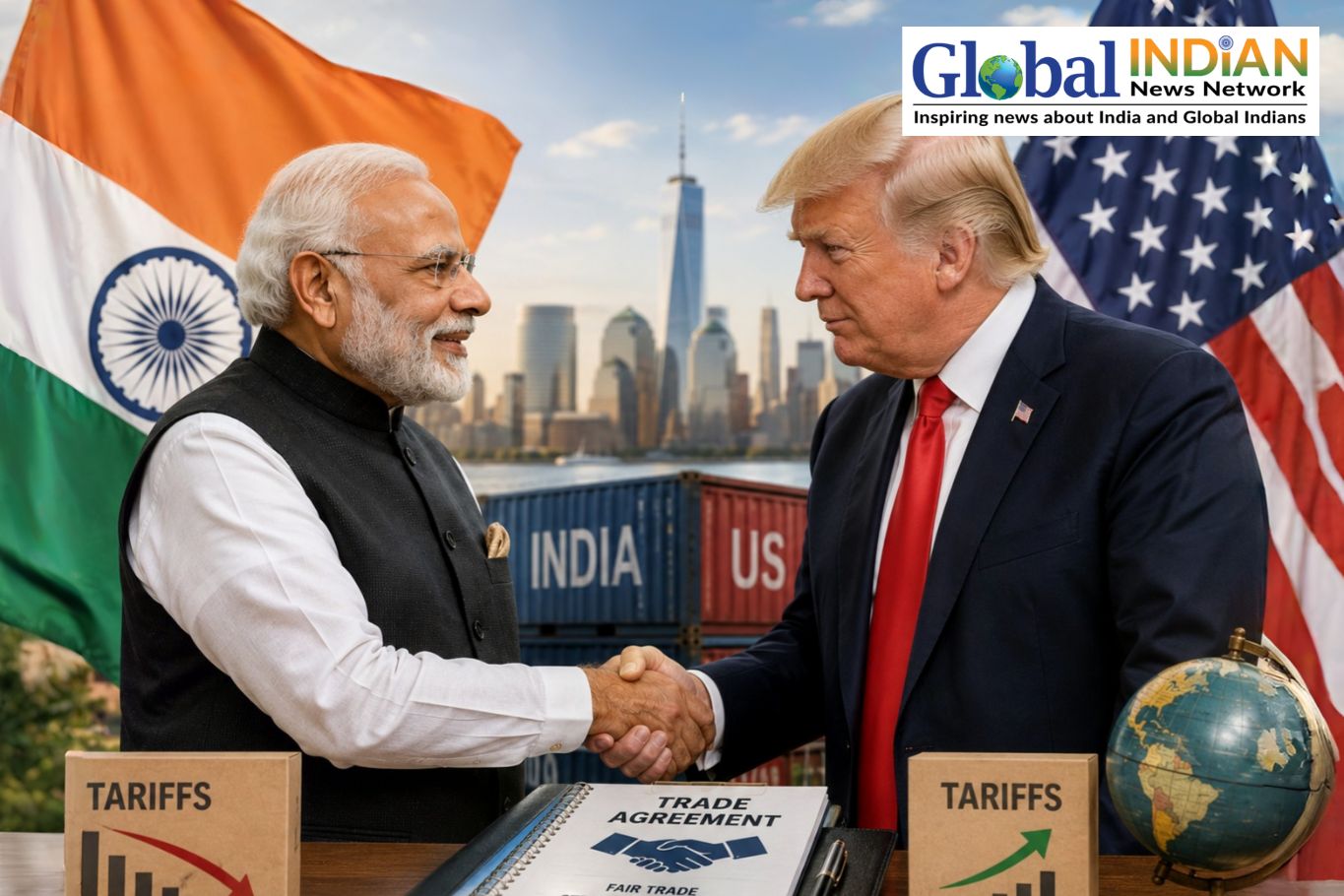
 US President Donald Trump and Prime Minister Narendra Modi are expected to work directly toward resolving differences between Washington and New Delhi over India’s purchases of Russian oil and potential US tariffs, White House trade adviser Peter Navarro said Tuesday.
Speaking to reporters at the White House, Navarro pointed to the close working relationship between Trump and Modi when asked whether proposed tariff measures could add pressure to bilateral relations. He indicated that the two leaders would handle the matter through their direct engagement rather than having officials intervene publicly.
The comments came amid discussions surrounding legislation linked to the late Republican Senator Lindsey Graham. The measure authorizes potential tariffs of up to 100% on imports from major purchasers of Russian energy and countries accused of helping evade sanctions. India is not automatically designated as a tariff target under the legislation.
Navarro also revisited his criticism of India’s energy relationship with Russia. He argued that Indian purchases of Russian crude expanded significantly after Moscow launched its invasion of Ukraine. He also alleged that some products connected to Russian oil were subsequently sold by India, claiming that such activity contributed to Russia’s ability to finance the conflict. Navarro did not provide figures to substantiate the claims during his remarks.
He later said the issue had been resolved but did not clarify what specific development or agreement he was referring to.
The comments come while India and the United States continue negotiations aimed at improving their trade relationship. Tariffs remain one of the major issues under discussion as both sides seek to reach an arrangement that can address their respective economic concerns.
Navarro also defended the Trump administration’s broader use of tariffs, arguing that the policy is encouraging international companies to establish manufacturing operations in the United States to avoid additional import costs. He said the approach was also contributing to increased investment by American businesses.
Acknowledging continued concerns over inflation and financial pressures facing US households, Navarro argued that the administration’s tax, trade and deregulation policies were beginning to support activity in sectors such as manufacturing and construction.
The Senate recently approved the Lindsey O. Graham Sanctioning Russia and Iran Act of 2026 by an 86-11 vote. While the legislation permits tariffs as high as 100% against certain countries purchasing Russian oil and gas, India has not been automatically placed on the list of countries facing such penalties.
The latest remarks highlight the continuing importance of direct engagement between Trump and Modi as Washington and New Delhi work through trade, energy and broader strategic differences.