 The Indian Space Research Organisation (ISRO) has achieved another milestone in the Gaganyaan human spaceflight mission by successfully completing three important tests related to the Crew Module systems. The trials focused on astronaut safety features, separation mechanisms, and structural performance required for a successful space mission.
The first test evaluated the Crew Module Uprighting System, a crucial technology designed to help the spacecraft return to a stable upright position after landing in the ocean. The system uses stored cold-gas technology and plays an important role in ensuring astronaut safety during the recovery phase after splashdown.
The second test examined the separation process of the umbilical mechanism that connects the Crew Module with the Service Module. The Crew Module is designed to carry astronauts, while the Service Module provides essential support through power and propulsion systems during the mission.
The umbilical mechanism includes two separate units: CSU-1, located on the Crew Module side, and CSU-2, positioned on the Service Module side. During the spacecraft’s return journey, the Service Module separates from the Crew Module after the disconnection of CSU-1. The CSU-2 unit then separates shortly before the spacecraft begins atmospheric re-entry.
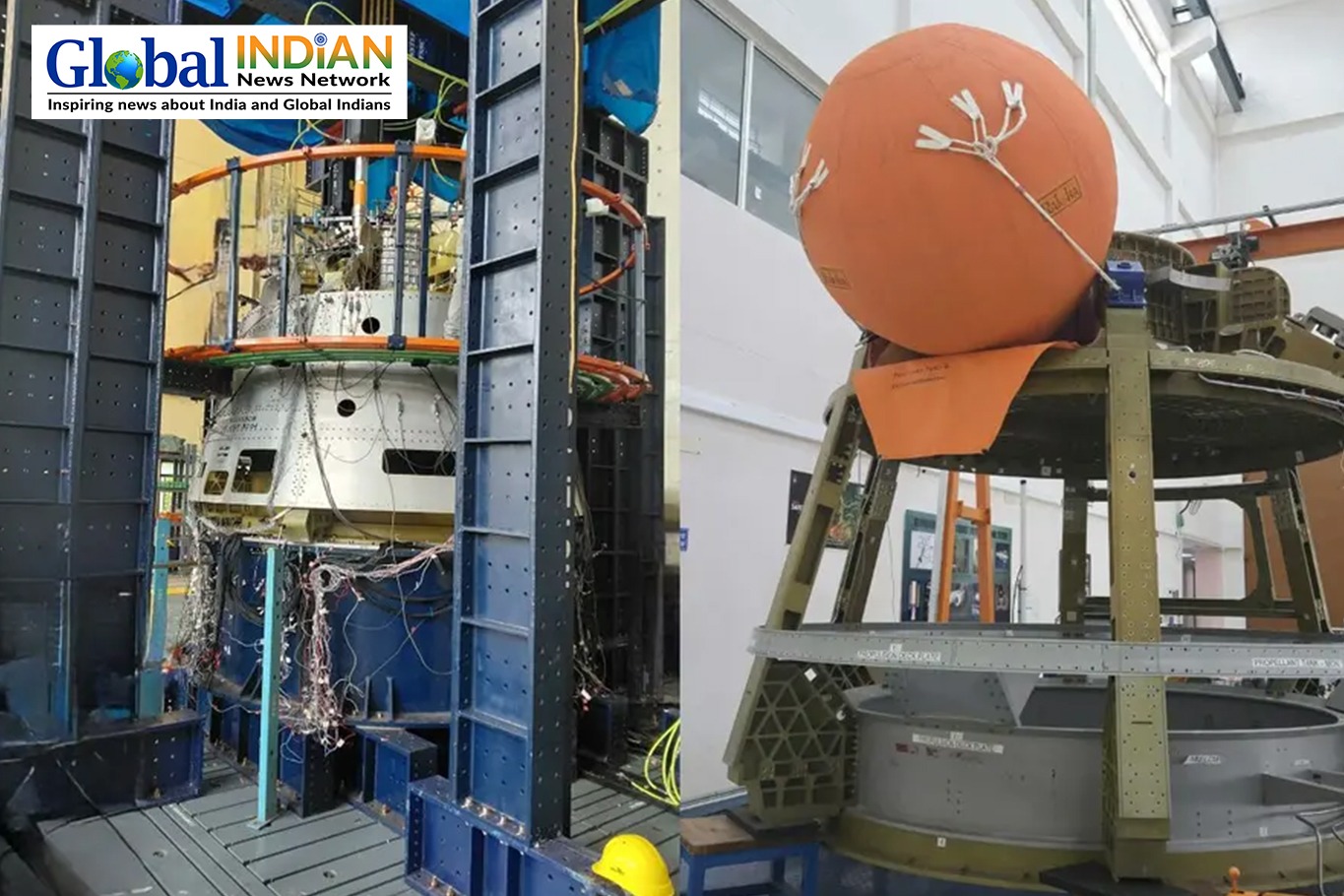
ISRO conducted a dedicated test to evaluate the separation of CSU-2 using a simulated Crew Module structure. The trial successfully demonstrated smooth detachment of the component while confirming that the Crew Module panel and related connection points maintained structural strength during the process.
The third test focused on verifying the Crew Module’s structural stability during the separation of the apex cover. This protective cover plays an important role during the mission by safeguarding the parachute systems and related equipment. It is removed before parachute deployment to allow the spacecraft to safely descend toward Earth.
These successful demonstrations represent significant progress in India’s ambitious Gaganyaan program, which aims to send Indian astronauts into space. By validating critical safety and operational systems, ISRO continues to strengthen the reliability of the spacecraft and move closer toward achieving India’s first human spaceflight mission.