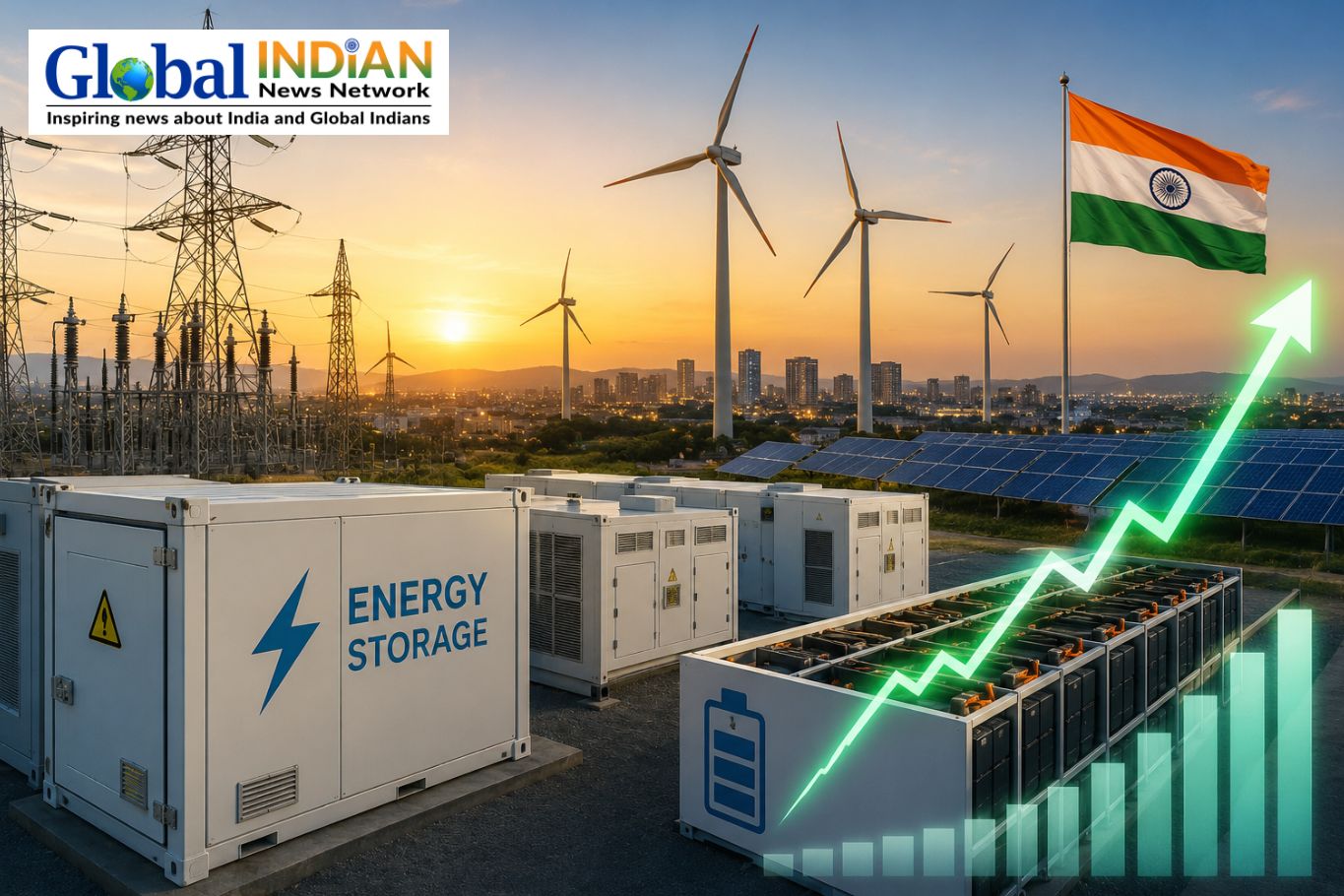
 India’s energy storage sector experienced extraordinary growth during the opening months of 2026, signaling a major step forward in the country’s transition toward a cleaner and more resilient power system. New data released by Mercom India Research reveals that battery energy storage installations surged significantly between January and March, underscoring the increasing role of storage technologies in supporting renewable energy expansion and ensuring a stable electricity supply.
During the first quarter of the year, India added 4.6 gigawatt-hours (GWh) of battery energy storage capacity. This represented a dramatic increase compared with the final quarter of 2025, when additions totaled just 442.7 megawatt-hours (MWh). The rapid pace of deployment demonstrates how quickly energy storage is becoming an essential component of the country’s evolving energy landscape.
As a result of the latest installations, India’s cumulative battery energy storage capacity reached 5.9 GWh by the end of March 2026. Industry experts view this milestone as evidence of growing confidence in storage technologies, which help balance electricity demand, enhance grid stability, and maximize the utilization of renewable energy generated from solar and wind projects.
The report highlights Rajasthan as the leading state in terms of total installed battery storage capacity. The state’s strong performance reflects its expanding renewable energy footprint and ongoing investments in infrastructure designed to support sustainable power generation. Other regions are also accelerating storage deployment as governments and private developers recognize the importance of energy storage in maintaining reliable electricity networks.
Beyond current installations, the sector’s future outlook remains highly encouraging. India’s energy storage ecosystem is being supported by a strong pipeline of upcoming projects and increasing policy attention from both central and state authorities. By March 2026, the country had already established 7.2 gigawatts (GW) of pumped storage capacity, providing another critical tool for managing fluctuations in renewable energy production.
The report further notes that energy storage tenders totaling 18 GW were issued during the quarter by various agencies, highlighting robust market momentum and investor interest. Gujarat emerged as a major hub for future standalone battery storage projects, with the state accounting for the largest share of planned capacity additions.
As India continues to expand its renewable energy portfolio, battery storage and pumped hydro projects are expected to play an increasingly important role. These technologies will help create a more flexible and dependable electricity system while supporting the nation’s broader goals of reducing carbon emissions, improving energy security, and building a sustainable power infrastructure for the future.