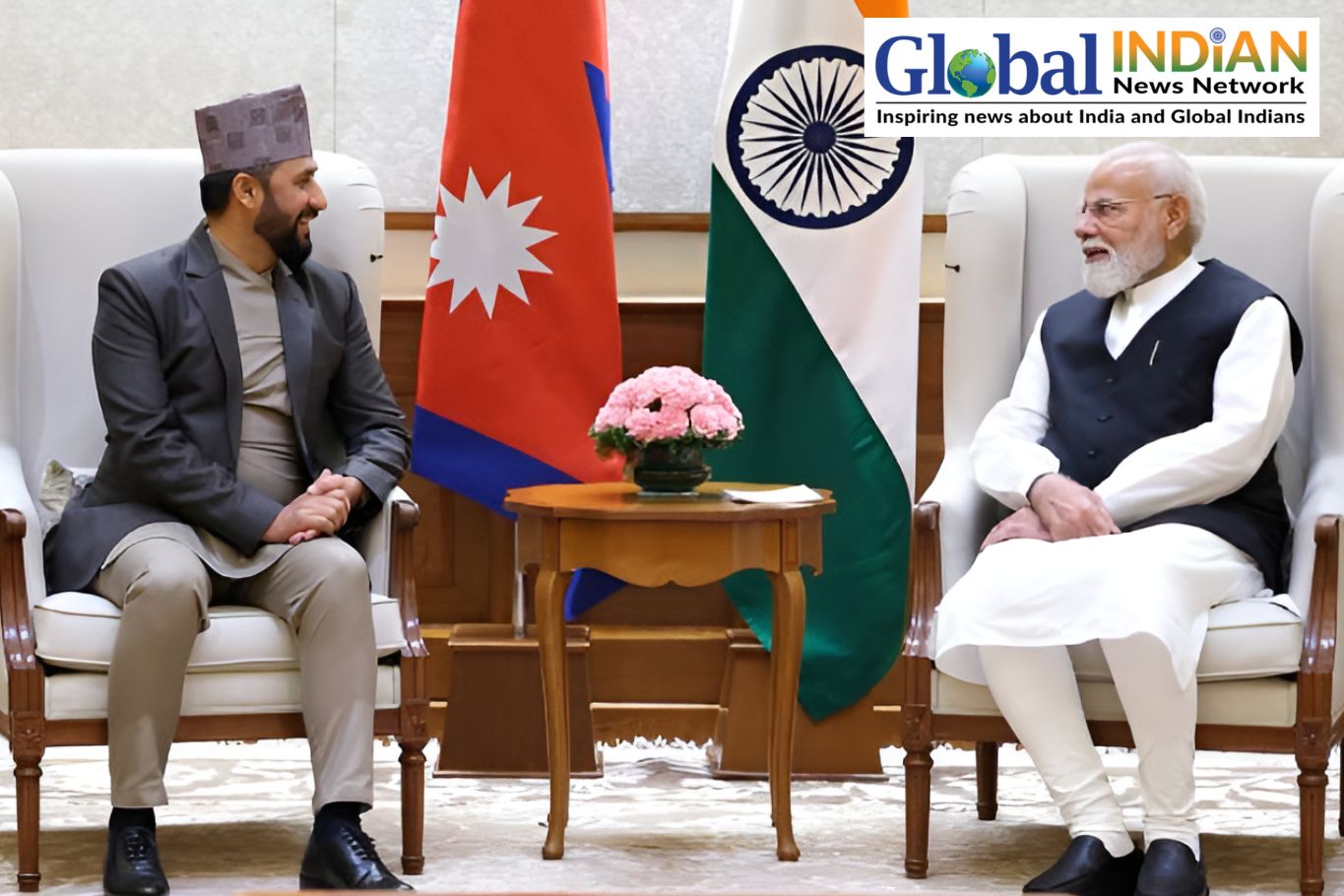
 Prime Minister Narendra Modi met Rastriya Swatantra Party (RSP) chairman Rabi Lamichhane in New Delhi, where discussions centered on strengthening India-Nepal relations and expanding cooperation for shared regional growth. The meeting highlighted mutual interest in deepening engagement between the two neighboring countries.
In a statement shared on X, Prime Minister Modi expressed satisfaction at meeting Lamichhane and welcomed his commitment to working closely with India. He emphasized that India values Nepal as a key partner under its Neighbourhood First policy, which prioritizes strong diplomatic and developmental ties with surrounding nations. Modi further noted that both sides share a vision of advancing a stable and prosperous future through closer cooperation.
The Prime Minister also underlined India’s willingness to collaborate with Nepal’s new leadership to further enhance the long-standing and multifaceted relationship between the two countries. This includes strengthening cooperation in areas such as infrastructure development, connectivity, trade, and cultural exchange, all aimed at promoting regional stability and mutual progress.
Earlier, Union Home Minister Amit Shah also met a Nepalese delegation led by Rabi Lamichhane in New Delhi. The discussions reflected both countries’ interest in reinforcing bilateral relations, particularly in areas related to security cooperation, governance, and institutional collaboration.
According to the Ministry of Home Affairs, Shah congratulated Lamichhane on his party’s electoral performance and extended India’s best wishes to Nepal’s new government. Both sides reaffirmed their commitment to working together to further strengthen the traditionally close ties between India and Nepal.
Following the meeting, Lamichhane described the interaction as constructive, noting that discussions focused on enhancing bilateral cooperation, improving security coordination, and promoting shared democratic values. He also emphasized the importance of strengthening ties between political parties of both nations.
In addition, the Nepalese delegation met Bharatiya Janata Party President Nitin Nabin in New Delhi. During the interaction, they were briefed on the party’s organizational structure, ideological foundations, and governance approach. The discussion also highlighted the increasing role of young leaders in shaping political engagement and public discourse.
The series of high-level meetings reflects the ongoing diplomatic engagement between India and Nepal, underscoring a shared commitment to deepen political, economic, and cultural cooperation in the coming years while building on their long-standing historical relationship.