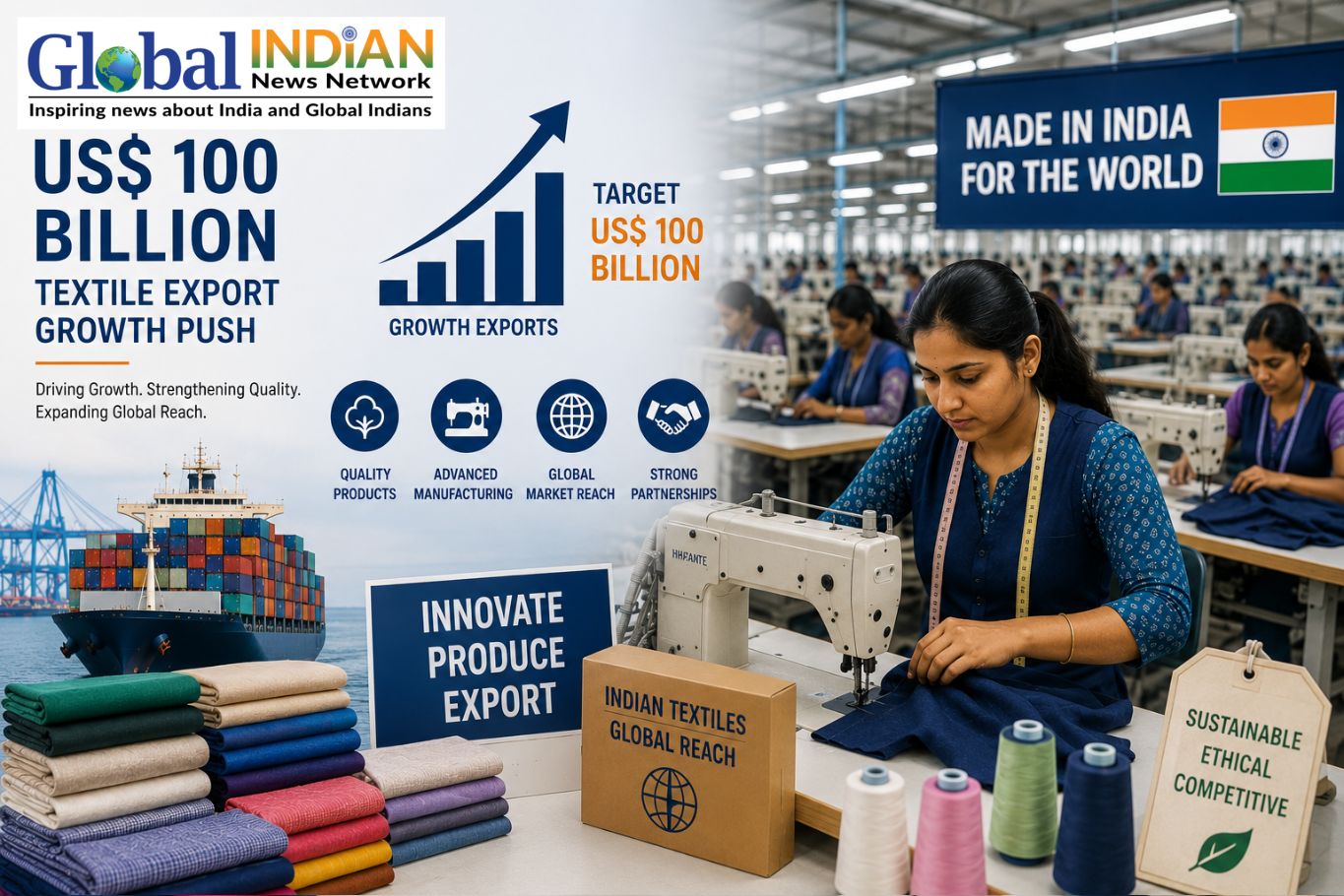
 India has set an ambitious goal to strengthen its position as a global leader in the textile industry, targeting US$ 100 billion in textile exports by 2030. The government is also aiming for overall textile production worth US$ 250 billion as part of its long-term vision for economic transformation under the broader Viksit Bharat 2047 roadmap.
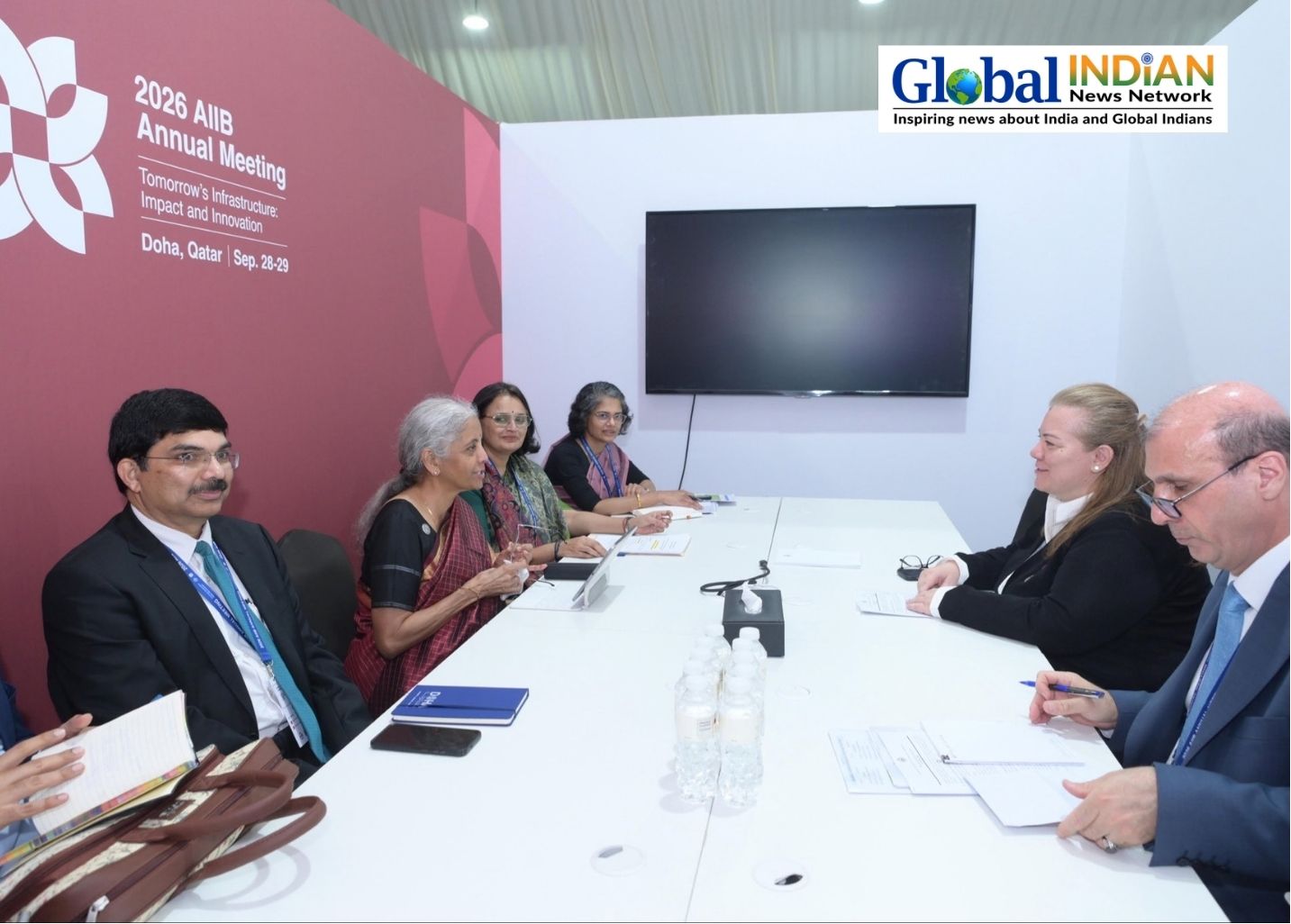
Union Finance Minister Nirmala Sitharaman, speaking at the TEXPROCIL Export Awards ceremony in Mumbai, emphasized the need to build a fully integrated textile value chain that spans “from farm to fibre, factory, fashion, and foreign markets.” She highlighted that India’s focus must be on improving competitiveness while expanding global market access for domestic producers.
The event, organised by the Cotton Textiles Export Promotion Council, recognized exporters for their outstanding performance in areas such as export growth, innovation, employment generation, environmental and social governance (ESG) practices, and e-commerce-driven expansion. A new initiative, the Advanced Certificate Programme in International Trade (ACPIT), was also launched to further strengthen India’s export capabilities and trade expertise.
India’s textile sector, one of the oldest in the world with roots tracing back to the Sindhu-Saraswati civilisation, currently ranks as the sixth-largest textile exporter globally. The industry contributes approximately 2.3% to India’s GDP and nearly 12% of total export earnings, while supporting nearly 60 million livelihoods across the country.
Recent figures show that textile exports reached around US$ 33.5 billion in FY 2025–26, reflecting steady progress despite global economic challenges. Officials noted that reforms introduced since 2014, including GST restructuring and targeted sectoral schemes, have played a key role in improving efficiency and competitiveness.
The government also highlighted major initiatives such as the PM MITRA Parks Scheme and the Samarth Scheme, which aim to modernize production infrastructure and enhance workforce skills. Seven PM MITRA textile parks are currently under development, with investment agreements worth approximately US$ 2.91 billion already signed.
Officials believe these integrated policy measures will help India scale its textile manufacturing capacity, attract global investment, and strengthen its position in international supply chains. The sector is expected to play a central role in boosting exports, creating jobs, and supporting India’s broader economic growth ambitions over the coming years.