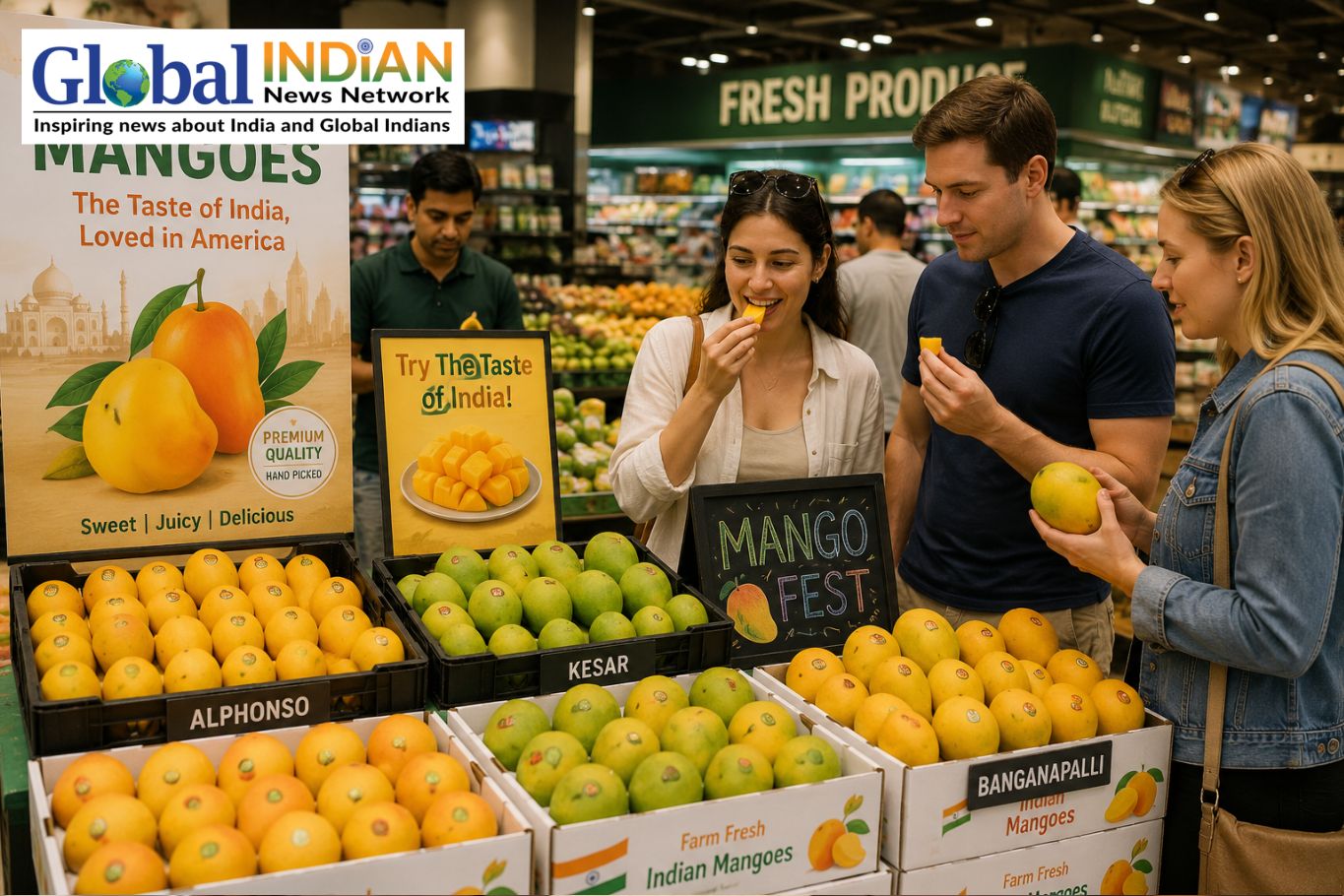
 Indian mangoes are becoming a major sensation across the United States, with premium varieties such as Alphonso, Kesar, Langra, Chausa, and Banganapalli witnessing exceptionally high demand among American consumers. The latest wave of excitement was seen in Seattle, where newly imported Kesar mangoes reportedly disappeared from supermarket shelves within hours of arriving.
Videos circulating online from stores in Seattle showed large crowds rushing to buy the fruit, highlighting the growing popularity of Indian mangoes in the American market. Reports suggest that many shipments are effectively sold out even before reaching stores, demonstrating how rapidly demand has expanded in recent years.
A standard box containing around 10 to 12 mangoes is currently priced between 50 and 60 dollars in the United States. Premium subscription style deliveries can reportedly cost nearly 1,000 dollars for the full season. Despite these high prices, consumers continue purchasing the fruit enthusiastically, with importers noting that many loyal buyers are American customers rather than only members of the Indian diaspora.
The recent shipment to Seattle was made possible after a year long initiative led by the Indian Consulate General in Seattle. India’s Consul General in Seattle, Prakash Gupta, described the effort as “mango diplomacy” while speaking during a television segment focused on Indian mangoes. He highlighted the emotional and cultural importance mangoes hold for Indian families and communities.
Although Mexico continues to dominate the American mango market due to its geographical advantage and lower transportation costs, Indian mangoes are steadily building a premium identity because of their rich sweetness, aroma, and seasonal exclusivity. Mango lovers in the United States often describe Indian varieties as being far superior in flavor compared to commonly available alternatives.
India remains the world’s largest mango producer, with production crossing 25 million metric tons during the 2024 to 2025 period. However, only a very small portion of this production is exported internationally. One major challenge is the delicate texture and thin skin of Indian mangoes, which make long distance transportation more difficult.
Despite logistical challenges, Indian mango exports to the United States are steadily recovering after the disruptions caused during the pandemic years. The United States imported approximately 719 million dollars worth of mangoes in 2020, and this figure climbed to nearly 1.02 billion dollars by 2025, reflecting the rapidly growing appetite for mangoes nationwide.
While Indian mangoes still account for only a small percentage of total US imports, their premium positioning and rising popularity have transformed them into a luxury seasonal product in American supermarkets.