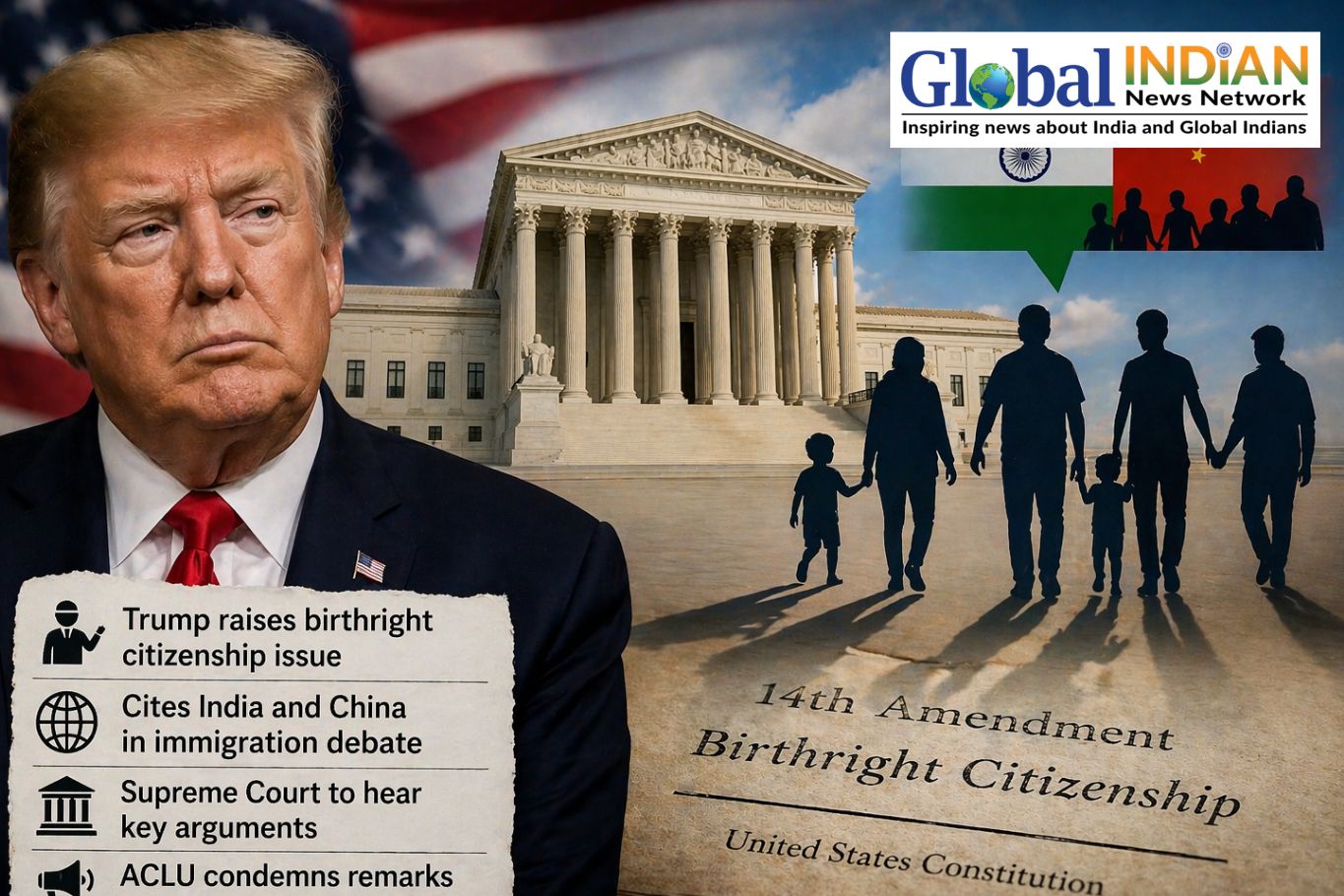
 US President Donald Trump has reignited a heated debate over birthright citizenship after resharing a video featuring conservative commentator Michael Savage, who strongly criticized current US immigration laws. The remarks have drawn attention for their controversial framing of immigrants from countries such as India and China, and for intensifying ongoing political divisions around US citizenship policy.
In the video, Savage argued that the existing legal framework allows for misuse of birthright citizenship provisions. He claimed that some individuals allegedly travel to the United States late in pregnancy so their children can automatically gain citizenship at birth, a process he described as a legal loophole. He further asserted that this practice enables families to later migrate to the US, fueling broader immigration flows.
Savage’s commentary, originally aired on a conservative media program, extended into broader criticism of immigration and legal advocacy groups. He targeted organizations such as the American Civil Liberties Union, accusing them of influencing court arguments in ways he believes weaken immigration enforcement. His language framed the debate as not just legal but also political and cultural, suggesting that judicial proceedings fail to address public sentiment.
He also expressed frustration with constitutional interpretation, arguing that the US legal framework has not adapted to modern realities such as global travel and digital communication. According to him, this gap has made current immigration laws outdated in addressing present-day challenges.
The commentary further touched on themes of assimilation and national identity, with Savage claiming that earlier immigrant groups integrated more effectively into American society compared to present-day migration patterns. He suggested that traditional notions of cultural assimilation have weakened over time.
Additionally, he proposed that major policy questions like birthright citizenship should be decided through national public voting rather than solely through judicial interpretation, arguing that the issue should reflect popular opinion.
The resurfacing of these remarks by Trump has added fuel to an already sensitive political topic in the United States, where immigration policy and constitutional rights remain deeply contested. Critics argue that such rhetoric risks oversimplifying complex legal frameworks, while supporters view it as a call for stricter immigration controls.
Overall, the renewed focus on birthright citizenship highlights continuing tensions in American politics over immigration, national identity, and constitutional interpretation, with strong opinions emerging from both political and legal perspectives.