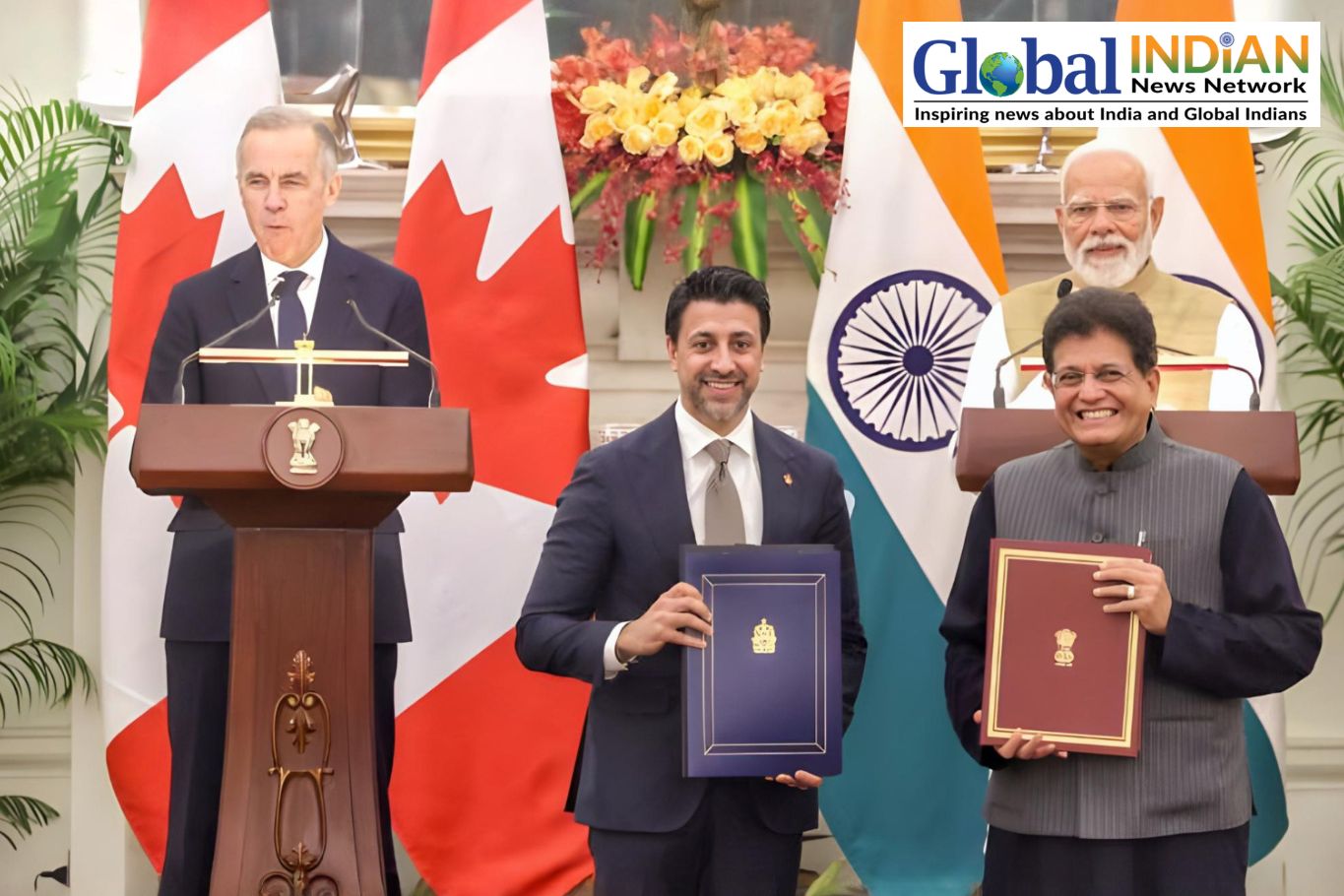
 India’s renewed trade engagement with Canada has opened what experts describe as a second opportunity to build a stable and long term economic partnership between the two countries. The relaunch of negotiations during Canadian Prime Minister Mark Carney’s visit earlier this year is being viewed as a significant step forward after earlier talks were disrupted by political tensions.
According to India’s former High Commissioner to Canada Sanjay Kumar Verma, the changing global environment has made economic diversification essential for Canada, which remains heavily dependent on the United States. He noted that this reliance has become a strategic limitation, especially amid rising geopolitical uncertainty, making India an increasingly important long term partner rather than just another export destination.
Verma highlighted that the shift toward an Early Progress Trade Agreement in 2022 reflected a more practical approach to bilateral trade relations. This framework, he suggested, can serve as a foundation for gradually developing a more comprehensive economic partnership agreement in stages.
He proposed that a full CEPA should not be rushed as a single large deal, but instead built progressively. The initial phase could consolidate existing agreements, while later stages could expand into areas such as investment protection, digital trade, and regulatory alignment. More sensitive sectors like agriculture, intellectual property rights, and government procurement could be addressed at a later stage when political conditions are more favourable.
The analysis also points out that trade in goods between India and Canada remains relatively limited but has strong potential for expansion if market access improves and regulatory procedures are simplified. Services trade, particularly in information technology, education, and professional sectors, is already a strong pillar and could grow further with better cooperation.
Investment ties between the two countries are also described as a key strength. Canadian pension funds and institutional investors have invested heavily in India’s infrastructure and renewable energy sectors, while Indian companies have expanded their presence in Canada’s services economy. This creates a mutually beneficial economic corridor that supports long term stability.
However, Verma emphasized that maintaining investor confidence will require a more predictable taxation and capital repatriation framework that balances regulatory control with business certainty.
He also stressed the importance of insulating trade agreements from political disruptions. According to him, future agreements should include strong institutional mechanisms such as dispute resolution systems, regular review processes, and private sector participation. These structures would help ensure that economic cooperation continues even during periods of diplomatic strain, making the partnership more resilient over time.