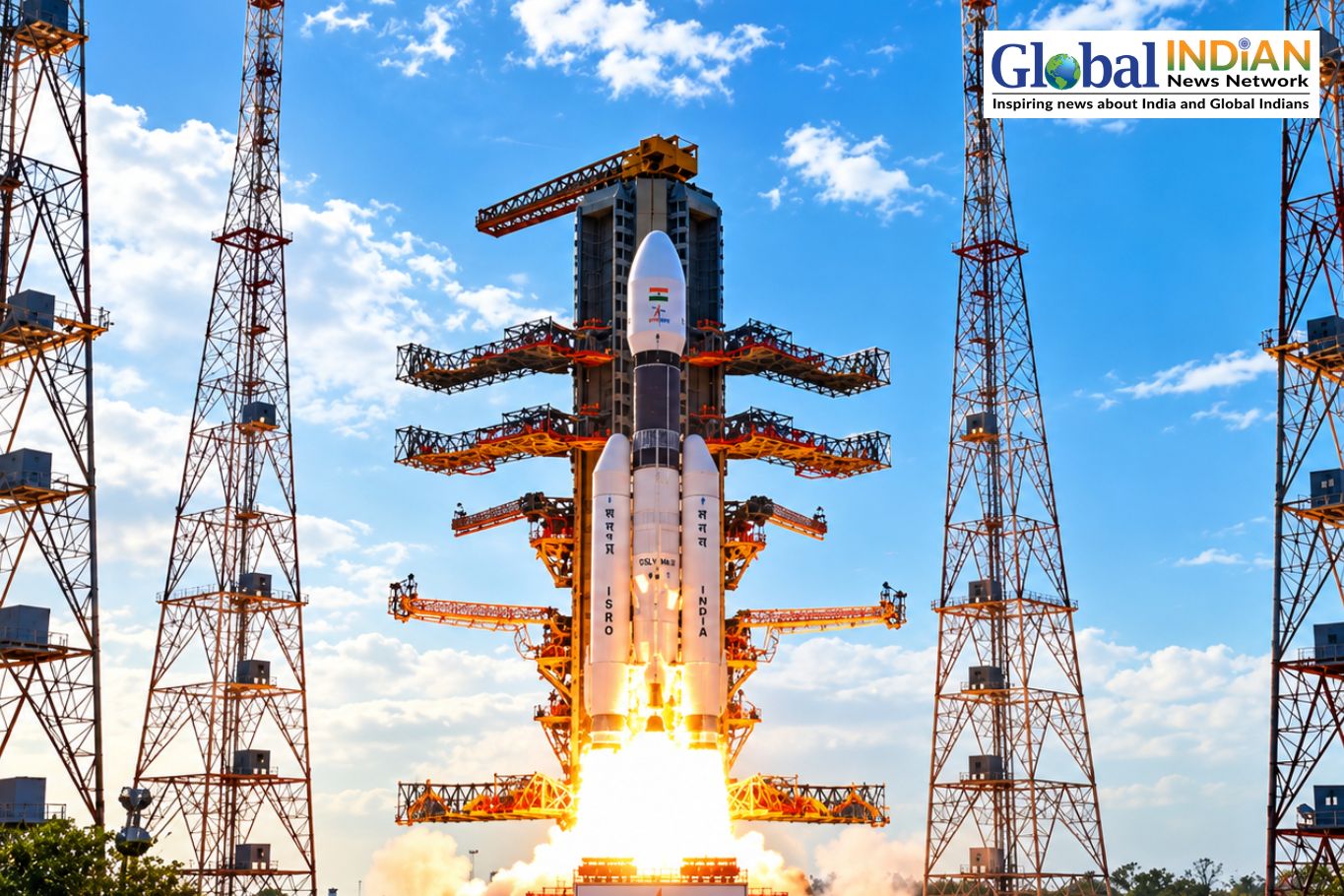
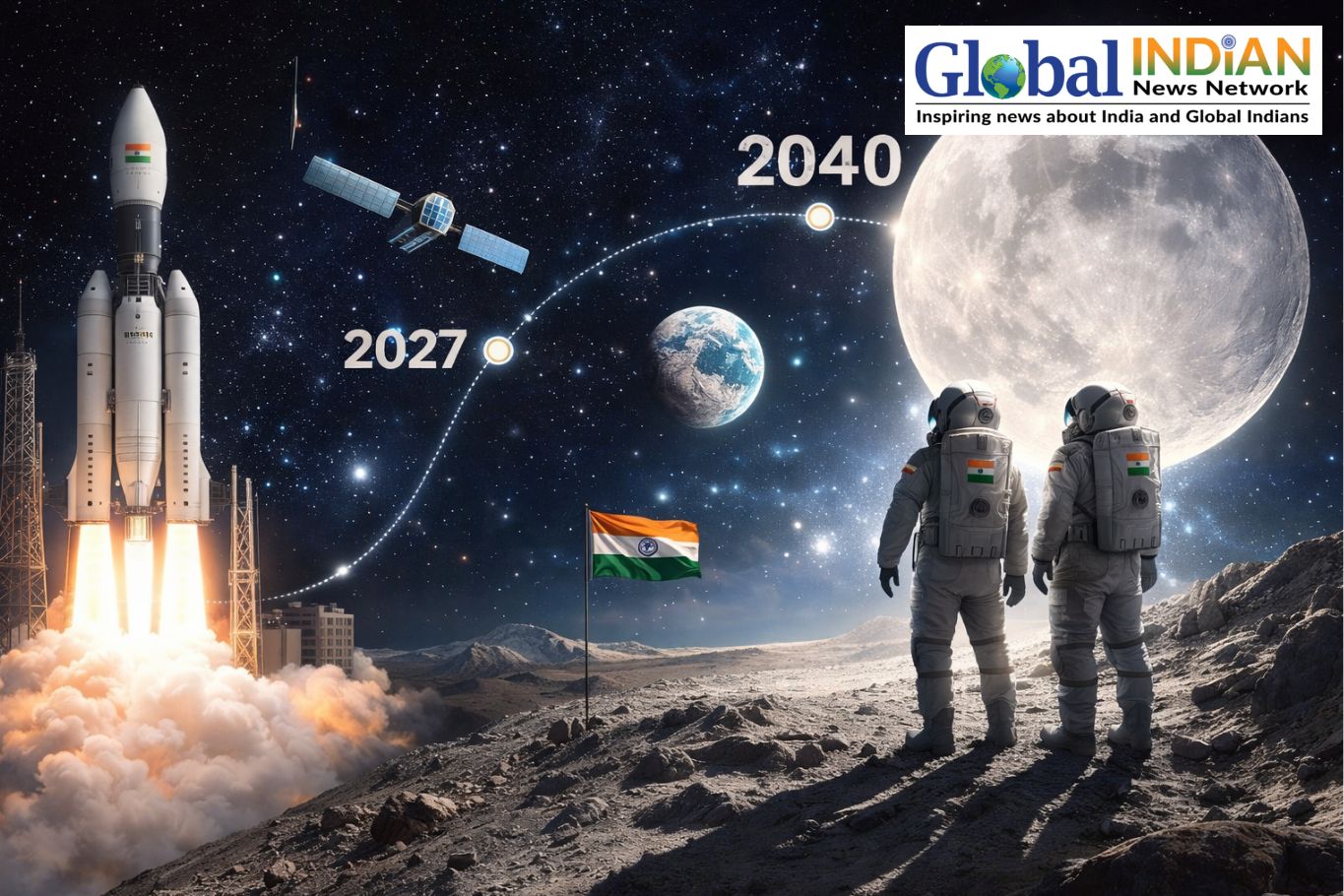
 The Indian Space Research Organisation (ISRO) has announced an ambitious plan to send a human mission to the Moon by the year 2040. ISRO Chairman V Narayanan stated that achieving this milestone would place India among the leading spacefaring nations, with strong capabilities across launch systems, satellite technology, space applications, and human spaceflight programs. He emphasized that this vision aligns with the broader goal of building a developed India through advanced scientific progress.
Narayanan also shared updates on India’s upcoming human spaceflight initiative, the Gaganyaan mission, which is expected to take place in 2027. Before the crewed mission, ISRO plans to conduct three uncrewed test flights to ensure system readiness and safety. Alongside this, India is also working on a G20 satellite project, aimed at supporting member countries through shared space-based services, with a planned launch around the same timeline.
Highlighting India’s growing presence in global space activities, the ISRO chief noted that the organization has successfully executed numerous commercial missions, deploying 433 satellites belonging to 34 countries. He also pointed out that India has achieved a major milestone by launching 104 satellites in a single mission without any collision, setting a global benchmark in satellite deployment efficiency.
Narayanan underlined the importance of mission operations in space programs, explaining that while a rocket launch lasts only about 20 to 25 minutes, mission control and operations continue for years, especially in long-duration satellite missions. He explained that communication satellites often function for up to 15 years, requiring continuous monitoring and management throughout their operational life.
He also referred to the Mars Orbiter Mission as an example, noting that it required nearly 300 days of continuous mission operations support to achieve success. According to him, such operations are even more critical in human spaceflight missions, where precision and safety are of the highest priority.
In addition, ISRO is developing advanced infrastructure for ocean exploration under the Samudrayaan project, part of India’s Deep Ocean Mission. The initiative includes the creation of a specialized titanium vessel designed for deep-sea research, further expanding India’s capabilities beyond space into ocean science and exploration.