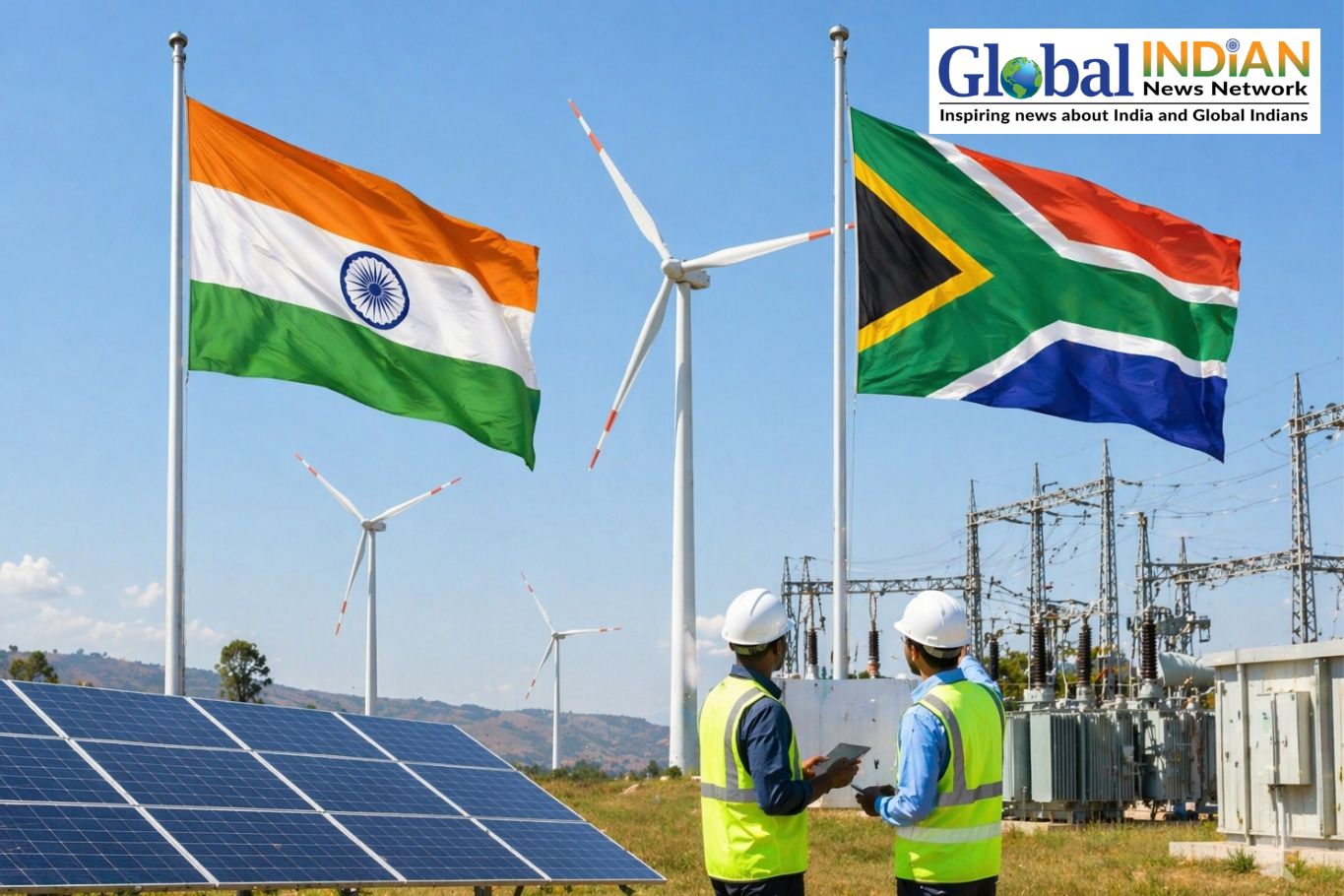
 India is being viewed as a potential key partner in helping Africa accelerate its renewable energy expansion, drawing on its own significant progress in scaling solar and wind power over the past decade. India has added more than 130 gigawatts of renewable capacity, and clean energy now makes up a little over half of its total installed electricity capacity. This experience positions the country as a possible model for emerging economies pursuing large-scale energy transitions.
Across Africa, the shift toward clean energy is not just a long-term policy goal but a practical necessity aimed at improving daily life and economic productivity. Reliable electricity is expected to support essential services such as healthcare facilities, agricultural irrigation systems, and industrial operations, reducing dependence on costly diesel-based power sources. However, nearly 600 million people across the continent still lack access to electricity, even as renewable projects continue to expand and access rates gradually improve.
According to the analysis, India’s renewable energy success has been driven by structured competitive bidding processes, clear policy frameworks, and strong deployment of distributed solar systems that serve both rural households and smaller towns. These approaches, while adaptable rather than directly transferable, could offer valuable insights for African governments designing their own energy policies.
Africa also holds a major advantage in renewable energy development due to its abundant natural resources. The continent receives some of the highest levels of solar radiation globally, making it highly suitable for large-scale solar deployment. Between 2020 and 2025, governments and private investors in Africa committed around 25 gigawatts of renewable energy capacity, with an additional 11 gigawatts secured through private investments. In several countries, solar energy is already becoming more cost-effective than new gas-based power generation when factoring in fuel costs and transmission challenges.
Beyond energy generation, Africa plays a crucial role in the global clean technology supply chain due to its vast reserves of critical minerals. The region is rich in cobalt, copper, manganese, platinum group metals, and lithium, all essential for producing batteries, wind turbines, and electrolysers used in modern energy systems.
India has already begun sharing technical expertise with African partners in areas such as grid modernization, energy storage, and renewable integration. Organizations like Power Grid Corporation of India have collaborated on transmission projects aimed at improving regional power connectivity and enabling more efficient use of renewable resources.
Experts suggest that with supportive financing, institutional cooperation, and transparent agreements, India and Africa could jointly build a strong renewable energy partnership that supports economic growth, energy security, and long-term sustainability for both regions.