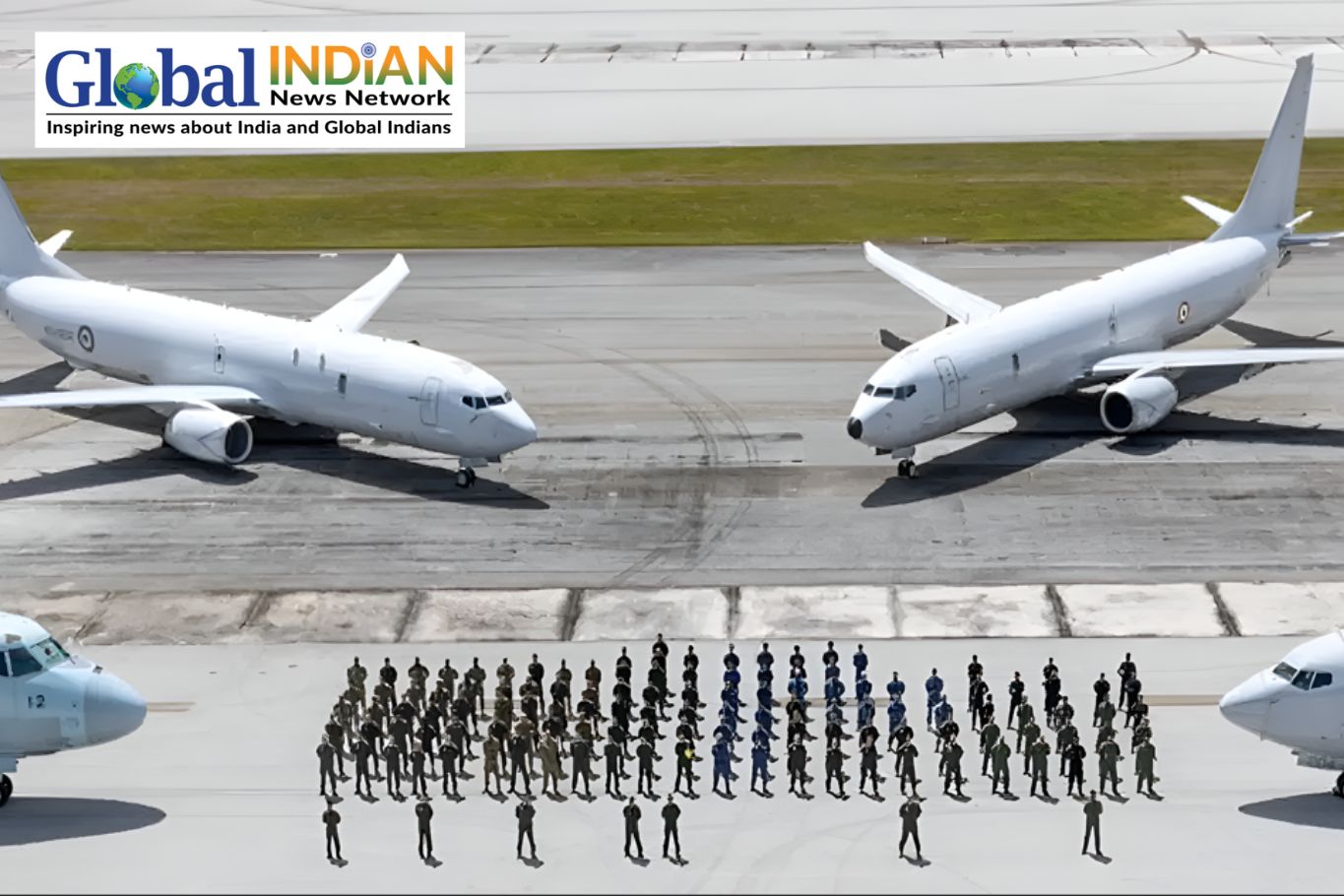
 The United States and India, alongside Japan, Australia, and New Zealand, concluded a 20-day anti-submarine warfare exercise, Sea Dragon 2026, at Andersen Air Force Base in Guam on March 28. The intensive drills focused on enhancing capabilities to detect and neutralize undersea threats in complex operational environments, officials reported.
Hosted by Commander, Task Force 72, the exercise featured the US Navy’s P-8A Poseidon aircraft alongside planes from the Indian Navy, Japan Maritime Self-Defense Force, Royal Australian Air Force, and Royal New Zealand Air Force. Sea Dragon 2026 emphasized interoperability among the five nations, improving their ability to conduct coordinated operations and maintain shared maritime domain awareness in a dynamic and contested region.
The training included structured tracking exercises using the mobile MK-30 anti-submarine warfare target, as well as a live drill involving an active Navy submarine. Operations took place near Saipan, the capital of the Northern Mariana Islands, where recoverable exercise torpedoes were employed, showcasing expanded operational capabilities.
To maintain a competitive edge, each nation’s performance was evaluated in realistic scenarios. Japan’s Patrol and Reconnaissance Squadron 3 earned the Dragon Belt award, previously held by the Royal Australian Air Force, highlighting excellence in operational execution.
Officials underscored the significance of exercises like Sea Dragon in reinforcing regional stability and demonstrating the strength of US partnerships. “They show that together we’re stronger, more capable and ready to deter any aggressor in the Indo-Pacific,” said Navy Lt. Caitlin Tucker, a pilot with Patrol and Reconnaissance Squadron 45.
Since its inception in 2019, Sea Dragon has become a vital platform for promoting coordination among maritime forces in the Indo-Pacific. India’s participation alongside longstanding US allies marks a deepening of defense cooperation in the region, reflecting growing commitments to shared security objectives and operational readiness.
Through these exercises, the five participating nations enhanced tactical proficiency, reinforced strategic alliances, and strengthened the collective ability to respond effectively to emerging maritime threats.