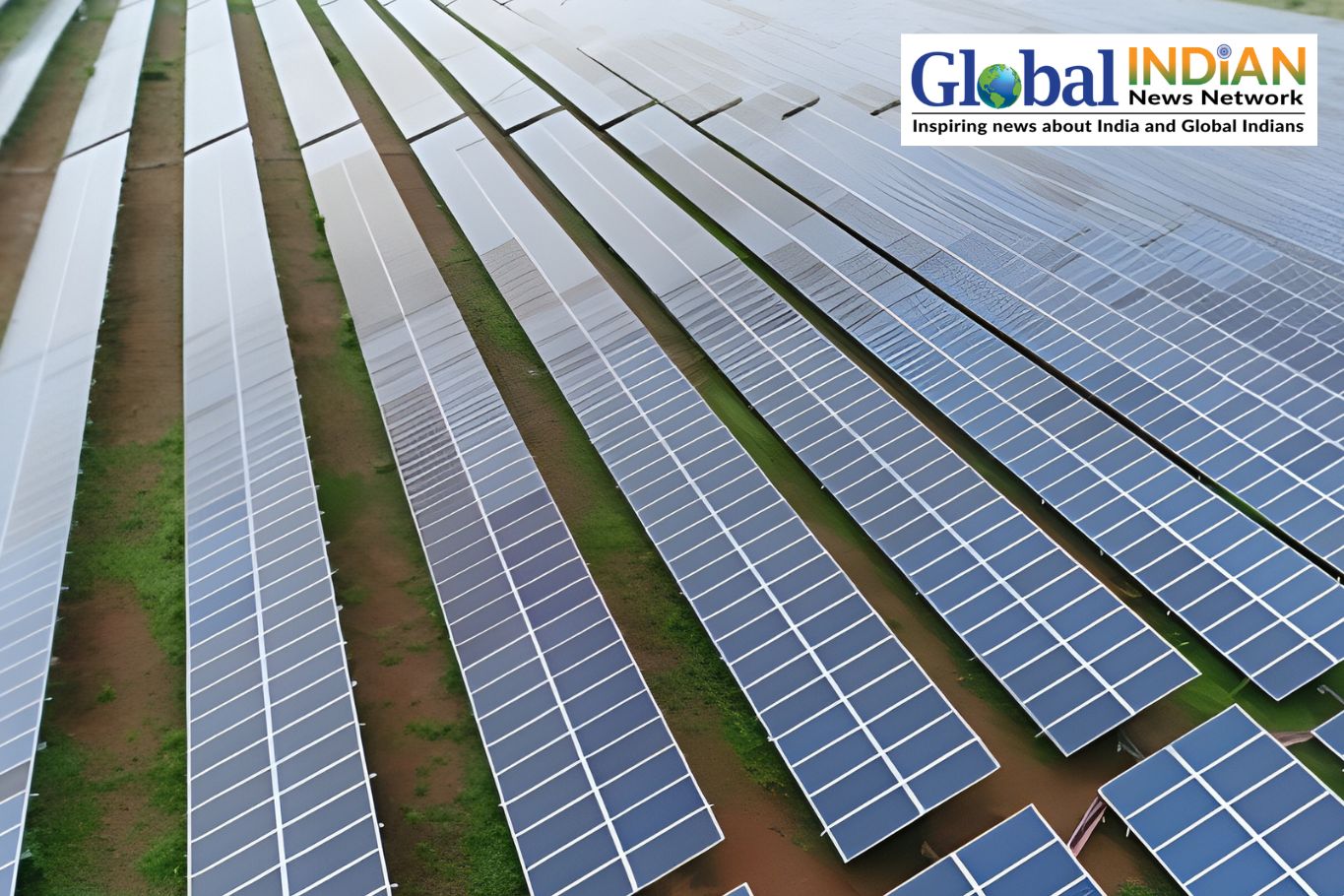
 India is rapidly positioning itself as a global hub for electro-technology manufacturing, driven by its push toward clean energy and industrial transformation, according to a report by the World Economic Forum.
The report highlights that India is charting a unique development path by industrialising on the back of affordable solar power and battery technologies, rather than relying heavily on fossil fuels like many developed economies did in the past.
This shift is helping the country move towards energy sovereignty while simultaneously creating new opportunities in global supply chains.
India’s energy transition is already showing strong momentum. As of 2025, solar energy accounts for around 9% of the country’s electricity generation. Additionally, coal consumption per capita remains significantly lower compared to countries like China at similar stages of development.
Electric mobility is also gaining traction. Electric vehicles now account for nearly 5% of car sales, while in the three-wheeler segment, India leads globally, with electric models making up close to 60% of the market.
Electricity consumption is rising steadily and now contributes nearly 20% of final energy use, placing India on par with major economies at comparable income levels.
The report further notes that technological advancements have made renewable energy more competitive. At a similar stage of development, coal was once significantly cheaper than solar for other economies. Today, in India’s case, solar combined with energy storage is estimated to cost nearly half as much as new coal-based power.
A strong policy push has also accelerated manufacturing growth. India’s electronics industry has expanded nearly six-fold over the past decade, reaching approximately $130 billion. This growth is critical, as electronics manufacturing forms the foundation for broader electro-tech capabilities.
Production capacity in solar modules has increased twelve-fold to around 120 GW, enabling self-sufficiency. Meanwhile, solar cell manufacturing has reached 18 GW, and battery as well as EV manufacturing capacities are expanding rapidly.
The report concludes that India is not only transforming its own energy landscape but is also positioning itself to become a key global supplier of electro-tech solutions, with other emerging economies closely observing its model.