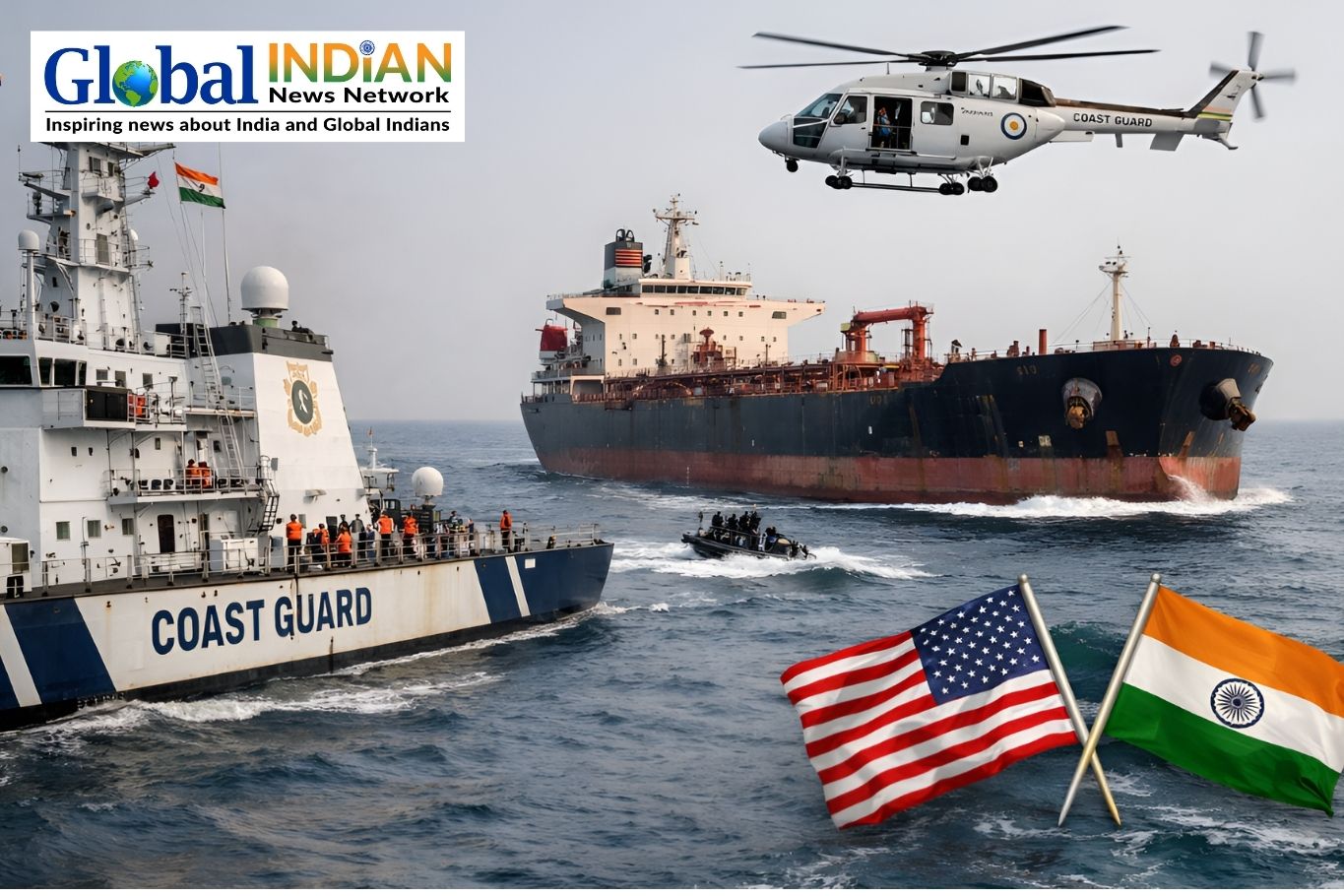
 In a decisive shift in maritime enforcement, India’s Coast Guard has seized three oil tankers sanctioned by the United States, alleging their involvement in illicit ship-to-ship transfers of restricted petroleum cargo. The move marks India’s first direct operational action aligning with U.S. sanctions enforcement, signaling a notable evolution in bilateral strategic cooperation.
The vessels — Al Jafzia, Asphalt Star, and Stellar Ruby — had been blacklisted by the U.S. Treasury for allegedly transporting Iranian oil under deceptive ownership structures and false flags. Such tactics are common within the so-called “shadow fleet,” a network of aging tankers that obscure cargo origins and routing to bypass international restrictions.
The timing of the operation is significant. It coincides with a broader recalibration in India–U.S. economic relations, including a new bilateral trade framework aimed at reducing tariff barriers and expanding market access. As part of this thaw, India has also signaled a gradual shift in its energy procurement patterns, addressing long-standing American concerns over purchases of discounted Russian crude.
Beyond symbolism, the seizure reflects a tightening global effort to disrupt sanctioned oil flows from countries such as Iran, Russia, and Venezuela. The shadow fleet has become central to sustaining these exports, operating through complex networks of shell companies and covert maritime transfers.
For India, the enforcement action underscores a willingness to balance strategic autonomy with deeper partnership responsibilities. While New Delhi continues to manage sensitive ties with multiple energy suppliers, it is increasingly demonstrating alignment with Western regulatory frameworks in areas tied to global finance and maritime security.
The episode highlights India’s evolving geopolitical posture — one that blends economic pragmatism with growing coordination among major powers. As global supply chains and energy markets remain volatile, India’s maritime enforcement decisions may increasingly shape its standing in the emerging strategic order.