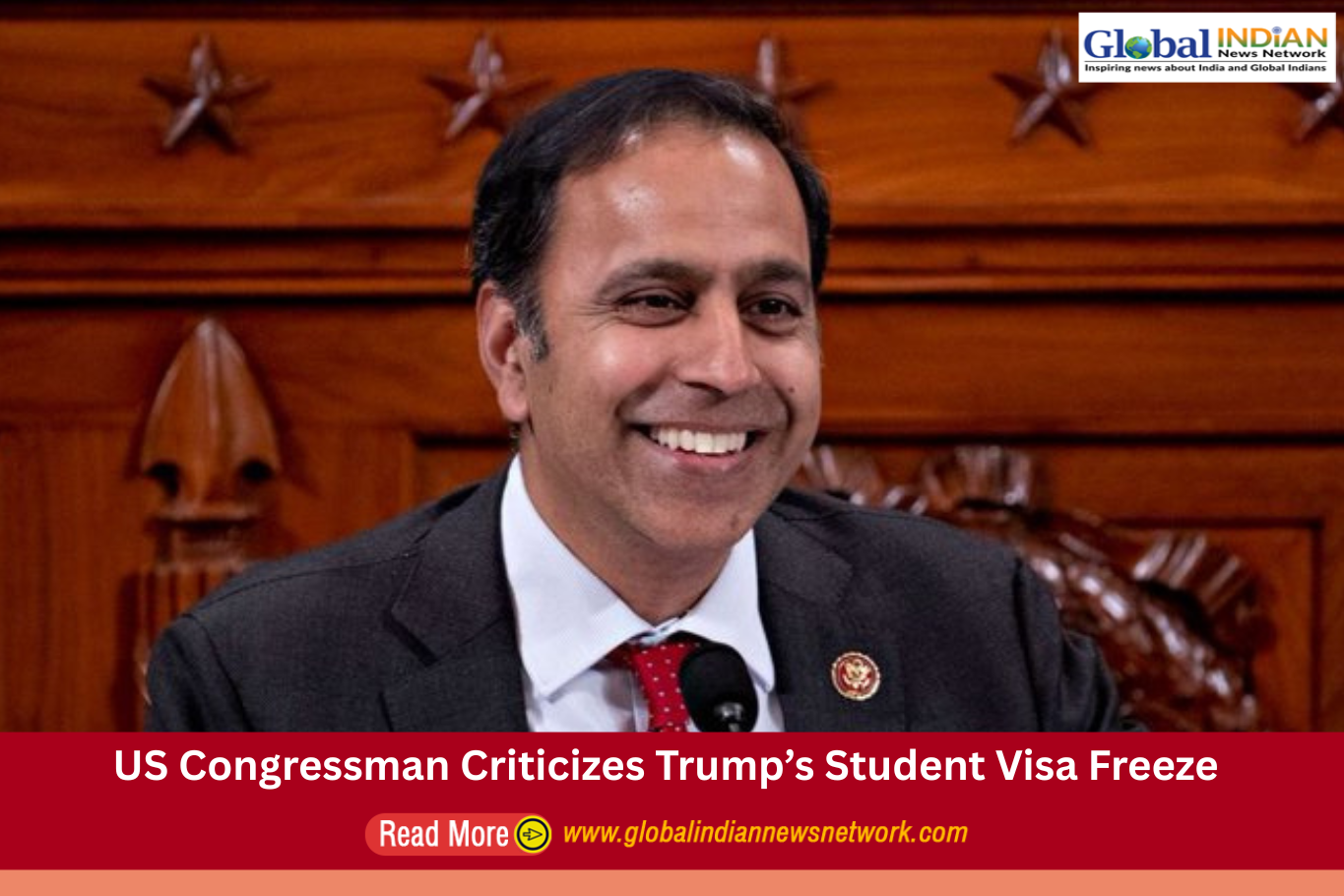
 US Congressman Raja Krishnamoorthi has strongly criticized the Trump administration’s decision to suspend student visa interviews amid plans to introduce extensive social media screening for applicants. He described the move as “reckless” and warned about its negative consequences for America’s economic future and security.
In a detailed statement, Krishnamoorthi stressed that international students play a crucial role in advancing research, enriching universities, and contributing to industries that will shape tomorrow’s economy. “These young scholars and innovators are not just students—they are fundamental to our economic strength and national security. By nurturing future technologies and creating well-paying jobs, they ensure the United States remains a global leader,” he noted.
Krishnamoorthi further called the exclusion of international students a “strategic error” that jeopardizes US competitiveness on the world stage. He highlighted that America’s appeal lies in its promise of freedom, educational opportunity, and diversity of ideas. Closing doors to international talent isn’t merely discriminatory; it risks ceding leadership to countries welcoming global innovators without hesitation.
Separately, US Secretary of State Marco Rubio instructed embassies and consulates to halt scheduling visa interviews for new student applicants. This directive comes as the administration considers sweeping social media vetting measures for visa candidates, according to reports from Politico.
Meanwhile, former President Donald Trump renewed his criticism of Harvard University, suggesting it should limit foreign student admissions to 15%, down from its current nearly 31%. Trump argued that many foreign students come from “radicalized” regions and expressed concern over security, stating the need to ensure that admitted students “love our country.” He cited fears about violence and disturbances, claiming that some foreign students were “troublemakers” influenced by the “radical left.”
This ongoing debate reflects broader tensions over immigration policies, national security, and the role of international students in the US education system and economy.