With the 2026 US midterm elections approaching, political candidates are increasingly reaching out to Indian-American voters through cultural engagements, temple visits and community celebrations. From preparing traditional dosas at Indian restaurants to participating in Diwali festivities, politicians are seeking to connect with a community whose participation could influence closely contested electoral races.
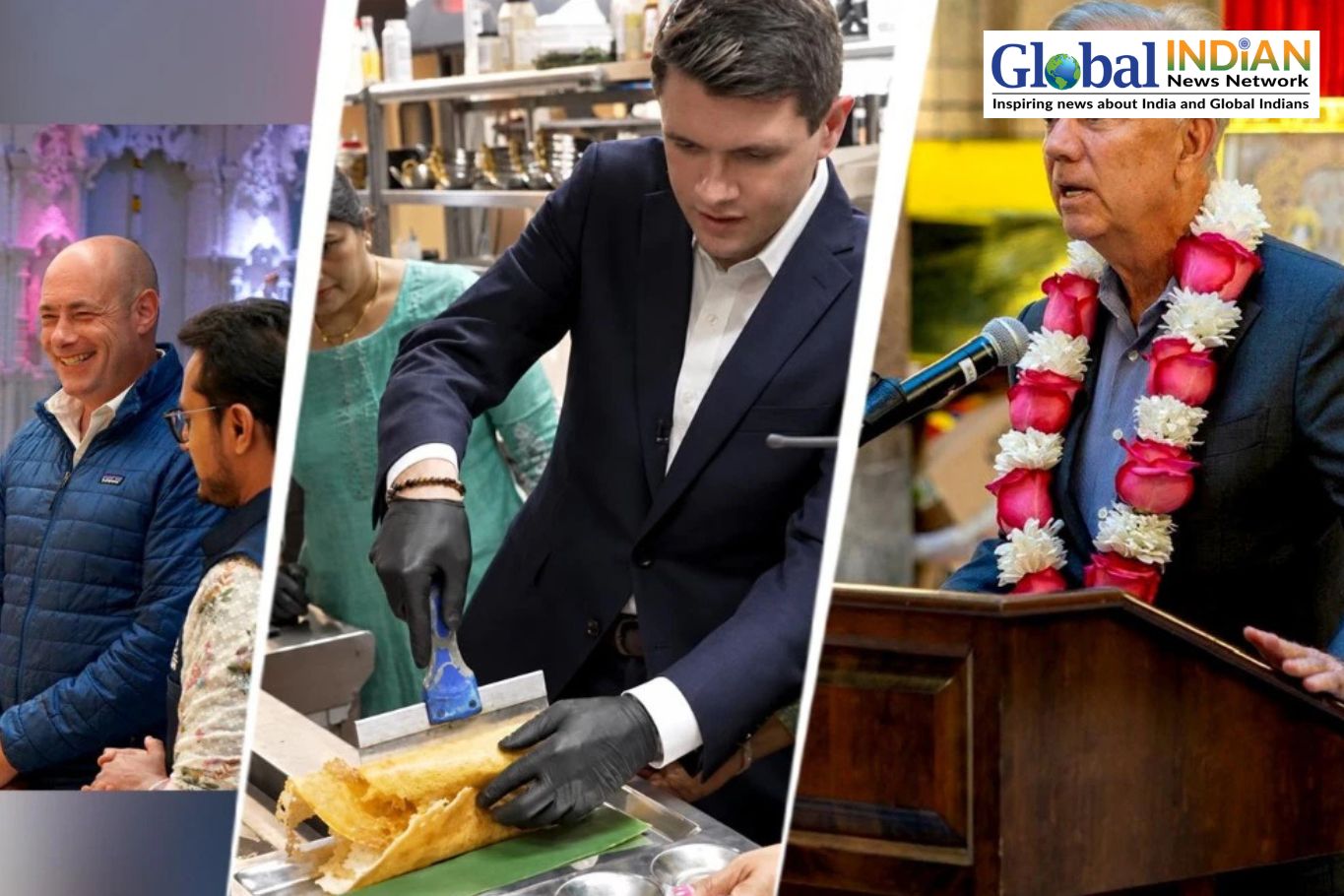
One of the recent examples came from Texas, where Democratic Senate candidate James Talarico tried his hand at making dosas at an Indian restaurant in Irving, a Dallas suburb with a sizeable Indian-American population.
Dressed in a black suit and white shirt, Talarico prepared the popular South Indian dish by spreading dosa batter across a hot pan and adding a spicy potato filling. He then folded the crispy dosa and served it on a banana leaf-lined plate, drawing applause from those present.
The gesture received a warm response from members of the Indian-American community in Texas, particularly amid concerns over racist remarks and attacks targeting people of Indian origin.
Talarico is contesting the US Senate seat against Republican nominee Ken Paxton in traditionally Republican Texas. His outreach has also attracted attention on social media, where supporters highlighted the contrast between his cultural engagement and controversial remarks about Indian Americans attributed to some Republican-aligned influencers.
Businessman James Blunt praised Talarico’s initiative in a post on X, describing his dosa-making appearance as a contrast to rhetoric that has targeted Indian Texans and their cultural identity.
Beyond Texas, Diwali celebrations and visits to Hindu temples have become an increasingly visible part of political outreach to Indian-American voters.
Connecticut Governor Ned Lamont, who is seeking another term, attended Diwali celebrations at the State Capitol alongside Deputy Secretary of State Jennifer Barahona. The event provided an opportunity to recognise the cultural contributions of the Indian-American community.
In Ohio, Congressman Greg Landsman participated in the 11th Patotsav celebrations at the BAPS Swaminarayan Temple in Sharonville, commemorating the anniversary of the temple’s consecration.
US Senator Cory Booker of New Jersey also attended Diwali celebrations at the Akshardham temple. Meanwhile, Congressmen Randy Fine and Scott Perry visited a Hindu temple in Harrisburg, Pennsylvania, as part of their engagement with the community.
In Michigan, Congressman John James visited a Swaminarayan temple to understand its religious traditions and learn about the spirit of service associated with the Hindu-American community.
These engagements reflect the growing political visibility of Indian Americans in the United States. The community has a significant presence in states such as California, Texas, New Jersey, New York, Washington, Illinois, Pennsylvania and Georgia.
Its electoral relevance is particularly notable in competitive states, including Georgia, Pennsylvania, Michigan and North Carolina. In closely contested elections, relatively small differences in voter participation can influence the final outcome, making outreach to diverse communities an important feature of campaign strategies.
For Indian-American voters, these interactions also provide opportunities to highlight issues concerning cultural recognition, racial discrimination, religious freedom, economic opportunities and political representation.
As candidates increasingly participate in community celebrations and cultural activities, the Indian-American diaspora is becoming a more visible part of the American electoral landscape. The 2026 midterm elections will provide another opportunity to observe how community engagement translates into political participation across the country.