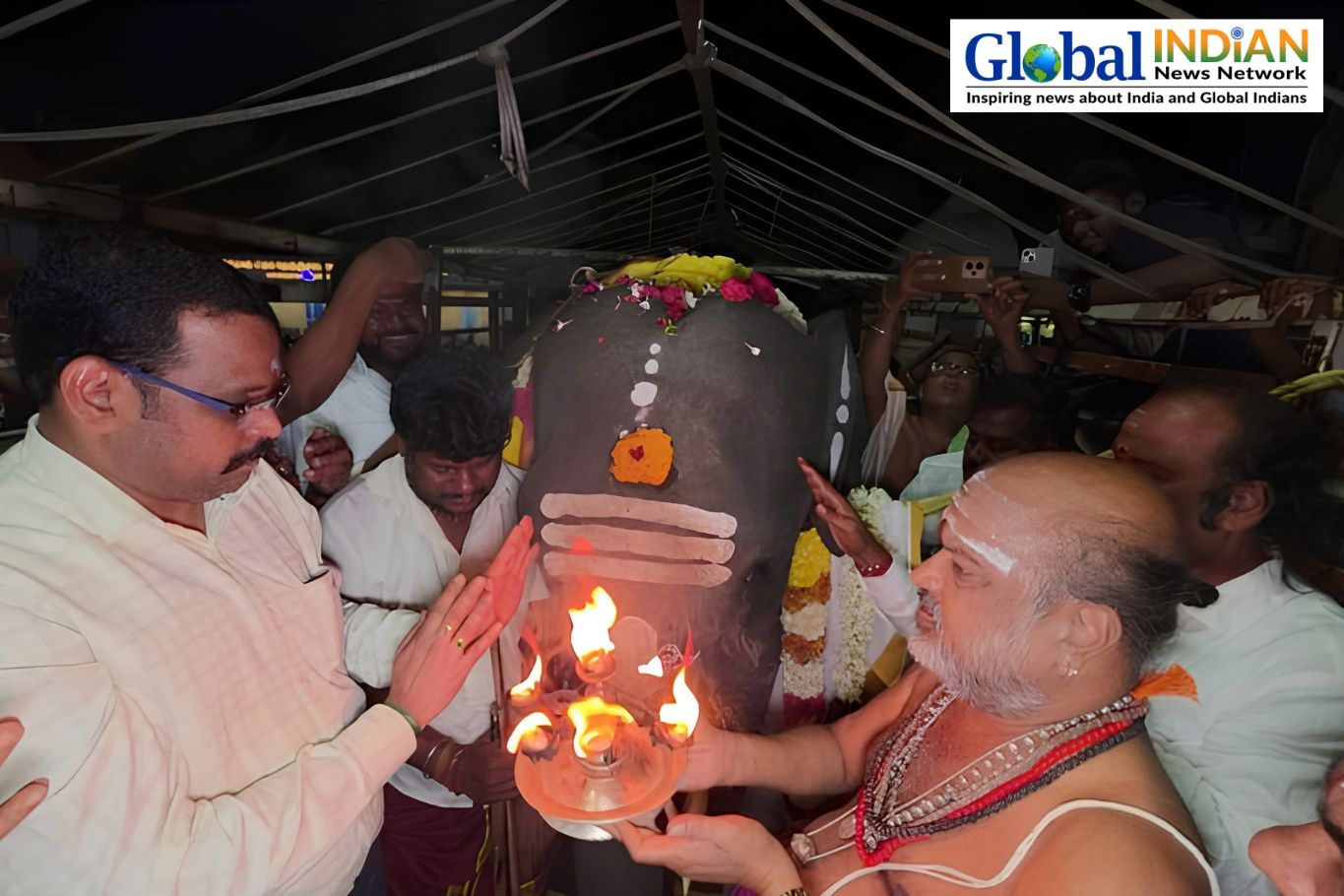
The historic Arunachaleswarar Temple in Tiruvannamalai, Tamil Nadu, has welcomed an eight-year-old elephant named Hiralal from Assam, marking the arrival of a new temple elephant after a gap of nearly a decade.
According to officials from the Hindu Religious and Charitable Endowments (HR&CE) Department, Hiralal reached the temple premises at approximately 9:30 p.m. on Thursday. The arrival follows the death of Rukmani, a 30-year-old female elephant, in March 2018. Rukmani had been brought to the temple from the Mudumalai Reserve Forest in 1995, when she was seven years old.
Temple authorities have arranged dedicated facilities and veterinary support to care for the newly arrived elephant. S. Bharanidaran, the HR&CE Department’s joint commissioner in Tiruvannamalai, said a veterinary team would be available to monitor the animal’s health and well-being. Hiralal will stay within the temple complex, with mahouts from Assam working alongside local handlers to assist with its daily care.
Hiralal’s arrival is part of a broader arrangement under which the Assam government has agreed to provide five elephants to temples across Tamil Nadu.
Following this agreement, the Arunachaleswarar Temple is also expected to receive another elephant named Shiva, who is six years old. The temples in Nagapattinam and Kancheepuram are scheduled to receive elephants named Rupsing and Bijuli, respectively. Meanwhile, the Meenakshi Amman Temple in Madurai has recently received Durga, a five-year-old female elephant.
To support Hiralal’s daily needs, the HR&CE Department has begun work on specialized facilities within the temple grounds. Plans include a swimming pool equipped with showers and a designated area where the elephant can take mud baths.
The proposed pool will cover approximately 1,600 square feet and have a minimum depth of five feet. Ramps will be installed to help the elephant enter and exit the water safely.
Devotees will be permitted to see Hiralal, but temple officials have emphasized that protective arrangements will be established around its resting area to safeguard both visitors and the animal.
The temple’s preparations reflect the logistical requirements involved in accommodating a large animal within a busy religious complex, with veterinary supervision, suitable bathing facilities and trained handlers forming key elements of its care arrangements.