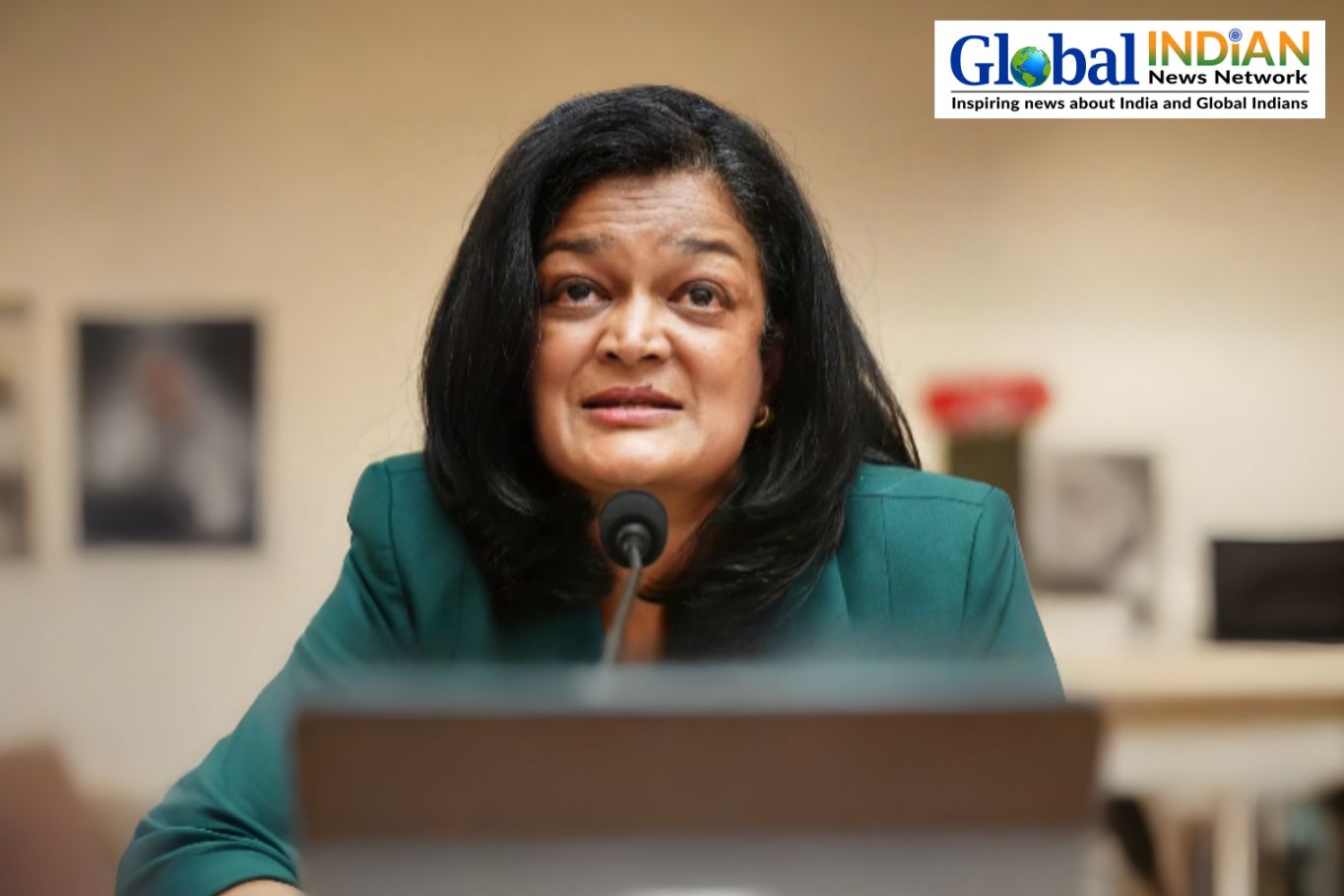
Indian-American Congresswoman Pramila Jayapal and several Democratic lawmakers have reintroduced legislation that would place a moratorium on the federal government’s use of facial recognition and other biometric surveillance technologies. The proposed Facial Recognition and Biometric Technology Moratorium Act would restrict federal agencies from deploying systems that identify individuals through characteristics such as facial features, voices, gait and other permanent physical traits.
The legislation has been introduced in both chambers of Congress. Massachusetts Democratic Sen. Edward Markey and Oregon Democratic Sen. Jeff Merkley introduced the Senate version, while Jayapal, a Washington Democrat, joined Reps. Rashida Tlaib of Michigan and Ayanna Pressley of Massachusetts in sponsoring the House version.
Under the proposed legislation, federal agencies would be prohibited from using biometric surveillance systems unless Congress later passes legislation removing the restriction. The measure would also prevent federal funds from being used to purchase or operate covered technologies.
The lawmakers said their proposal comes amid increased government use of biometric tools. They specifically pointed to facial-recognition technology used by agencies including Immigration and Customs Enforcement and Customs and Border Protection. According to the lawmakers, these technologies raise concerns about privacy, civil rights and potential misuse involving immigrants, protesters and other communities.
Jayapal said the legislation is intended to address what she described as widespread, nonconsensual government surveillance. She also cited concerns about potential disparities in facial-recognition systems, arguing that errors could disproportionately affect Black, Brown and Asian people.
The lawmakers referenced research indicating that facial images of nearly half of US adults are already contained in facial-recognition databases. They also cited studies reporting racial disparities in identification accuracy, including research suggesting that some demographic groups can face substantially higher rates of misidentification.
Markey argued that government agencies should face restrictions on using biometric technologies to monitor communities. Merkley similarly framed the proposal around privacy, discrimination and constitutional protections, while Tlaib raised concerns about people being incorrectly identified as criminal suspects.
The proposed legislation includes several enforcement provisions. Biometric information obtained in violation of the law could be excluded from judicial proceedings. Individuals whose biometric data was allegedly collected or used unlawfully would have the ability to bring civil actions, while state attorneys general would also receive enforcement authority.
The bill would additionally encourage states and local governments to establish their own restrictions by conditioning certain federal grants on the adoption of similar moratoriums.
The proposal has received support from civil liberties and digital-rights organizations, including the American Civil Liberties Union, Electronic Frontier Foundation, Electronic Privacy Information Center, Access Now and the Leadership Conference on Civil and Human Rights. Additional Democratic lawmakers, including Sens. Ron Wyden and Elizabeth Warren, are also listed as supporters.