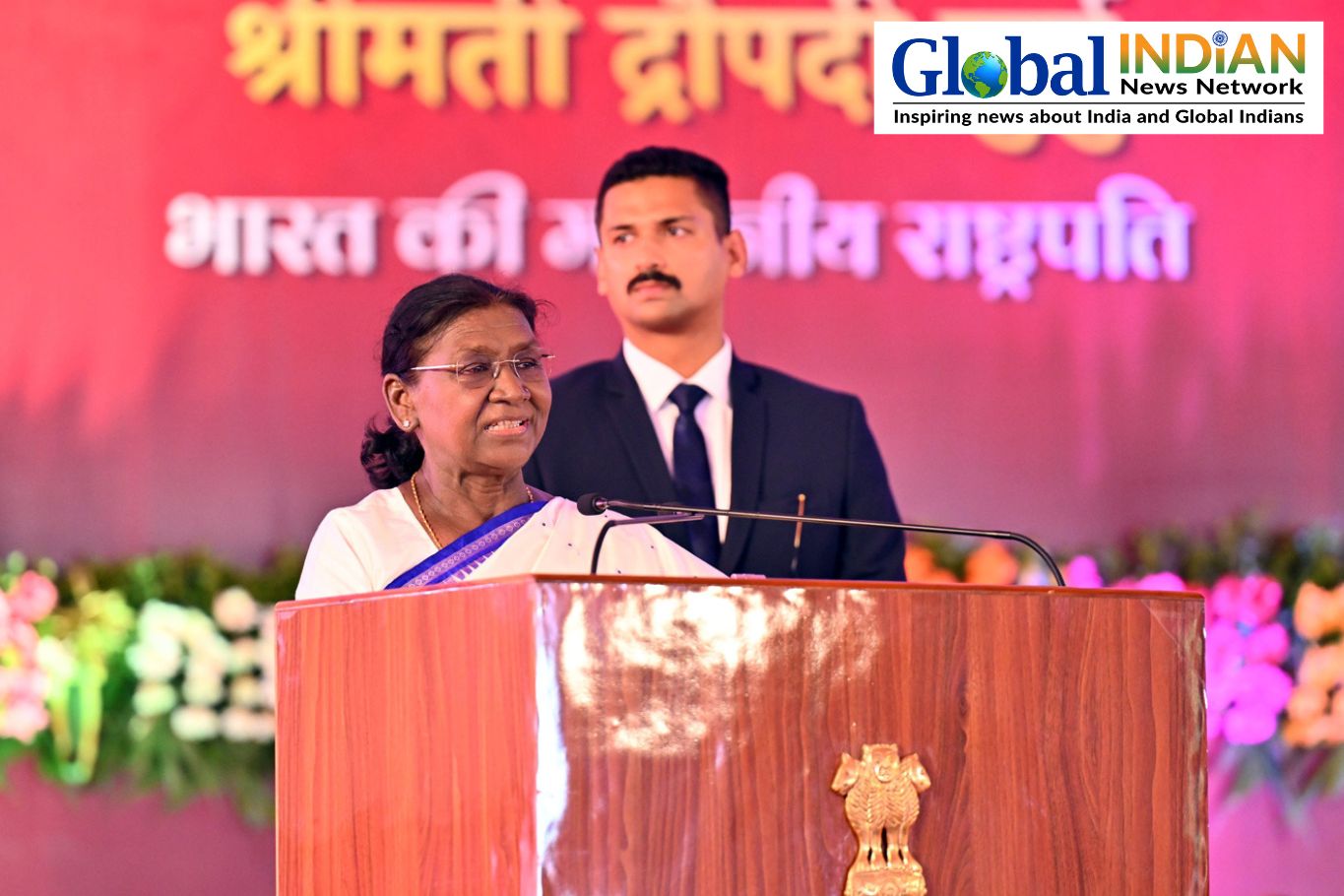
 President Droupadi Murmu has underscored the importance of maintaining a balance between modern development and traditional values, stating that such harmony is essential for building a strong, prosperous, and inclusive society. She made these remarks while addressing a programme titled “Empowerment of Tribal Society by Spiritual Awakening,” organized by the Prajapita Brahma Kumaris Ishwariya Vishwa Vidyalaya in Betul, Madhya Pradesh.
During her address, the President highlighted the growing relevance of spirituality in an increasingly fast-paced and consumer-driven world. She observed that modern society is facing rising levels of stress, social fragmentation, and conflict, making spiritual awareness and inner purity more important than ever. According to her, spirituality serves as a guiding force that promotes equality, sustainable living, and responsible use of natural resources.
President Murmu emphasized that tribal communities in India naturally embody many of these spiritual and ecological values. She noted that their lifestyle is deeply connected to nature, fostering a sense of balance, sustainability, and collective well-being. This close relationship with the environment, she said, reflects an inherent understanding of environmental responsibility that is increasingly vital in addressing global challenges such as climate change and resource depletion.
The President also appreciated the efforts of the Brahma Kumaris organization, noting their long-standing work in engaging with tribal communities across various regions of the country. She said such initiatives play a meaningful role in enhancing both social and spiritual development at the grassroots level.
Highlighting a broader vision of empowerment, President Murmu stated that true progress cannot be measured only through economic indicators. Instead, real empowerment is achieved when individuals develop self-confidence, dignity, and awareness of their responsibilities toward society. She stressed that spiritual awakening helps individuals discover inner strength, cultivate positive thinking, and align their lives with higher moral purpose.
She further noted that development becomes truly meaningful only when it remains connected to cultural heritage and core civilizational values. Modern advancement, she said, should not replace tradition but should instead draw strength from it, ensuring that growth remains balanced, inclusive, and socially grounded.
Calling for collective national effort, the President urged citizens to contribute toward the vision of a developed India by 2047. She emphasized that this goal can only be achieved through a combination of economic progress, moral responsibility, environmental awareness, and social unity.
President Murmu concluded that India’s path to development must be holistic in nature, ensuring that progress benefits all sections of society while preserving the country’s cultural identity and strengthening its social fabric.