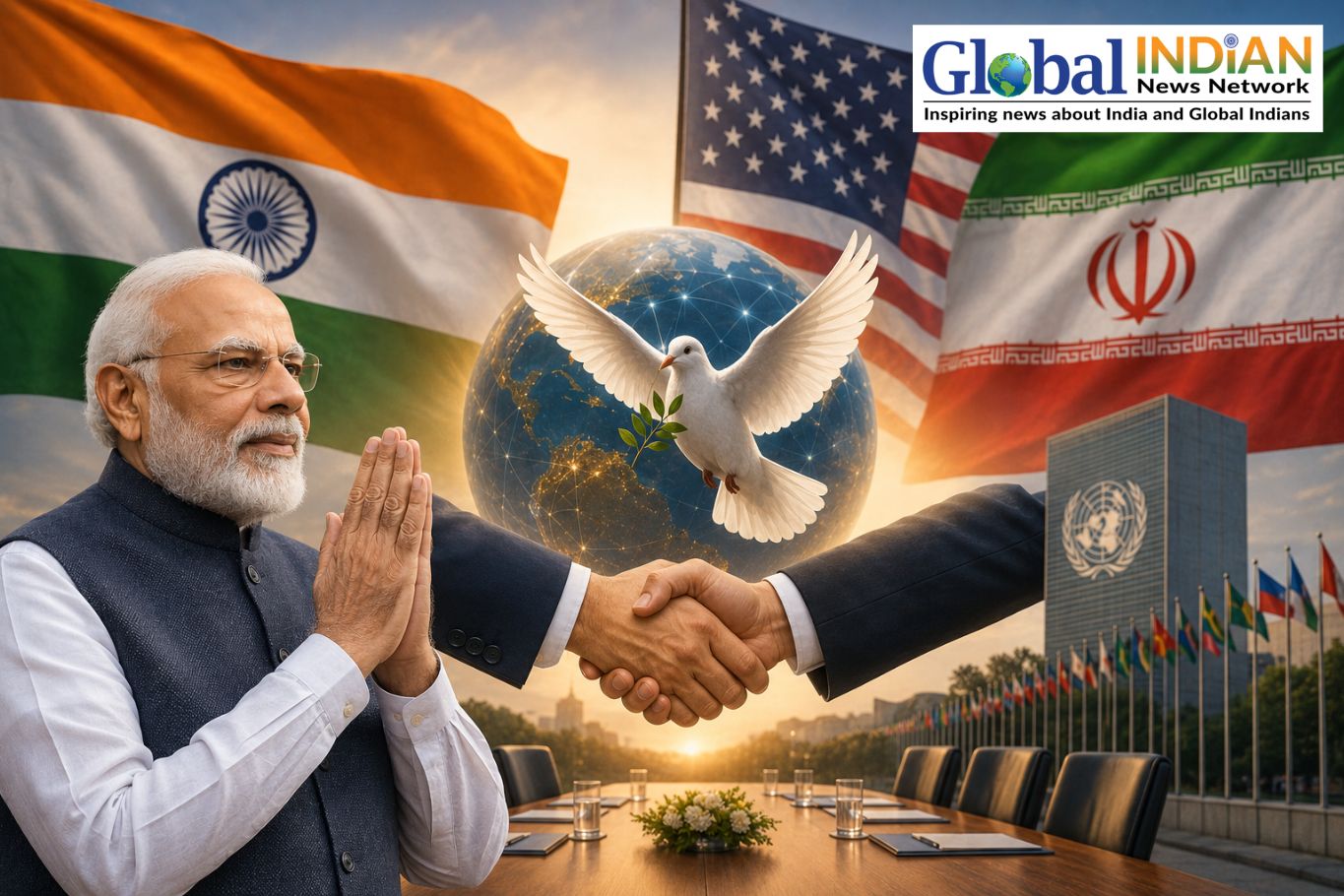
 Prime Minister Narendra Modi on Monday welcomed the reported understanding reached between the United States and Iran to bring an end to hostilities in West Asia, emphasizing that the development could pave the way for regional stability and safeguard crucial international trade corridors.
Sharing his views on X, Modi highlighted the far-reaching consequences of the conflict, noting that the prolonged tensions had triggered significant economic disturbances worldwide while also resulting in the loss of lives across multiple nations. He expressed optimism that diplomatic efforts between Washington and Tehran would help reduce uncertainty in an already fragile region.
The Prime Minister stated that India viewed the reported breakthrough as a positive step toward restoring peace and normalcy. He underscored the importance of ensuring uninterrupted maritime movement, particularly through strategically important waterways that serve as lifelines for international commerce and energy transportation.
According to Modi, the successful implementation of the understanding could strengthen regional security while preserving the freedom of navigation that many economies rely upon. He also voiced hope that discussions on unresolved matters between the two countries would continue constructively and eventually lead to a durable and comprehensive agreement.
The remarks came amid reports suggesting that the United States and Iran had agreed on a draft framework designed to de-escalate tensions and revive diplomatic engagement. The proposed arrangement is believed to include measures aimed at reopening the Strait of Hormuz and restarting negotiations concerning Iran’s nuclear program.
Reports further indicated that the framework could provide temporary sanctions relief to Tehran, facilitate access to previously frozen Iranian assets, and establish a 60-day period for both sides to address outstanding issues. Iranian media outlets have described the initiative as part of a broader 14-point proposal, although complete details of the framework have yet to be officially disclosed.
The development carries particular significance for India, which depends heavily on energy imports transported through the Strait of Hormuz. The narrow passage is one of the world’s most critical shipping routes and handles a substantial portion of global oil supplies.
Recent instability in the region had heightened fears of disruptions to maritime trade, rising energy costs, and a broader geopolitical escalation. Any move toward easing tensions is therefore likely to be welcomed by nations whose economies are closely tied to stable energy markets and secure international shipping lanes.