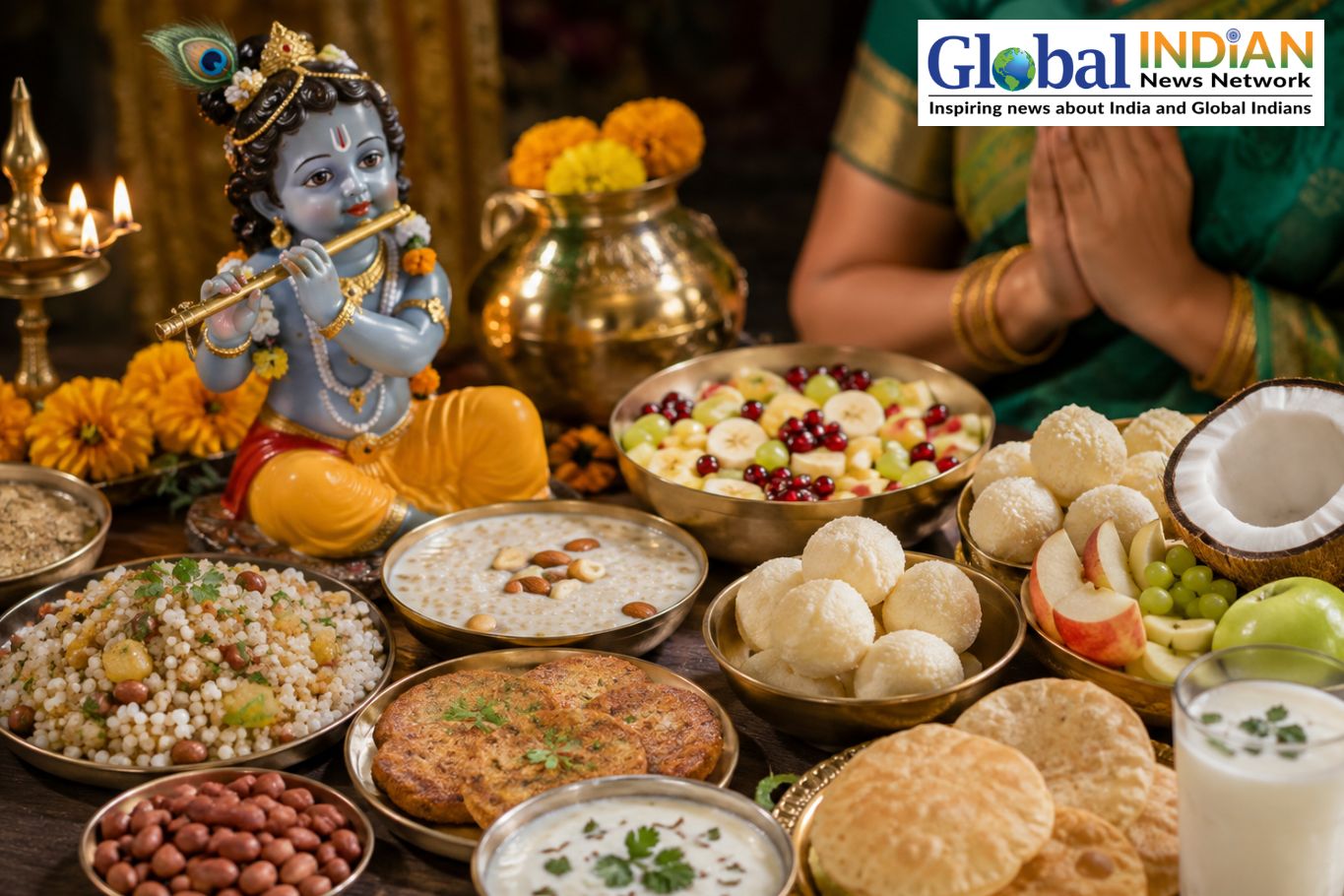
Janmashtami, the festival celebrating the birth of Lord Krishna, will be observed according to different traditions in 2026. Ashtami, the eighth lunar day associated with Krishna’s birth, begins at 2:25 AM on September 4 and ends at 12:13 AM on September 5. Because the lunar period crosses two calendar dates, Smarta devotees generally observe the fast on September 4, while many Vaishnava communities and ISKCON followers observe Janmashtami on September 5.
For devotees observing a fast, the day generally begins with a light meal before sunrise. Those who are not following a strict waterless fast can choose simple foods such as fruit, milk or roasted makhana. Heavy meals are best avoided because the purpose is to keep food intake modest and uncomplicated throughout the day.
Vrat-friendly foods typically include buckwheat flour, water chestnut flour, amaranth, sabudana and barnyard millet. Potatoes, sweet potatoes, raw bananas, makhana, fruits, dairy products and nuts are also commonly included. Regular wheat, rice, pulses and lentils are generally avoided. Onion and garlic are also excluded according to traditional fasting practices.
Another important difference is the type of salt used. Sendha namak, or rock salt, is traditionally preferred instead of ordinary table salt during vrat. Since rock salt may not provide iodine, it is better viewed as a temporary festival-specific choice rather than a replacement for iodized salt in everyday cooking.
Fasting practices vary from person to person. Nirjala fasting involves avoiding both food and water, while phalahari fasting permits fruits and selected vrat foods. Some devotees instead have one restricted meal after sunset. People with demanding work schedules may find a moderate phalahari approach easier to maintain than a completely waterless fast.
The most significant ritual period is Nishita Kaal, the midnight period associated with Krishna’s birth. In Delhi, it is expected to fall approximately between 11:55 PM and 12:42 AM on the night of September 4-5. During this period, devotees perform the main worship, offer bhog and celebrate Krishna’s arrival. Makhan and mishri are traditionally offered, followed by items such as dhaniya panjiri, fruits and sweets.
The timing for parana, or formally ending the fast, differs between regional panchangs. Some traditions permit devotees to eat after the midnight worship, while others continue the fast until sunrise.
Devotees should also avoid turning vrat food into an excessively rich meal. Deep-fried sabudana dishes, fried potatoes and sugary desserts can make an otherwise simple fast surprisingly heavy. Roasted or lightly cooked alternatives can provide a more balanced option.
A strict nirjala fast is not suitable for everyone. Pregnant women, people with diabetes, individuals taking regular medication and those who frequently experience acidity or related problems should seek medical guidance before attempting a waterless fast. A modified fast can still allow devotees to participate meaningfully in Janmashtami while taking their individual health needs into account.