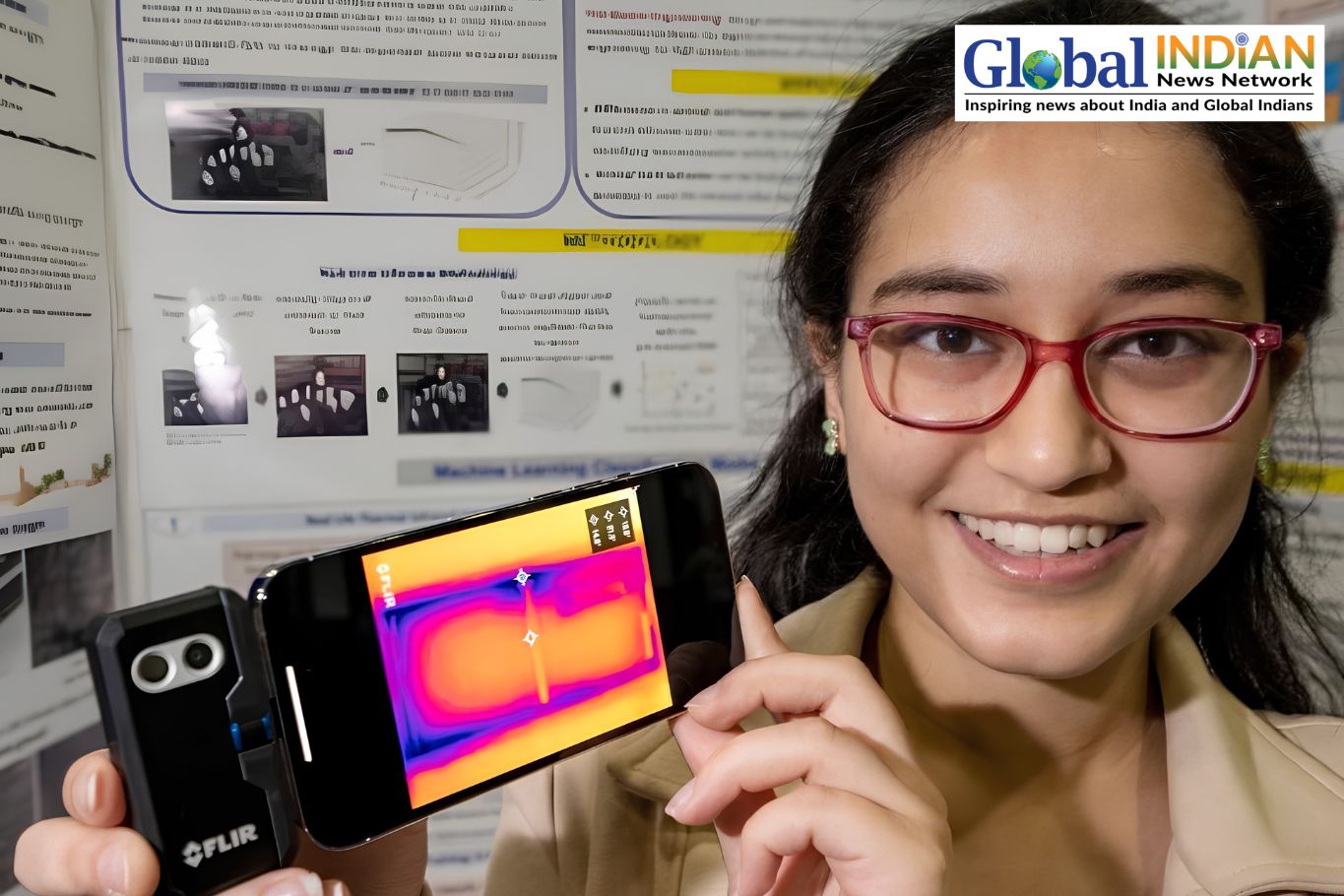
Indian-American student Anika Puri has demonstrated how artificial intelligence can support wildlife conservation through an innovative system designed to help identify potential poachers after dark. Her project, called ElSa, short for Elephant-Savior, analyzes thermal infrared footage captured by drones to distinguish human movement from animal activity. The innovation earned Puri a $25,000 scholarship as a 2022 Davidson Fellow, recognizing her engineering research and its potential contribution to protecting endangered wildlife.
According to reports from the Society for Science and the Davidson Institute, Puri, who comes from Chappaqua, New York, developed an interest in technology through hands-on experimentation, robotics, and drone aviation. Her early experiences included showcasing a Lego Mindstorms robot at Maker Faire and eventually obtaining a commercial drone pilot license. Over time, her curiosity about engineering evolved into a desire to address environmental challenges.
Visits to India helped shape that ambition. While exploring markets in Mumbai, Puri noticed ivory jewelry and decorative objects, prompting her to investigate illegal wildlife trade and the challenges involved in protecting endangered species. She subsequently examined how drone technology could improve surveillance in wildlife reserves.
Thermal-imaging drones allow rangers to monitor large protected areas at night, but interpreting their recordings can be difficult. Flying at approximately 400 feet, drones may capture humans and animals as small, indistinct shapes. Traditional detection methods often focus on individual images rather than movement across time, while manually reviewing extensive recordings can exhaust wildlife protection teams.
Puri addressed this limitation by developing an artificial intelligence system that evaluates movement patterns across successive video frames. ElSa examines characteristics such as speed, turning radius, and group behavior to help distinguish humans from animals. This approach provides additional information beyond an object’s appearance in a single image.
Testing on the BIRDSAI thermal infrared video dataset, compiled from four African national parks, produced a reported human-detection accuracy of 90.9%. According to the research cited in the original report, this represented approximately four times the performance of comparison methods under the studied conditions.
Affordability is another important feature of the project. While high-resolution thermal cameras can cost around $4,800, Puri’s prototype was developed using commercially available components for approximately $300. This lower development cost suggests a possible pathway toward making automated monitoring tools more accessible to conservation programs with limited budgets.
Although detecting a person does not establish that they are engaged in poaching, ElSa could help rangers identify footage requiring further investigation. Puri’s work illustrates how accessible engineering and AI research can contribute to biodiversity protection, potentially helping conservation teams monitor vulnerable wildlife more efficiently.