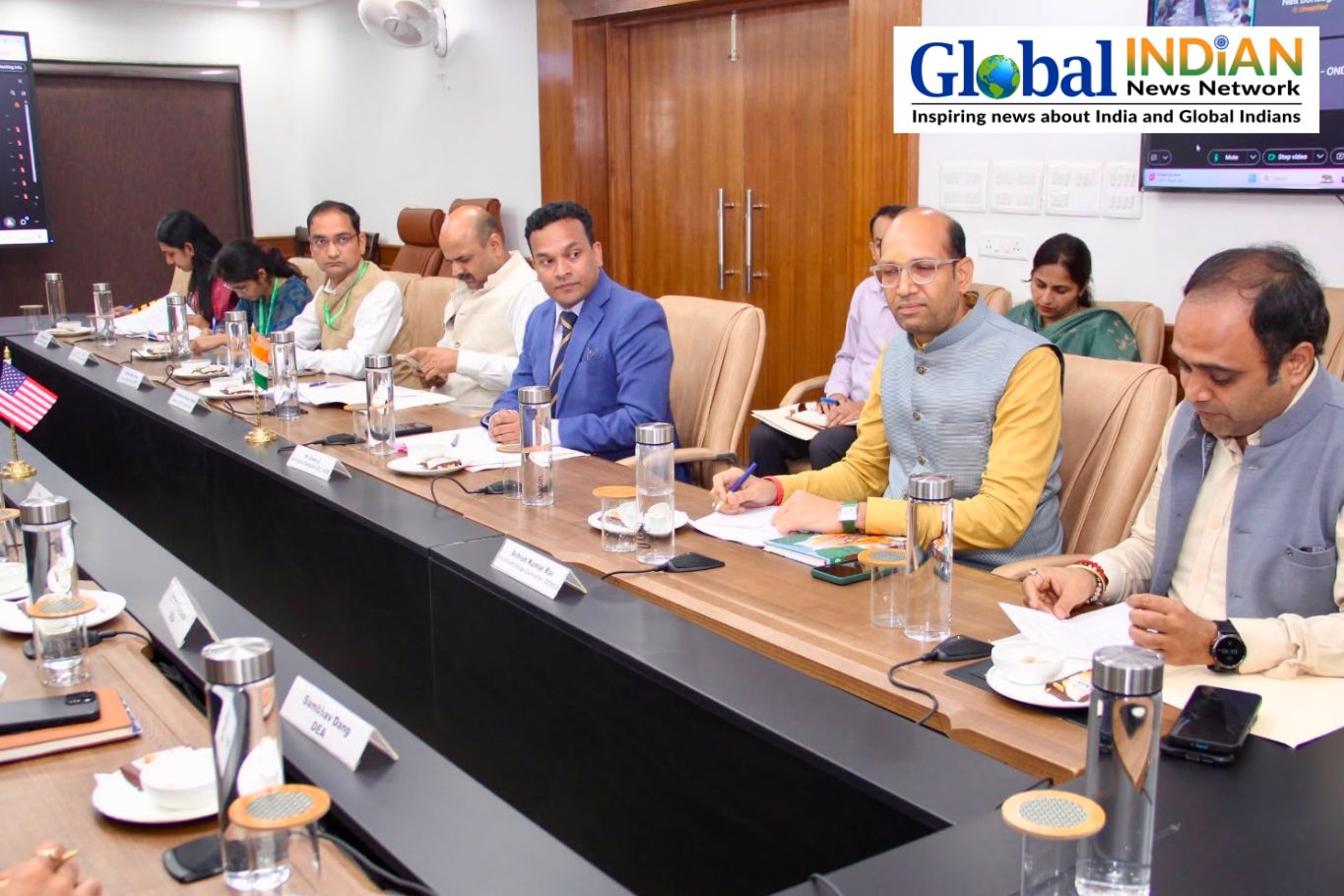
India and the United States have taken another step toward strengthening their partnership in combating illegal drug activities and preventing the misuse of chemical substances. The Narcotics Control Bureau (NCB) hosted the India-US Counter Narcotics Working Group (CNWG) Pillar I Working Group Meeting on August 6, 2026, in a hybrid format to improve cooperation between both countries in tackling narcotics trafficking and the unlawful diversion of precursor chemicals.
The meeting brought together senior officials from multiple Indian and American agencies involved in drug control and enforcement. Representatives from India included officials from the NCB, Central Bureau of Narcotics (CBN), Directorate of Revenue Intelligence (DRI), Central Drugs Standard Control Organisation (CDSCO), Ministry of External Affairs, Department of Revenue, and Department of Chemicals and Petrochemicals. The US delegation featured members from the Drug Enforcement Administration (DEA), the Office of National Drug Control Policy (ONDCP), LEGAT, and the US Department of State.
During the discussions, both sides focused on improving operational coordination, strengthening regulatory frameworks, preventing the illegal movement of precursor chemicals, and enhancing institutional capabilities. India highlighted its existing systems for monitoring precursor substances and shared updates on ongoing measures designed to improve enforcement and oversight.
The latest discussions build on previous engagements held during the 69th Session of the United Nations Commission on Narcotic Drugs in Vienna in March 2026. At that meeting, officials from both nations explored ways to exchange actionable intelligence and develop faster information-sharing mechanisms. These efforts are aimed at supporting joint investigations and disrupting international drug networks operating across borders.
India has continued expanding its global partnerships in narcotics control. The government recently informed Parliament that the NCB has established bilateral agreements with 27 countries and signed Memoranda of Understanding (MoUs) with 19 nations to strengthen international cooperation against drug-related crimes.
India also conducts regular high-level discussions on narcotics issues with several countries, including Myanmar, Nepal, Thailand, Sri Lanka, Indonesia, Singapore, and the United States. These dialogues help improve coordination among law enforcement agencies and address evolving challenges linked to drug trafficking.
As part of its long-term strategy, the government introduced the Vision Document on Narcotics Control (2026-2029), which outlines a three-year roadmap with specific targets and priorities. The initiative follows a “Whole-of-Government” and “Whole-of-Society” approach to reduce drug abuse and strengthen prevention efforts.
The NCB has also established a four-level Narco-Coordination Center (NCORD) framework to improve collaboration between central and state agencies. The mechanism aims to create stronger coordination among stakeholders involved in preventing drug trafficking and protecting communities from narcotics-related threats.