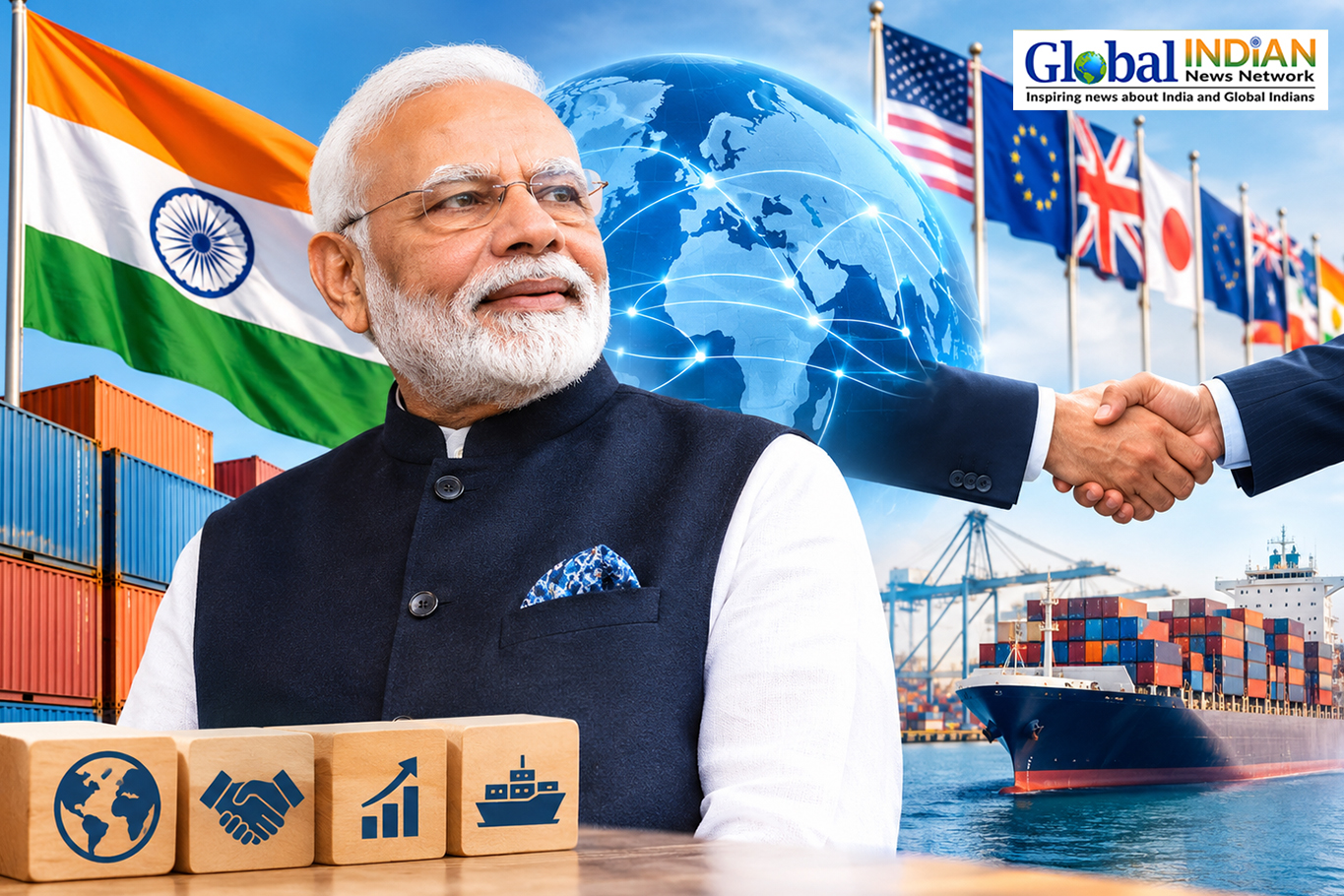
 India is stepping up efforts to expand its network of free trade agreements, with Commerce and Industry Minister Piyush Goyal saying negotiations are underway with 8-9 additional groups of countries and individual nations. The combined economies involved represent roughly $15 trillion in GDP, underscoring New Delhi’s push to widen access to major international markets.
Speaking in Tokyo while leading a business delegation of more than 200 representatives, Goyal said India’s expanding trade agreement network is designed to strengthen the country’s role in global commerce. The long-term objective is to establish trade agreements covering about 75% of global trade, giving Indian companies greater access to overseas markets and helping the country become more deeply connected to international supply chains.
Over the past four years, India has concluded nine FTAs covering economies with a combined GDP of approximately $60 trillion. These agreements include access to markets across 38 developed countries, providing Indian businesses with additional opportunities to increase exports and develop international partnerships.
India’s earlier agreements with major economies such as Japan and South Korea, as well as the Association of Southeast Asian Nations, have already created preferential market access to economies representing another $10 trillion in GDP. When combined with newer agreements and ongoing negotiations, the government expects the overall trade framework to become significantly broader.
Existing Indian FTAs currently provide preferential access to markets representing approximately $70 trillion in GDP. The countries and trading groups involved in current negotiations could add another $15 trillion, further expanding the potential reach of Indian exporters and businesses.
Goyal’s visit to Japan also reflects the government’s broader focus on strengthening bilateral economic ties. Discussions with Japanese businesses and investors are aimed at encouraging greater investment in India and creating new opportunities across sectors such as manufacturing, data centers and artificial intelligence.
The minister has also emphasized the importance of developing more balanced trade relations between India and Japan as economic engagement between the two countries grows. Greater cooperation could help expand investment flows while opening additional avenues for Indian businesses.
The government’s wider FTA strategy is intended to improve market access, boost exports, attract international investment and help Indian companies participate more effectively in global value chains. By expanding its trade partnerships, India is seeking to reinforce its position as a competitive manufacturing and investment destination while creating stronger foundations for sustained export-led growth.