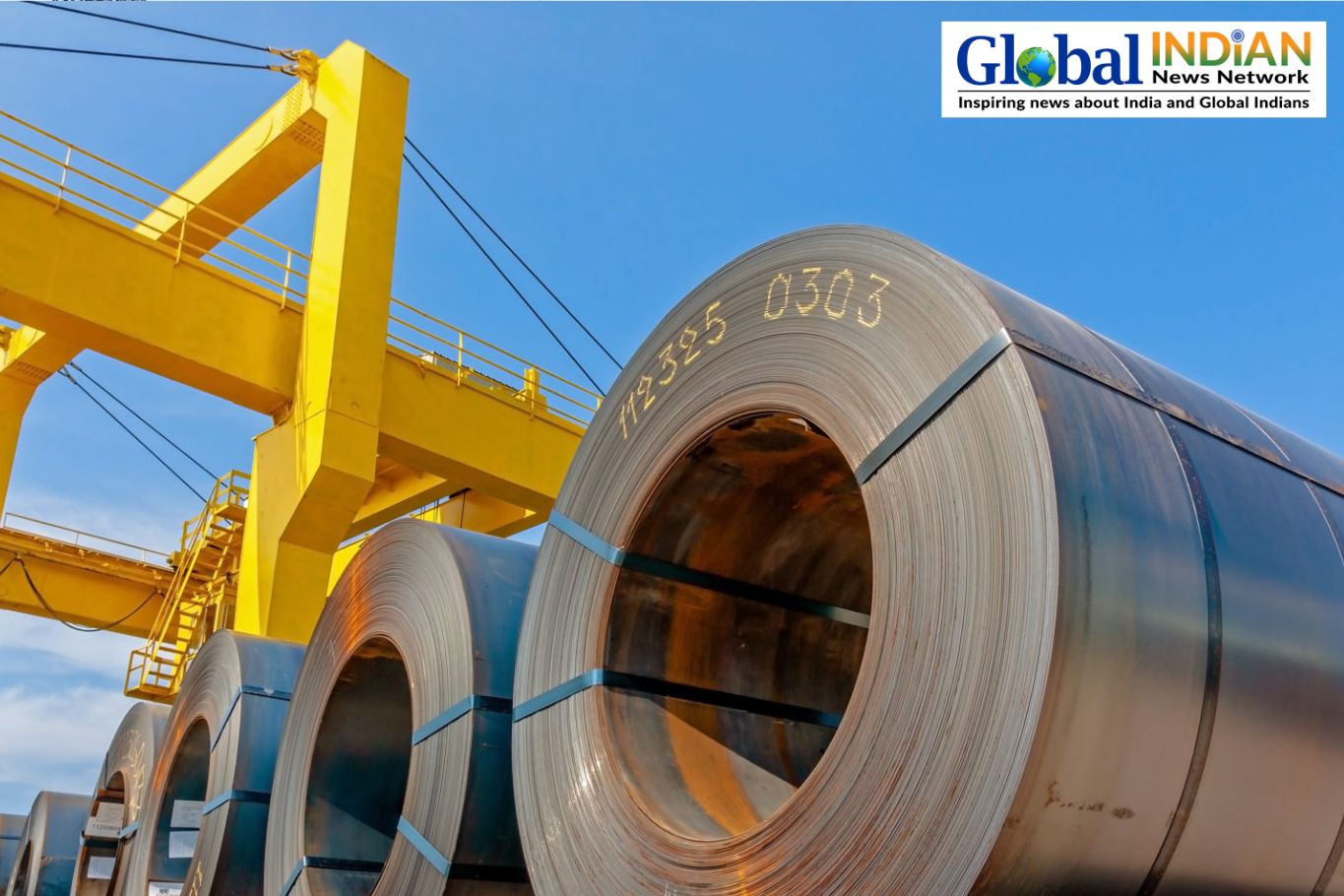
India plans to expand its steelmaking capacity to 600 million metric tonnes by 2047 under a new policy framework designed to guide the sector’s development over the next two decades.
The proposed policy also outlines measures to reduce emissions, strengthen access to key raw materials and support the steel industry’s long-term growth as domestic demand increases.
India’s steelmaking capacity stood at about 220 million tonnes in fiscal 2026. The proposed target would therefore require capacity to increase by roughly 380 million tonnes over the next two decades.
The policy aims to reduce the steel industry’s average carbon emission intensity to around 1.54 tonnes of carbon dioxide per tonne of crude steel by 2047, compared with the current level of about 2.54 tonnes. The target is aligned with India’s broader goal of achieving net-zero emissions by 2070.
Securing adequate supplies of raw materials is another central focus of the proposed framework. The Steel Ministry expects India’s iron ore requirement to reach 772 million tonnes and plans to improve access to high-grade reserves through overseas assets and joint ventures.
Coking coal demand is projected to reach 214 million tonnes. The government plans to diversify supplies through what the policy describes as strategic global outreach, including efforts to acquire assets overseas.
Raw material availability and exports remain important challenges for India’s steel industry, particularly as countries around the world introduce higher trade barriers and other restrictions on steel flows.
India has also remained a net importer of finished steel. During the April-August period, the country imported 3.5 million tonnes, an increase of 29.5 per cent from the corresponding period a year earlier. China accounted for 31.8 per cent of those imports, making it India’s largest source of finished steel during the period.
Domestic steel prices are also expected to face upward pressure as post-monsoon activity boosts infrastructure and automobile demand. Higher coking coal costs could add further pressure to production expenses for steelmakers.
The proposed policy is intended to address these supply and cost pressures while preparing the industry for higher long-term demand. Its focus on capacity expansion, raw-material security and emissions reduction reflects the growing need to balance industrial growth with India’s climate objectives.
The government is expected to release the steel policy in the public domain after finalisation, providing a broader roadmap for the industry’s expansion through 2047.