India and Norway are strengthening their cooperation in green technology and sustainable infrastructure, with a renewed focus on transforming industrial waste into valuable resources for the cement and construction industries. The initiative aims to promote circular economy practices, reduce environmental pollution and develop innovative construction materials through collaborative research and technological development.
The collaboration was highlighted at the India-Norway Dialogue on Waste-to-Resource Solutions in the Cement and Construction Sector, organised jointly by the Council of Scientific and Industrial Research (CSIR), Norway’s SINTEF and the Research Council of Norway at the India Habitat Centre in New Delhi.
The dialogue reflects the growing momentum of the India-Norway Green Strategic Partnership, which places circular economy solutions, clean technologies and scientific research at the centre of bilateral cooperation. The partnership aims to encourage sustainable industrial practices while supporting the development of environmentally responsible infrastructure.
Addressing the discussions, CSIR-Central Building Research Institute Director Prof. R. Pradeep Kumar emphasised the importance of moving away from traditional linear economic models towards a circular economy. He highlighted the need to convert construction debris and industrial residues into useful materials, creating new opportunities for resource efficiency and sustainable development.
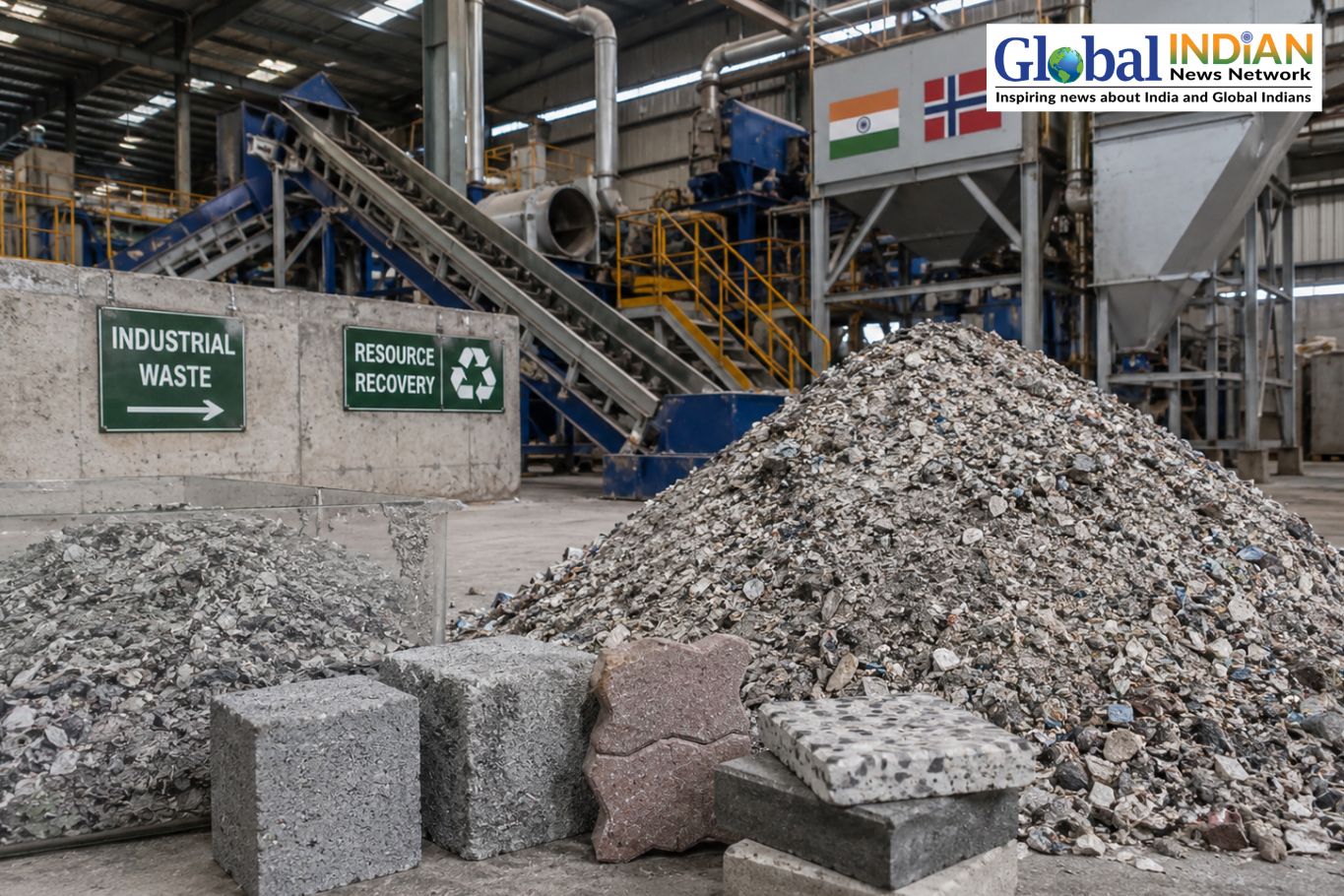
Participants explored the potential of reusing construction and demolition waste, steel slag, fly ash, red mud and other industrial by-products in construction applications. These materials could serve as alternatives to conventional raw materials, helping reduce landfill waste, conserve natural resources and minimise the environmental footprint of infrastructure development.
A key technical session led by SINTEF Chief Scientist Dr. Kåre Helge Karstensen examined the potential of cement kiln co-processing for the environmentally sound treatment of hazardous waste, including Persistent Organic Pollutants (POPs). The technology can also help reduce dependence on fossil fuels by replacing conventional energy sources with waste-derived alternative fuels.
Research initiatives undertaken by various CSIR institutes further demonstrated opportunities to incorporate industrial waste into road construction, geopolymer concrete and other value-added building materials. Applications involving fly ash, copper slag, red mud and plastic waste were among the areas highlighted for further technological development.
The discussions also identified several priority areas for future India-Norway cooperation. These include developing two to three joint research proposals, establishing pilot-scale demonstration projects for hazardous waste treatment and strengthening partnerships between industry and academic institutions.
The initiative represents an important step towards connecting scientific research with practical industrial applications. By combining India’s research capabilities and industrial requirements with Norway’s technological expertise, the partnership could accelerate the adoption of innovative waste-management solutions across the construction sector.
As both countries advance their green strategic cooperation, converting industrial waste into productive resources is emerging as a promising pathway towards cleaner manufacturing, sustainable construction and more resource-efficient infrastructure.