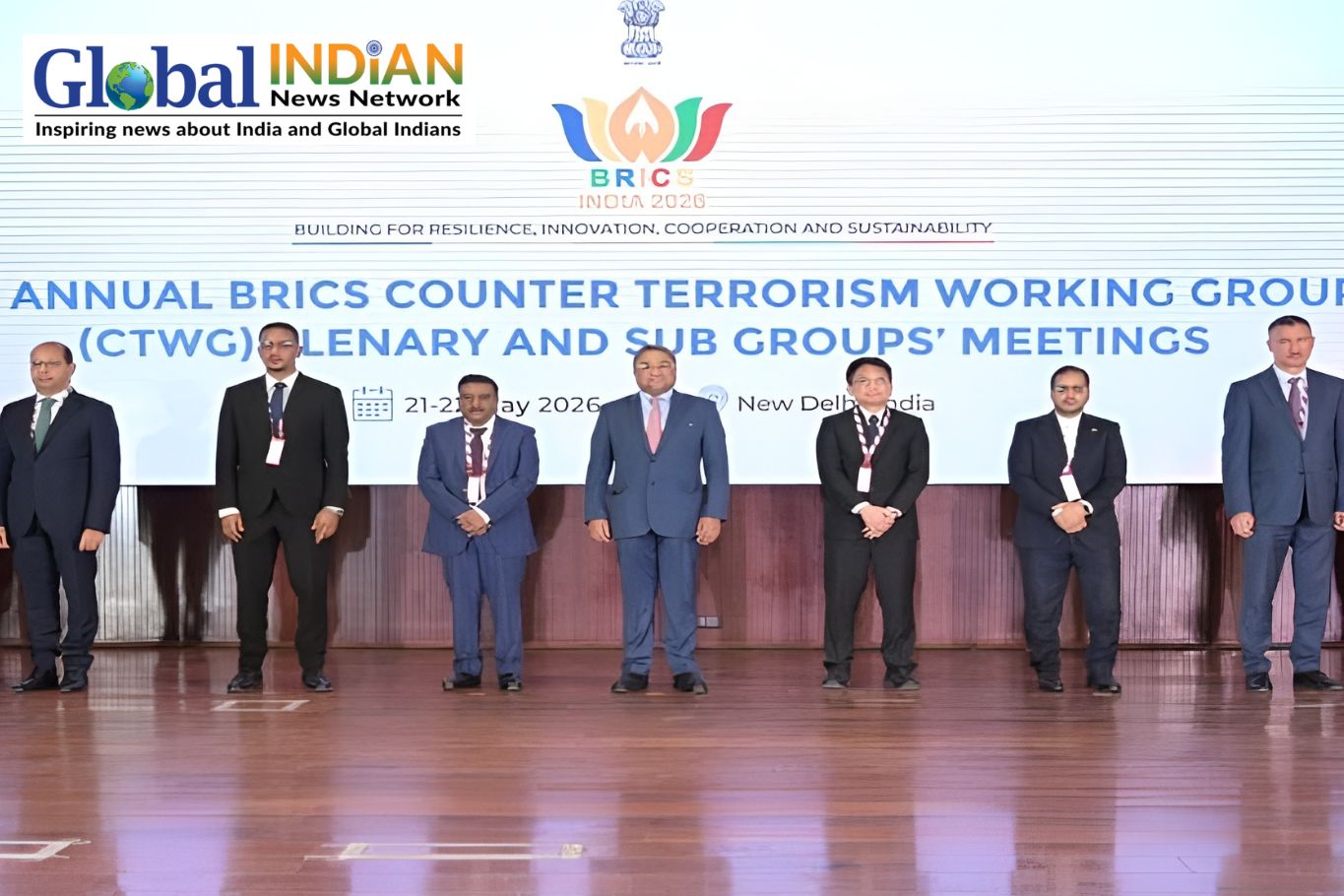
 India has called for strengthening the BRICS counter-terrorism framework by making it more resilient, future-ready, innovative and outcome-oriented amid evolving global security challenges. The appeal was made during the 11th Annual BRICS Counter Terrorism Working Group (CTWG) Meeting held in New Delhi under India’s BRICS Chairmanship for 2026.
Addressing the gathering, Secretary (West) in the Ministry of External Affairs, Sibi George emphasised the urgent need for stronger international cooperation to combat terrorism in all its forms and manifestations. He highlighted India’s continued concern over cross-border terrorism and stressed that nations must adopt a united and coordinated approach to address emerging security threats.
India underlined the growing complexity of terrorism due to evolving terror financing networks, radicalisation through digital platforms, and the misuse of emerging technologies by extremist groups. Officials stressed that counter-terror mechanisms must adapt rapidly to these changing threats while maintaining a strict zero-tolerance approach toward terrorism.
During the discussions, India advocated for strengthening the existing global counter-terror architecture through active, sustained and comprehensive international collaboration. The emphasis was placed on enhancing intelligence sharing, policy coordination, technological cooperation and capacity building among BRICS nations to effectively address future threats.
India also reaffirmed its commitment to deepening security cooperation with BRICS member countries to promote a secure and terrorism-free world order. The discussions reflected New Delhi’s broader push to position counter-terrorism cooperation as a central pillar of multilateral engagement within the expanding BRICS framework.
India’s BRICS Chairmanship for 2026 is being guided by the theme “Building for Resilience, Innovation, Cooperation and Sustainability,” focusing on a people-centric and future-oriented approach. The theme aligns with India’s efforts to strengthen global governance frameworks while encouraging collective responses to geopolitical and security challenges.
The BRICS grouping has expanded significantly in recent years, with countries including Egypt, Ethiopia, Iran, Saudi Arabia, the UAE and Indonesia joining the bloc, further increasing its geopolitical and strategic relevance. India’s push for a stronger counter-terrorism agenda within BRICS is expected to gain importance as the organisation expands its global influence and security cooperation mechanisms.
Observers believe India’s emphasis on future-ready counter-terror strategies reflects growing global concerns over cyber-enabled extremism, terror financing channels and the use of artificial intelligence and digital technologies by terror networks. The discussions in New Delhi are expected to contribute toward stronger institutional cooperation and a more coordinated global response against terrorism.