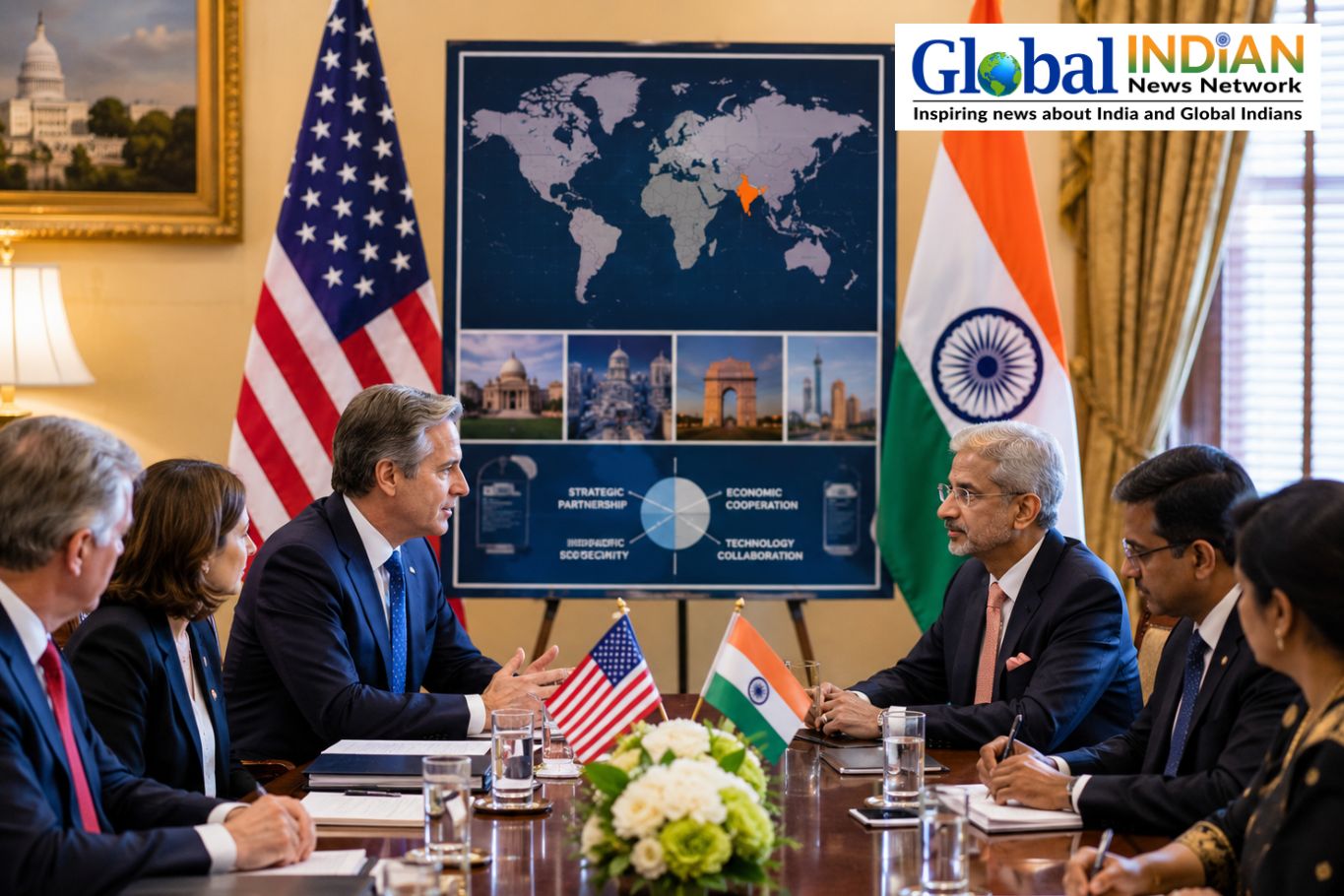
India is taking on a more prominent role in the Trump administration’s updated public diplomacy strategy as the United States increases its efforts to strengthen engagement across Asia. The shift reflects Washington’s broader objective of expanding its influence in the region while responding to growing information campaigns from China and other authoritarian governments.
During a confirmation hearing before the US Senate Foreign Relations Committee, Sarah Rogers, President Donald Trump’s nominee to lead the US Agency for Global Media (USAGM), outlined her vision for the agency’s future. She identified Asia as one of the organization’s highest priorities and emphasized that India would play a central role in its outreach efforts due to its growing geopolitical importance and highly active digital audience.
Rogers explained that the agency’s communication strategy must evolve alongside changing audience habits. Instead of relying primarily on traditional television and radio broadcasts, USAGM plans to focus on modern digital platforms that reach people where they consume content most frequently. She highlighted short-form videos, podcasts, online communities, and diaspora group chats as essential tools for building stronger connections with international audiences and improving the effectiveness of public diplomacy.
She also noted that India and Japan have become increasingly important in the digital landscape, pointing to their strong online engagement. According to Rogers, these markets provide valuable opportunities for the United States to communicate directly with audiences through innovative media formats that encourage greater interaction and accessibility.
Beyond India, Rogers identified several other regions where USAGM intends to strengthen its presence, including the Middle East, Iran, Afghanistan, and Cuba. She said the agency should concentrate on areas where access to independent and trustworthy information remains limited. If confirmed, her initial priorities would include improving the agency’s leadership, modernizing its operations, restoring research capabilities, and developing better methods to measure audience engagement and the impact of its communication efforts.
The administration’s renewed focus on India comes as US-China competition continues to expand beyond trade, defense, and technology into the information space. By investing in digital communication and strengthening partnerships throughout the Indo-Pacific, Washington aims to broaden its global reach while promoting access to credible information.
The updated strategy highlights India’s growing influence in regional and international affairs. As the United States reshapes its approach to global communication, India is expected to become an increasingly important partner in advancing public diplomacy and strengthening engagement across the Indo-Pacific.