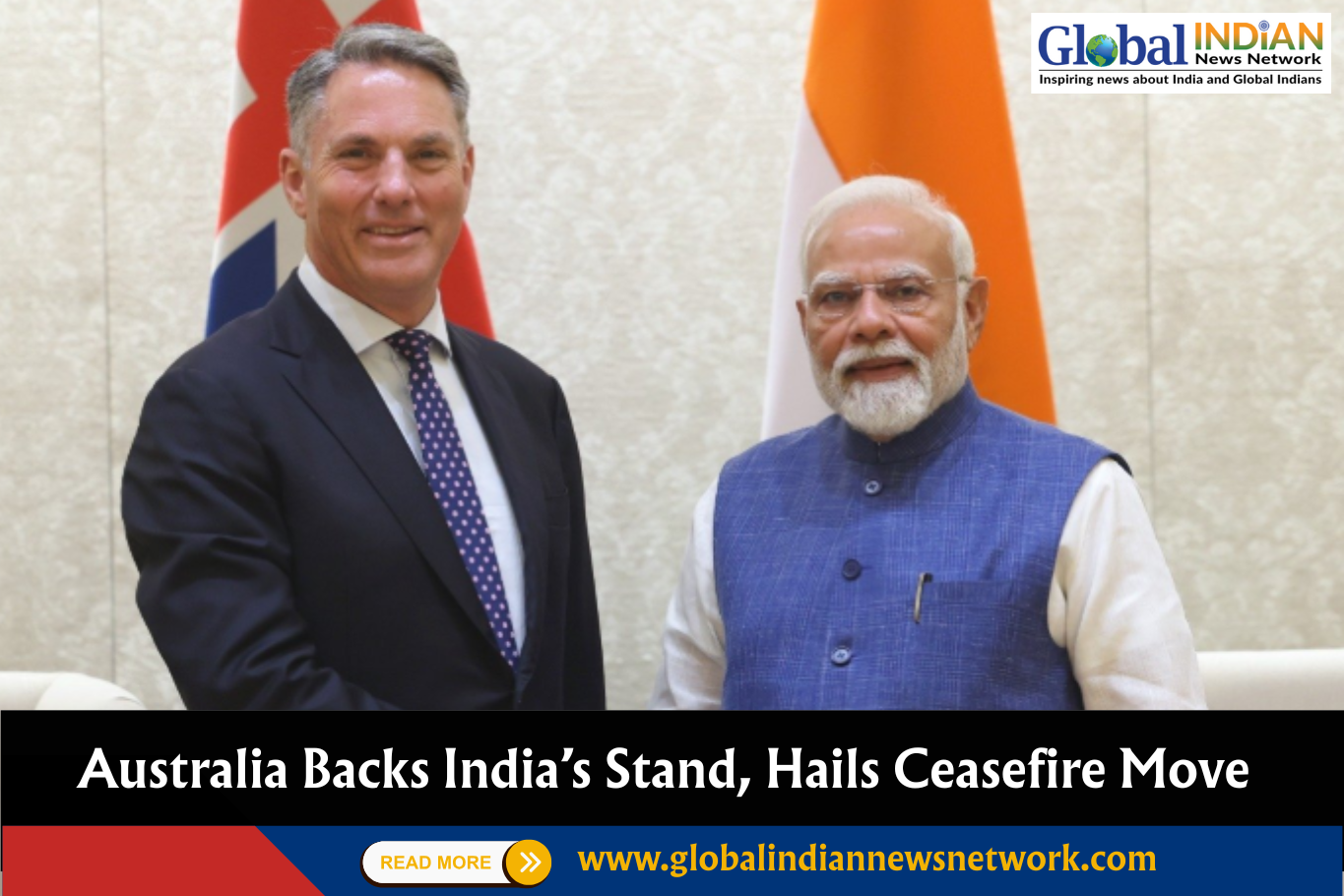
 In a recent conversation with CNN-News18, Australian Deputy Prime Minister Richard Marles voiced firm support for India in the wake of the devastating terror attack in Pahalgam, Jammu and Kashmir. Labeling the April 22 strike—where 26 tourists, including 25 Indians and one Nepali citizen, were killed—as “appalling,” Marles said the attack was met with “utter shock” in Australia.
Prime Minister Anthony Albanese reached out to Indian Prime Minister Narendra Modi almost immediately to offer his heartfelt condolences. Marles reiterated this commitment, affirming that Australia stands united with India and the global community in the fight against terrorism in all forms.
Addressing India’s retaliation through Operation Sindoor on May 7—an operation that resulted in the neutralization of over 100 terrorists and the targeting of infrastructure in Pakistan and Pakistan-occupied Jammu and Kashmir—Marles emphasized Australia’s understanding and support.
He noted that the ceasefire between India and Pakistan, reached just days later on May 10, was a strategic and courageous step. “We view the pause in military activity as a remarkable act of Indian leadership,” he stated, underlining the complexities involved in making such a decision under tense circumstances.
When questioned about public perceptions regarding India’s military actions, Marles emphasized that the core issue—terrorism—must remain at the forefront. “This was an act of terror. And in the simplest terms, we stand by India, as we do with any country combating terrorism.”
Australia also stressed the importance of maintaining peace in the Indo-Pacific region and reaffirmed the desire to work closely with India on security and counter-terrorism. Marles echoed that Australia does not take the ceasefire lightly and acknowledged it as a firm decision by New Delhi, deserving global appreciation.
Commenting on past claims by former US President Donald Trump regarding mediation between India and Pakistan, Marles emphasized that all nations seek a peaceful global order. “India’s restraint and response reflect global responsibility,” he concluded.