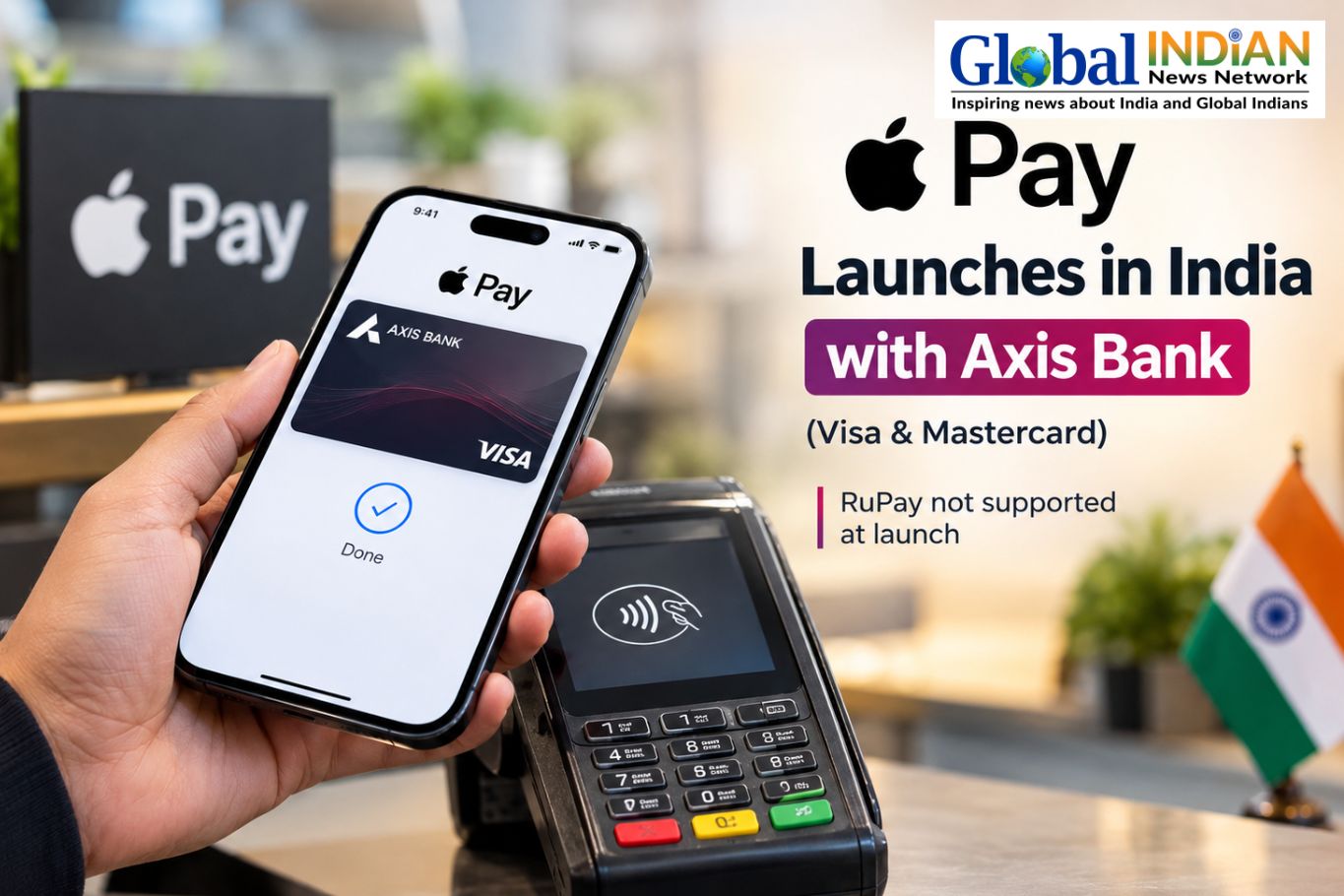
Apple Pay has begun rolling out in India with Axis Bank as its initial banking partner, bringing Apple’s contactless payment service to one of the world’s largest digital payments markets.
The initial rollout supports eligible Axis Bank credit cards on the Visa and Mastercard networks. RuPay cards are not supported at launch, limiting the service’s initial reach among Indian cardholders.
Apple Pay’s availability also depends on whether individual merchants and payment terminals have enabled the service. As a result, users may find that Apple Pay works at one payment terminal but is unavailable at another, depending on the payment infrastructure and acquiring bank involved.
The service is being introduced into a market where UPI dominates everyday digital payments. Unlike UPI, which enables direct bank-to-bank transactions without requiring a card, Apple Pay is primarily a card-based payment service that requires banks, card networks and payment infrastructure providers to integrate with Apple’s platform.
Apple Pay can be used on compatible iPhone, iPad and Apple Watch devices, with Mac support expected to follow. Customers can authenticate payments using Apple’s device security features without entering a payment PIN or receiving a one-time password for each transaction.
The service is expected to be accepted at millions of retail locations across India, including Apple Store outlets and participating brands such as Blinkit, Croma, Ixigo, Reliance brands, Tata 1mg and Zomato.
Apple has also worked with payment service providers including Cashfree, Juspay, Mswipe, Paytm, PayU, Pine Labs, Razorpay and Worldline to support integration across India’s retail payment infrastructure.
Axis Bank is the first banking partner for the initial rollout. Other major card issuers, including HDFC Bank, ICICI Bank and SBI Card, are not supporting Apple Pay at launch as discussions over commercial terms continue.
Apple’s reported commercial terms have emerged as an important factor in the rollout. The company is seeking a transaction fee of around 20 basis points, or 0.2 per cent, according to reports. That would represent a significant portion of the roughly 40 to 50 basis points typically available as margin within the payments layer.
Axis Bank had about 16.3 million credit cards in circulation as of August, compared with approximately 124 million credit cards across India, according to central bank data. The initial partnership therefore gives Apple Pay access to a sizeable existing card base while leaving substantial scope for expansion to other issuers.
Apple Pay and Apple Wallet Vice President Jennifer Bailey said the company was excited to bring the service to India, citing the country’s growing digital payments adoption and consumer focus on security and privacy.
Axis Bank CEO Amitabh Chaudhry said the payments sector was undergoing significant change as technology, security and evolving customer expectations reshape how consumers transact.
The launch gives Indian consumers another contactless payment option, but its initial availability remains narrower than the country’s widely used UPI ecosystem. Broader adoption will depend on additional banks joining the platform, support for more card networks and wider acceptance across payment terminals.