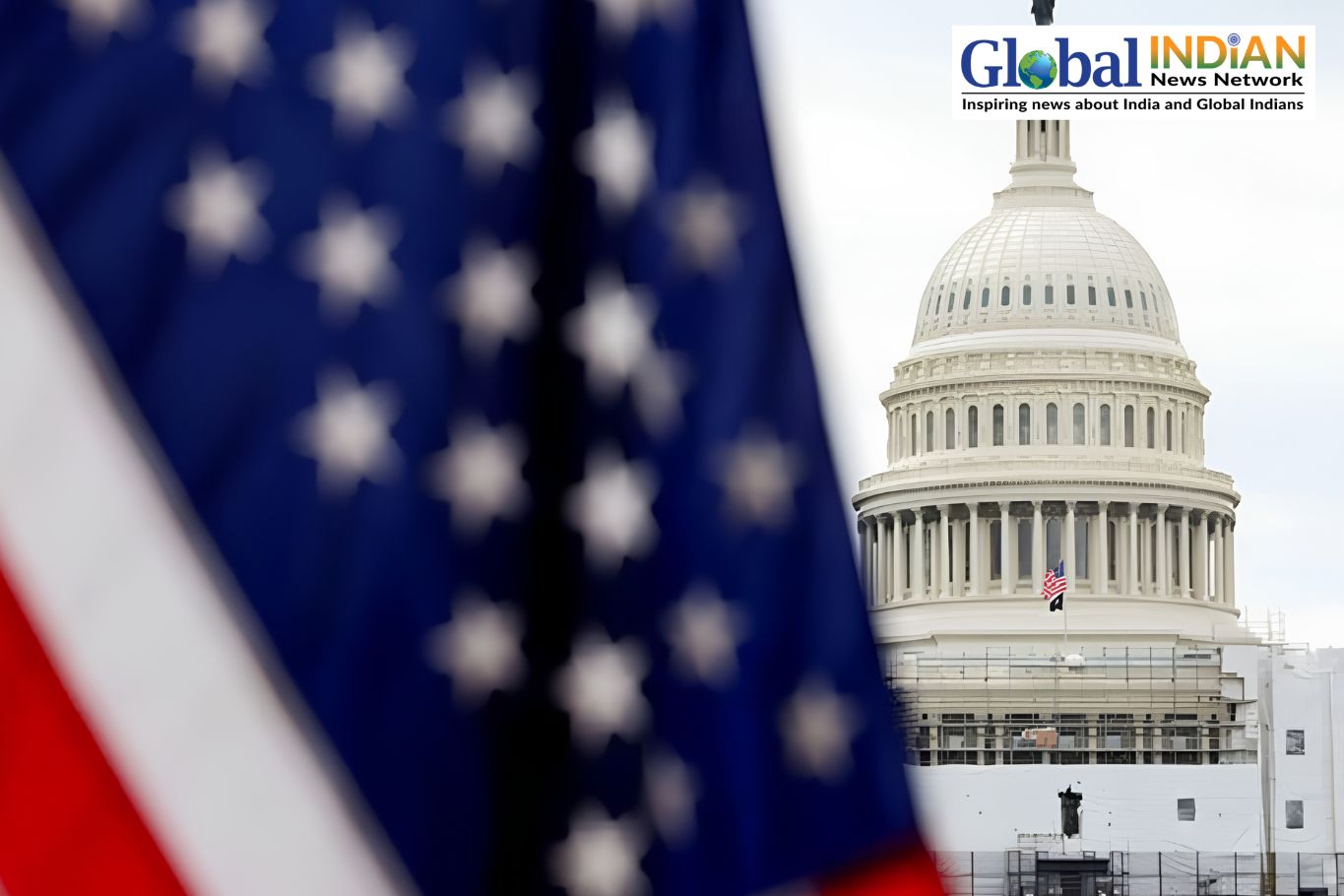
In a narrow 17-16 vote, House Republicans passed the ‘One Big Beautiful Bill’ late Sunday, just days after conservative dissent had briefly stalled its progress. The sweeping 1,116-page legislation, named in tribute to former President Donald Trump, sets forth a series of immigration reforms and significant financial measures aimed at reshaping border security and migrant-related policies.
The bill allocates a staggering $46.5 billion to restart construction on the US-Mexico border wall. The proposal entails constructing 701 miles of primary walls, 900 miles of river barriers, 629 miles of secondary barricades, and 141 miles of fencing for vehicles and pedestrians. Advanced surveillance technologies are also slated for deployment across the border.
However, the bill’s implications go beyond just border enforcement—it has major ramifications for legal immigrants. One controversial proposal is a 5% tax on all international money transfers made by non-citizens, including green card holders and those on non-immigrant visas such as H-1B. The absence of an exemption threshold means that even minor transfers will be taxed, creating concern among immigrant communities and economists alike.
India, which garnered $120 billion in remittances during the 2023–24 fiscal year, may face significant impacts. Approximately 28% of these inflows originated from the United States. If the tax becomes law, experts at the Global Trade Research Initiative (GTRI) estimate that India could see a 10-15% decline in remittances, translating into a potential shortfall of $12 billion to $18 billion annually.
Ajay Srivastava, GTRI’s founder, noted the 5% levy could increase remittance costs substantially. Indian households, particularly in Kerala, Uttar Pradesh, and Bihar—regions heavily reliant on overseas remittances—could face added financial strain.
Roughly 4.5 million Indians reside in the U.S., including nearly 3.2 million Persons of Indian Origin (PIOs). With no exemptions in place, the diaspora could collectively incur around $1.6 billion in annual tax losses. Currency experts predict the Indian rupee may weaken by Rs 1–1.5 per US dollar if these remittance inflows decline sharply, potentially prompting frequent interventions by the Reserve Bank of India.
This proposed tax has triggered growing concerns in both Washington and New Delhi as families brace for its possible financial consequences.