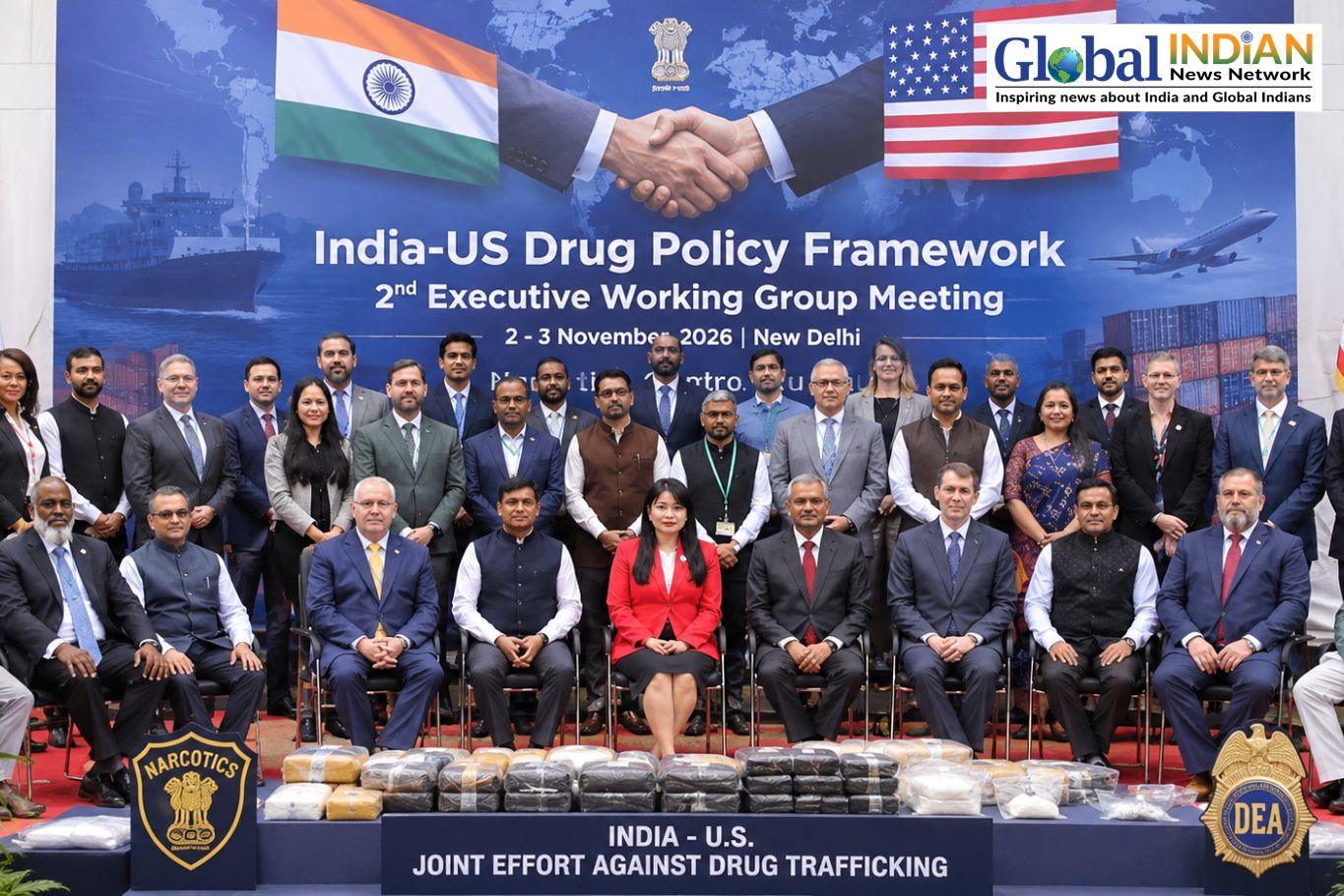
India and the United States are stepping up their efforts to combat international drug trafficking through stronger law enforcement coordination, intelligence sharing and tighter monitoring of chemical supplies. The Narcotics Control Bureau (NCB), operating under India’s Ministry of Home Affairs, hosted the second India-US Drug Policy Executive Working Group meeting in New Delhi on November 2 and 3, 2026. Senior policymakers and law enforcement representatives from both countries participated in discussions focused on addressing evolving narcotics-related threats.
India’s delegation was headed by NCB Director General Anurag Garg, while Debbie Seguin, Acting Deputy Director of the US Office of National Drug Control Policy (ONDCP), led the American team. The discussions reviewed existing bilateral initiatives and identified areas requiring greater cooperation, including intelligence exchange, joint enforcement operations, precursor chemical regulation, pharmaceutical supply chain security and reducing drug demand.
During the opening session, Garg presented India’s Vision Roadmap 2026–2029, developed under the guidance of Prime Minister Narendra Modi and Union Home Minister Amit Shah. The strategy emphasizes financial investigations, prevention, rehabilitation and network-focused operations. It aims to dismantle entire drug trafficking ecosystems by targeting their financiers, suppliers, intermediaries and logistical support systems rather than concentrating solely on individual offenders.
ONDCP Director Sara Carter highlighted the importance of international partnerships in disrupting criminal networks and preventing synthetic drugs and precursor chemicals from entering global markets. US Ambassador to India Sergio Gor also stressed that coordinated action between the two countries was producing operational progress in securing supply chains and restricting illegal chemical distribution.
Building on their first working group meeting in Washington, DC, in January 2026, both delegations reviewed emerging trafficking patterns and welcomed initiatives such as Operation MedMax, Operation WIPE and India’s Voluntary Code of Conduct addressing precursor chemical diversion.
The meeting concluded with a shared commitment to regular institutional engagement, timely intelligence exchange and coordinated action. Both countries also agreed to continue exchanging law enforcement expertise and effective practices to protect their communities from narcotics-related threats.