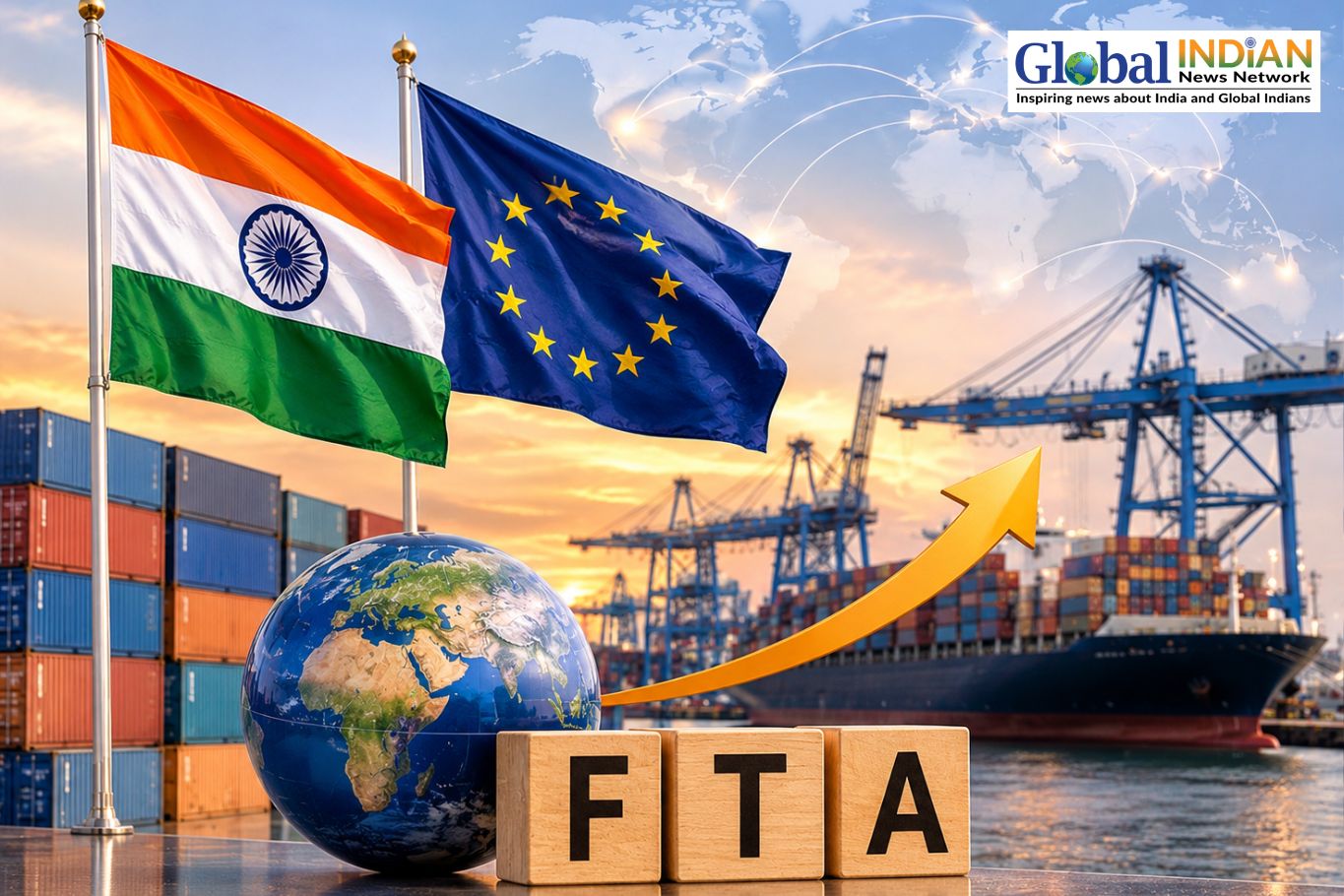
India is pursuing an ambitious expansion of its international trade network, with ongoing free trade agreement (FTA) negotiations potentially bringing nearly 75% of its merchandise exports under preferential market access. According to Commerce Department data reported by the India Brand Equity Foundation (IBEF) on November 4, 2026, the proposed agreements could increase FTA coverage to 74.5% of the country’s FY26 merchandise exports, representing approximately $329 billion. This would mark a substantial rise from the existing coverage of 27.4%.
Over the past six years, India has concluded eight trade agreements while continuing discussions on more than 10 additional deals. These negotiations are part of a broader strategy to expand export destinations, strengthen international commercial relationships, and create more opportunities for Indian businesses in overseas markets. During FY27, India has also implemented three trade agreements involving Oman, the United Kingdom, and New Zealand, further extending its global trading partnerships.
Currently, India’s operational trade agreements provide preferential access to markets accounting for approximately $120.9 billion in merchandise exports. This represents 27.4% of the country’s total merchandise exports, which reached approximately $441.5 billion in FY26. The existing agreements therefore provide an established foundation for India’s broader trade expansion plans.
Concluding the agreements under negotiation could considerably improve this position by allowing exporters to access additional international markets under more favorable trading conditions. Wider preferential access could strengthen the competitiveness of Indian products, create opportunities across multiple industries, and encourage businesses to explore new international customers.
India’s expanding FTA network reflects its commitment to diversifying trade relationships and reducing dependence on a limited number of export destinations. If successfully completed, the proposed agreements could become an important driver of export growth, international cooperation, and India’s long-term economic ambitions.