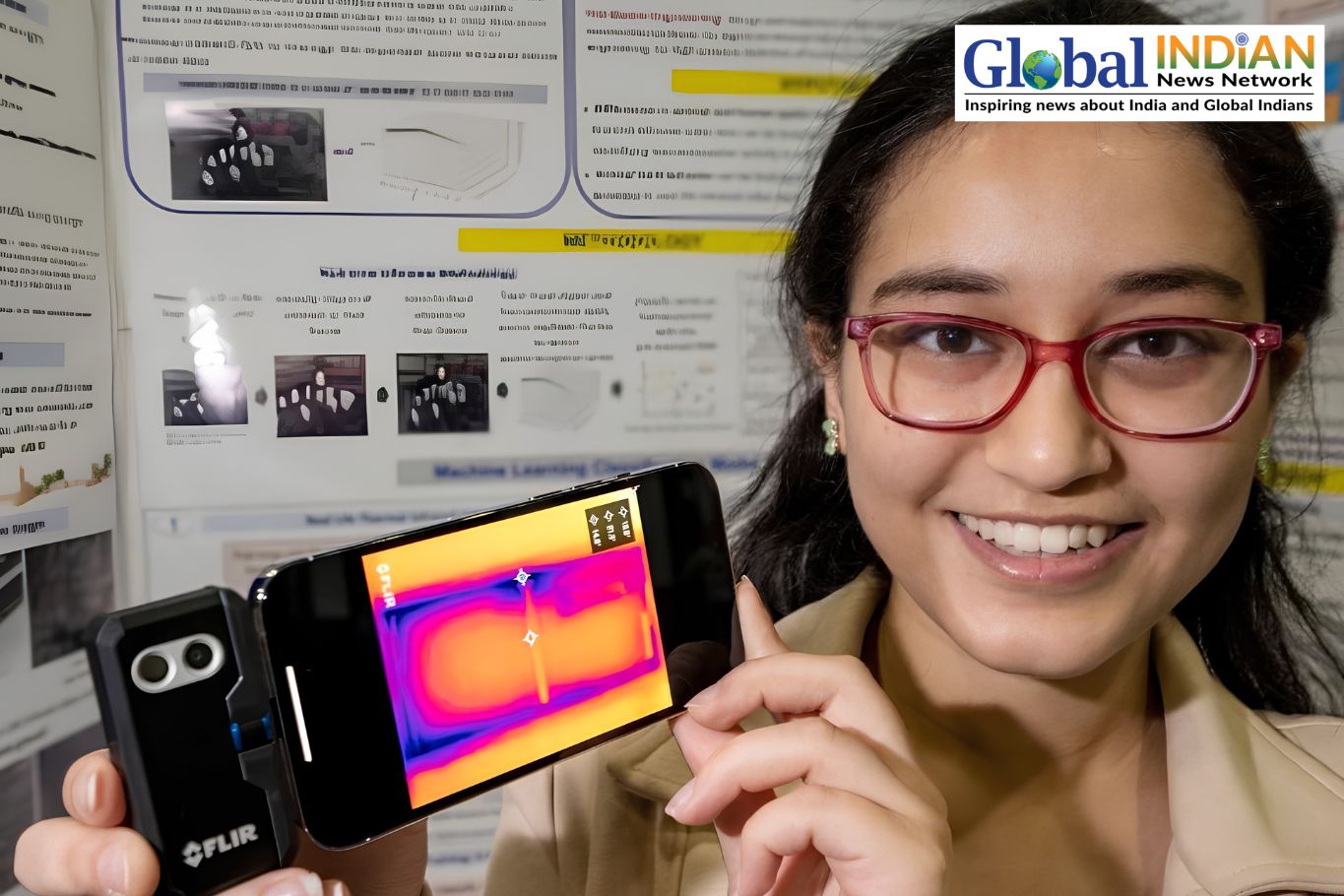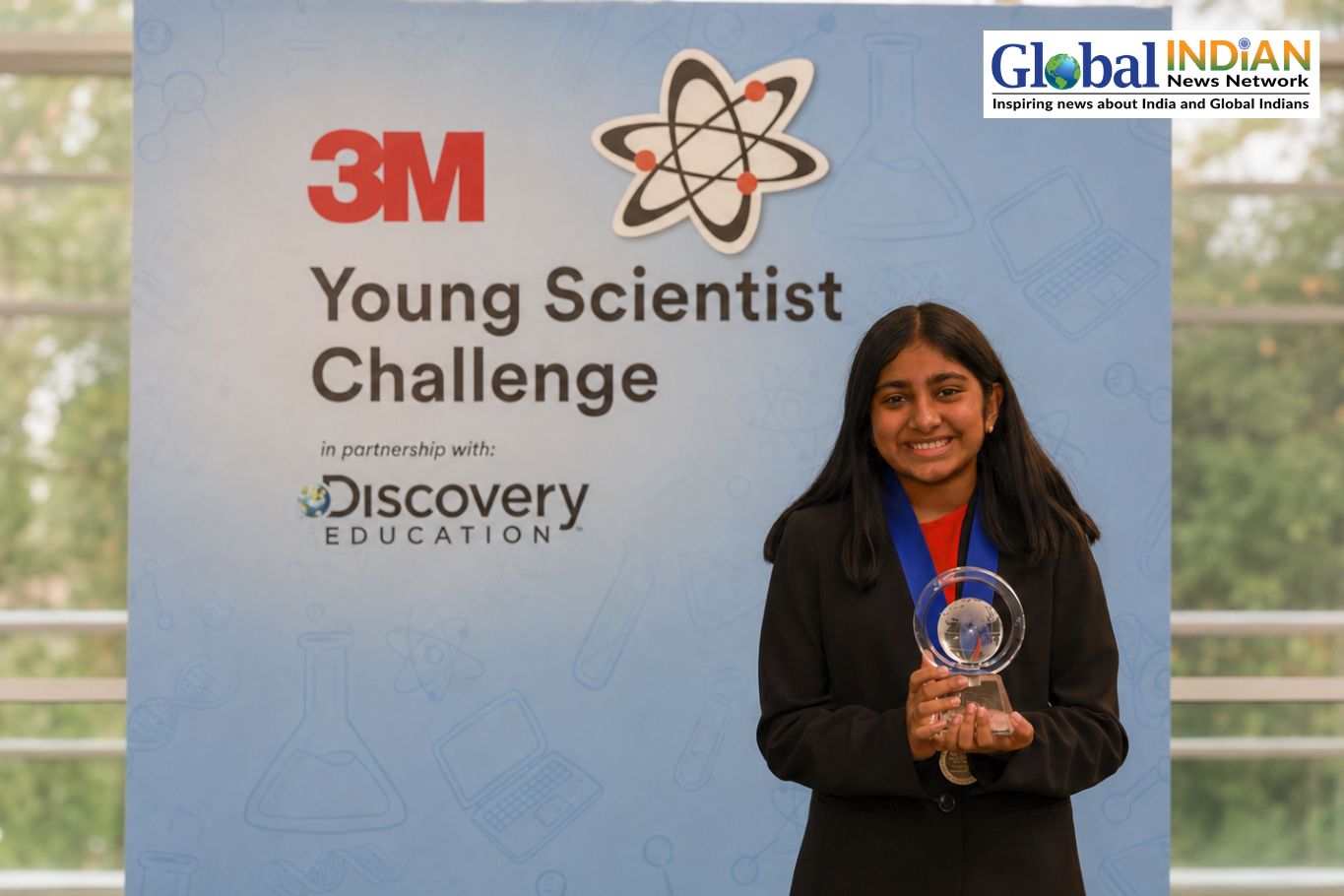
A 13-year-old Indian-American student has earned national recognition for developing an innovative approach to protecting marine ecosystems. Raji Doshi, an eighth-grader from Farmington, Connecticut, was named America’s Top Young Scientist after winning the 2026 3M Young Scientist Challenge. Her achievement earned her the competition’s $25,000 grand prize and highlighted the growing contributions of young innovators to environmental research.
Doshi’s victory was part of an exceptional showing by Indian-origin girls, who claimed all three top positions in the national competition. Aaisha Asif of Sarasota, Florida, and Sharvi Mahajan of San Diego, California, joined Doshi among the winners. The final round took place October 12-13 at the 3M Innovation Center in St. Paul, Minnesota, where 10 finalists ages 11 to 14 presented their inventions and participated in scientific challenges before a panel of judges. Five finalists were girls of Indian descent.
Doshi’s winning project, ALKACORE, seeks to address ocean acidification, a process driven by the absorption of atmospheric carbon dioxide into seawater. This chemical change threatens marine organisms, particularly those that depend on calcium carbonate to build shells and skeletons.
Her invention combines algae, which absorb carbon dioxide as they grow, with aragonite, a naturally occurring form of calcium carbonate. Laboratory experiments and chemical analyses indicated that the combination could support algae growth, improve carbon dioxide removal and reduce dissolved carbon dioxide levels. Doshi also developed a computational model to identify the appropriate quantity of aragonite, exploring how the concept might eventually benefit coastal communities.
Her interest in the issue began with a personal fascination with seashells. Concerned about the damage ocean acidification causes to shells and marine life, she wanted to turn that concern into practical scientific research. Working with 3M mentor Deborah Isabelle, a product engineering specialist, Doshi developed her idea through experimentation and data analysis.
The young scientist hopes to become a NASA aerospace engineer, working on technologies that monitor ocean health and climate change from space.
The other top winners also presented solutions to real-world challenges. Asif developed an environmentally friendly adhesive inspired by the proteins mussels use to attach themselves to wet surfaces. Her research explores alternatives to conventional glues that may release volatile organic compounds associated with air pollution and health concerns.
Mahajan created NeuroDrive Alert, a system designed to monitor fatigue and anticipate microsleep episodes, with potential applications in road safety. Her interests include neuroscience, artificial intelligence and machine learning.
Two additional Indian-American finalists presented environmental innovations. Arika Kundu developed LIGNEX, which uses agricultural waste such as peanut shells to help remove pesticide residues from produce. Naboshree Santra designed biodegradable soil-shade balls intended to reduce evaporation and preserve soil moisture.
Organized by 3M and Discovery Education, the Young Scientist Challenge is in its 19th year. The competition pairs finalists with 3M scientists for mentorship and prototype development, assessing their scientific knowledge, creativity, communication and application of STEM principles.
The achievements of Doshi and her fellow finalists demonstrate how young people can transform curiosity into meaningful innovation, offering fresh ideas for environmental protection, public safety and sustainable agriculture.