The South Indian tradition of golu brings families and communities together during Navaratri through elaborate displays of handcrafted dolls, religious figures and scenes from everyday life. In her exploration of the custom, Vidya Mohan highlights how these arrangements combine devotion, artistic expression and cultural storytelling, helping preserve Hindu traditions across generations.
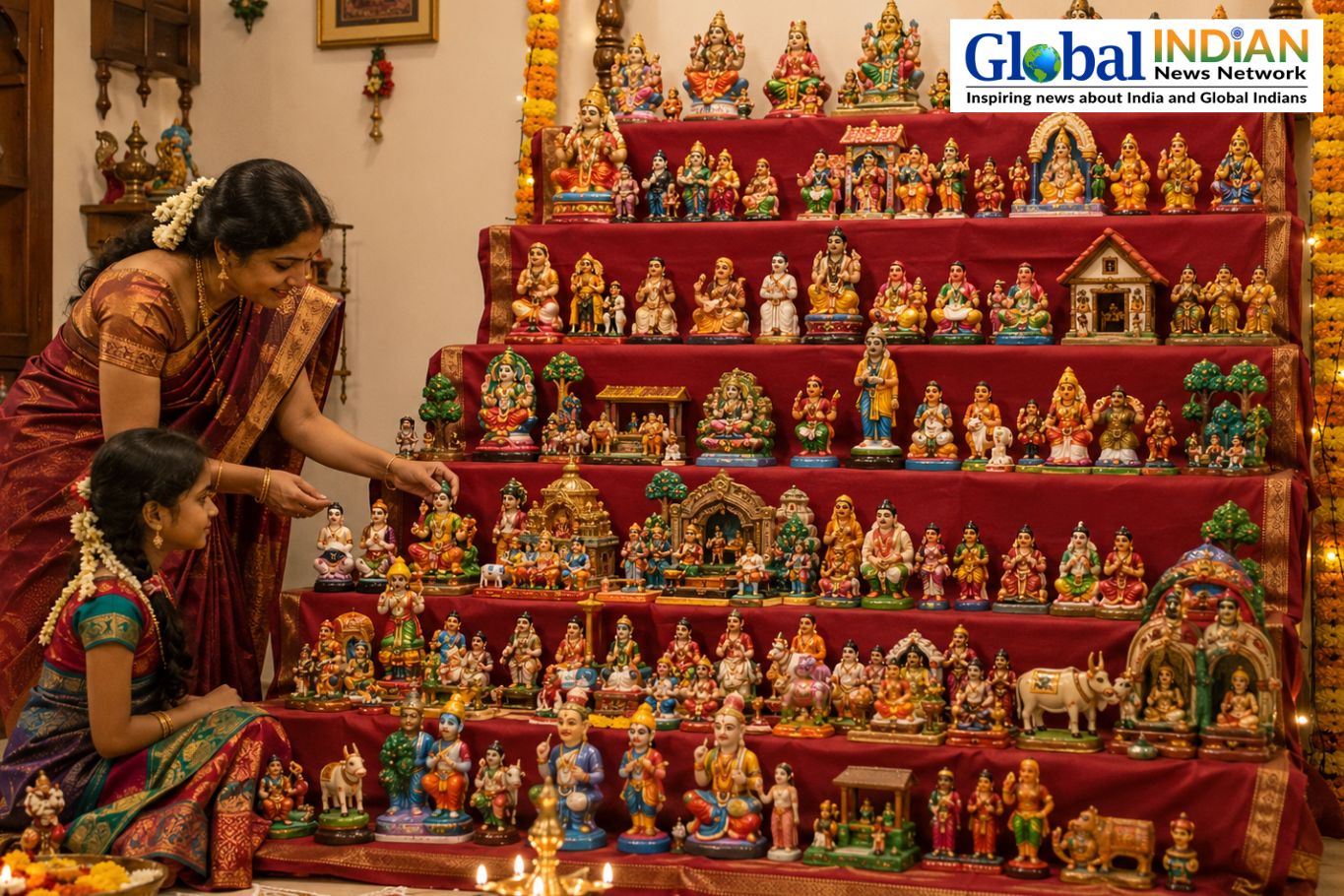
Known by different names, including bomma, bombe and golu, the displays feature figures representing Hindu Gods and Goddesses, saints, historical personalities, humans and animals. Many arrangements also recreate episodes from Hindu scriptures and scenes depicting ordinary life. Families carefully organize the dolls on stepped platforms, transforming their homes into spaces for worship and social gatherings throughout the festival.
During Navaratri, hosts invite friends, relatives and neighbors to visit their displays. Religious observances often include offerings of food, flowers and incense, while music, dance and other cultural performances add to the celebrations. These gatherings provide opportunities for people to share stories, strengthen relationships and introduce younger generations to their cultural heritage.
Beyond its decorative appeal, golu carries a deeper philosophical message through the placement of its figures. Traditional arrangements often follow a symbolic progression, beginning with animals on the lower steps and moving upward to human beings, spiritual teachers and individuals admired for their exemplary lives.
Higher levels feature divine incarnations and major Hindu deities. Depending on family and regional customs, these may include Durga, Lakshmi and Saraswati, or Siva, Vishnu and Brahma. The arrangement culminates in the concept of Brahman, the ultimate, formless reality in Hindu philosophy, which is understood to transcend physical representation.
This ascending structure offers a visual way to explore spiritual development and the relationship between the material world, human life and the divine. Through familiar figures and religious narratives, the tradition makes complex philosophical ideas accessible to family members and visitors.
Although deeply rooted in South Indian culture, golu has expanded beyond India through migration and the growth of the global South Indian diaspora. Families in countries such as the United States, Australia and the United Kingdom continue to organize Navaratri displays in their homes and communities.
For families living abroad, the tradition provides a meaningful connection to their heritage. Children encounter Hindu stories, learn about deities and religious values, and participate in customs passed down by parents and grandparents.
By combining devotion, creativity and community participation, golu continues to serve as a living cultural tradition, adapting to new settings while preserving the stories and spiritual ideas at its heart.