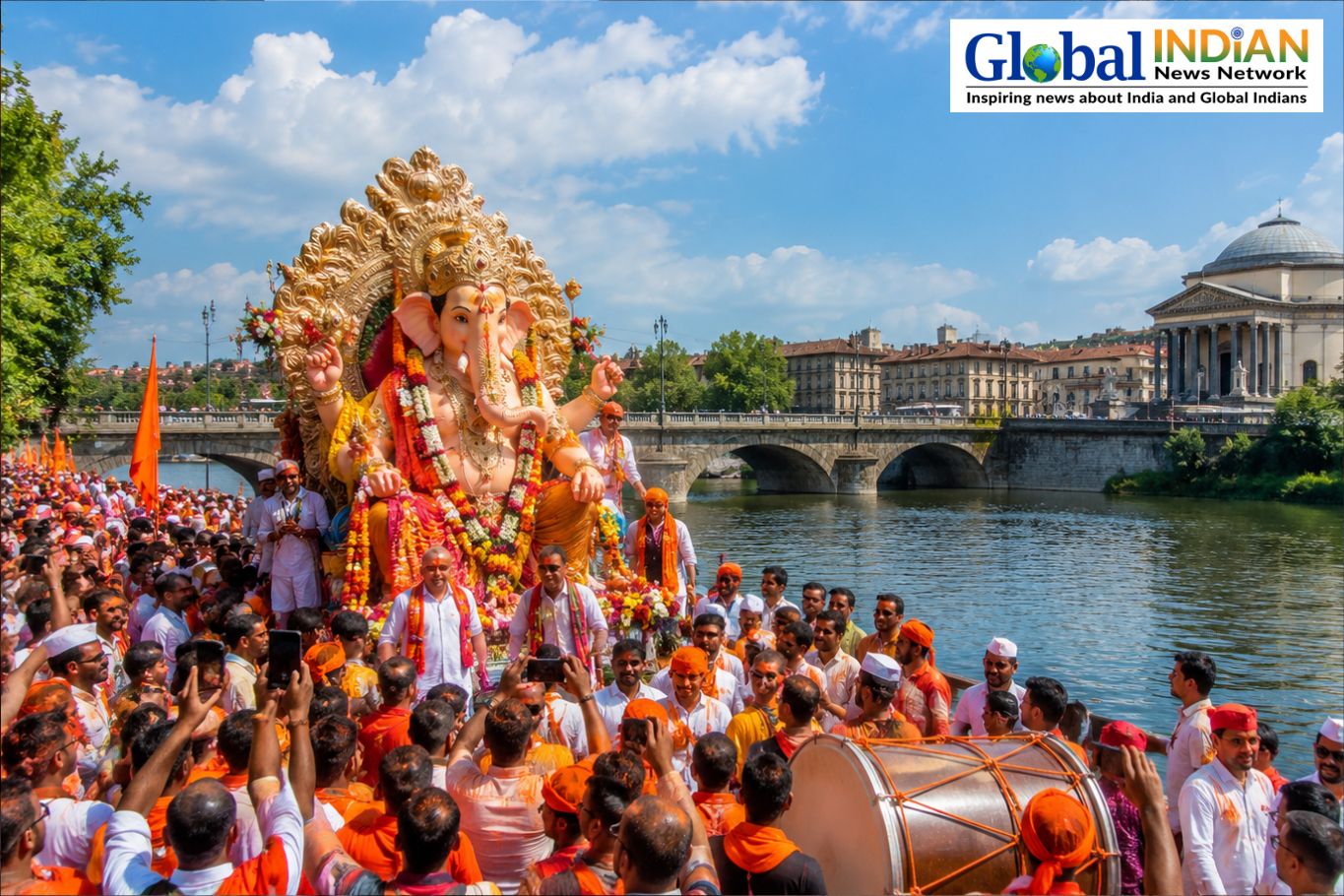
Hundreds of Hindus gathered along the banks of the Po River in Turin to celebrate Ganesha Chaturthi, honoring Lord Ganesha, the Hindu deity traditionally associated with wisdom, prosperity and the removal of obstacles. The celebration took place on Sunday, September 13, bringing together members of the Indian community, including students attending Politecnico di Torino and other universities across the city.
The official event was held at the Terrazza del Circolo Armida on Viale Umberto Cagni. It was organized by the Italian Hindu Union (Unione Induista Italiana), working alongside the Bharatiya Telugu Samithi Torino and the Sanjivani Torino Association.
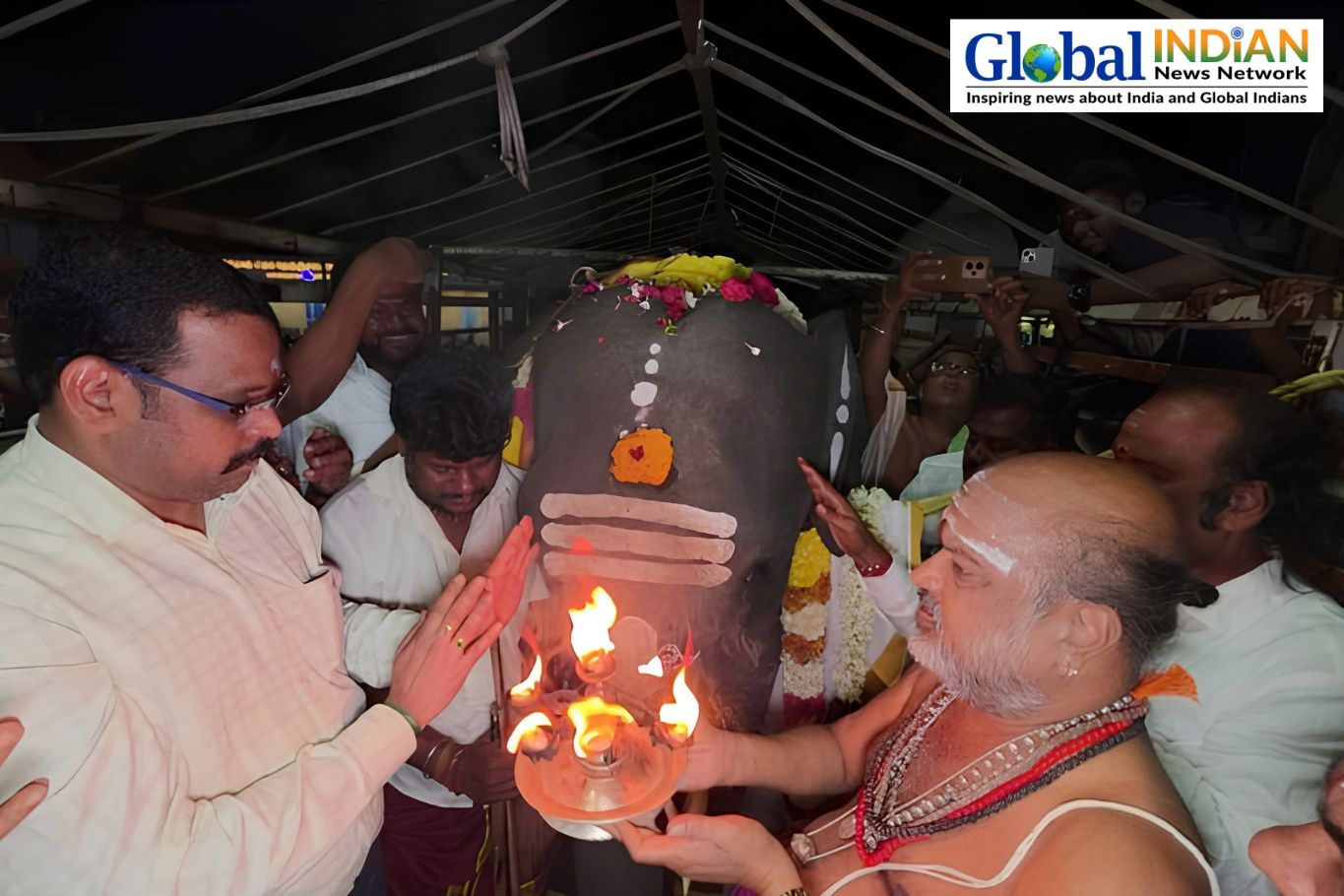
The program featured traditional Ganesha Puja, prayers and a cultural segment that included dance performances beginning at 5 p.m. The celebrations concluded with Murti Visarjan, the ceremonial immersion of the Ganesha idol, scheduled for 7:30 p.m. Flowers, incense, fruit and devotional offerings accompanied the religious observances, creating a festive atmosphere beside the river.
A notable feature of the Turin celebration was the use of a clay idol decorated with natural pigments. The choice reflected the traditional symbolism of Ganesha Visarjan, in which the deity’s physical representation is immersed in water and gradually dissolves.
For many devotees, the ritual represents the temporary nature of material forms and the return of natural elements to their origins. Using clay and natural colors also offers an alternative to plaster idols that may leave artificial materials behind in waterways.
The ceremony demonstrated how a longstanding Hindu religious practice can be observed in a new geographical setting while retaining its spiritual meaning and cultural significance.
The gathering also highlighted the growing visibility of Hindu communities in Italy. Figures cited during the event estimated that approximately 200,000 Hindus live across the country, including around 1,500 in Turin.
For residents and students participating in the celebration, the festival provided an opportunity to maintain religious traditions, share cultural practices and strengthen community connections.
Rather than simply reproducing a festival from India, the Turin celebration reflected how Hindu customs are becoming part of the city’s contemporary cultural landscape. The gathering along the Po River offered a meaningful example of how communities preserve their heritage while building lives and relationships in their adopted home.