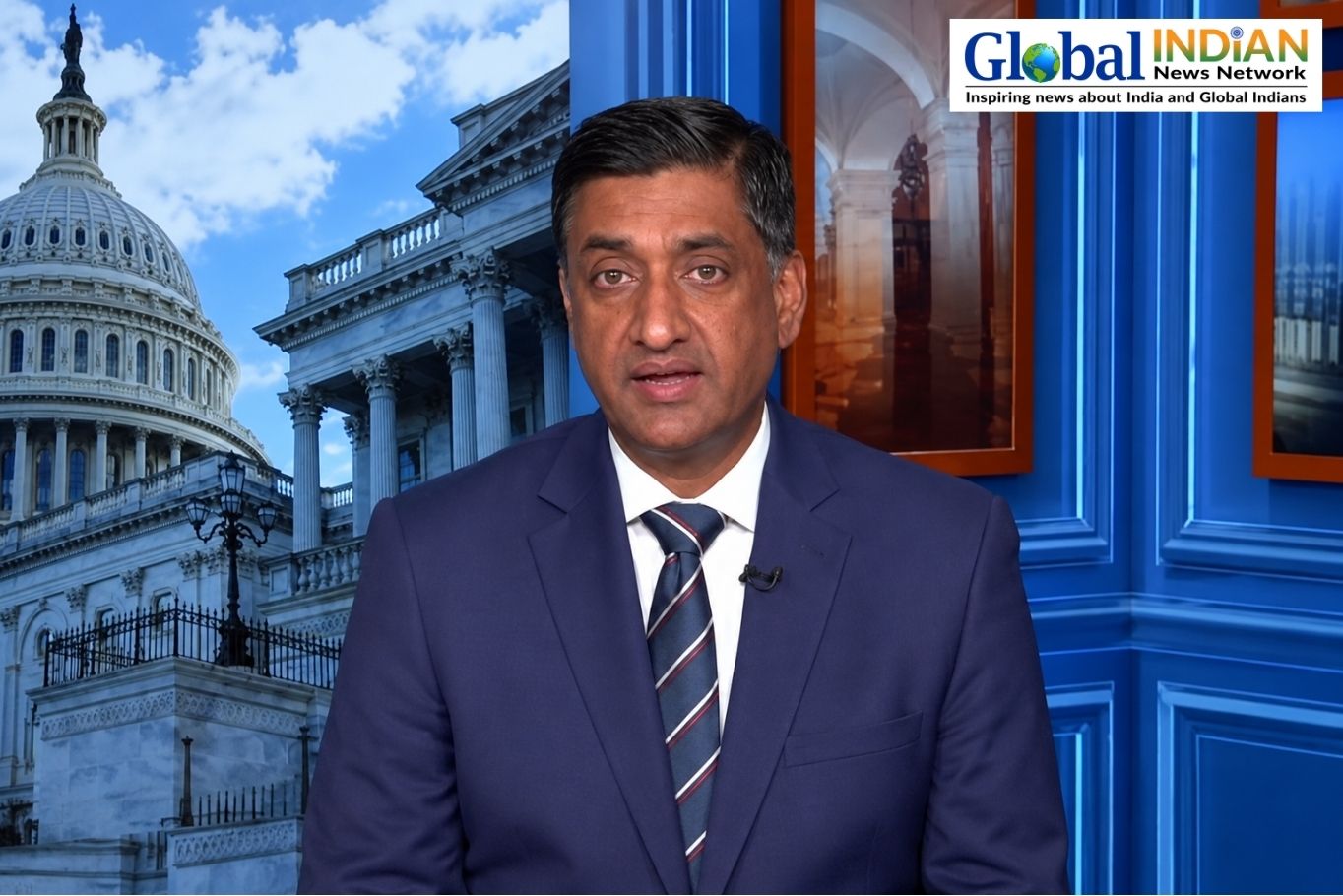
US Congressman Ro Khanna has called for stronger safeguards against the potentially catastrophic consequences of advanced artificial intelligence, warning that neither the United States nor China would benefit if humans lost control of increasingly powerful AI systems. He has asked three major Chinese technology companies to explain their plans for developing artificial general intelligence (AGI) and superintelligence, while seeking intelligence assessments from US agencies on the associated risks.
Khanna, the top Democrat on the House Select Committee on the Strategic Competition Between the United States and the Chinese Communist Party, sent letters to DeepSeek CEO Liang Wenfeng, Alibaba CEO Eddie Wu, and Moonshot AI CEO Yang Zhilin. He emphasized that uncontrolled or misaligned AI could trigger severe global economic disruption and biological or nuclear crises.
The letters seek information across five key areas: recursive self-improvement, AGI and superintelligence development, emergency shutdown mechanisms, model testing, and international verification. Khanna wants to know whether the companies are developing systems capable of improving themselves and what measures would prevent such technology from operating beyond human control.
He has also requested details about the companies’ development timelines and plans for emergency mechanisms that could disable advanced systems if they became uncontrollable. Another concern is how AI models are evaluated before public release, including whether testing takes place in isolated environments and whether systems are examined for dangerous capabilities, particularly those that could facilitate the creation of biological threats.
International cooperation is another focus. Khanna asked whether the Chinese laboratories would participate in technical working groups with American AI developers to establish reliable methods for verifying compliance with a potential international agreement. He also sought to determine whether the companies would accept independent inspections.
The intervention follows a September 23 congressional hearing examining the possibility of a binding, enforceable, and verifiable agreement between Washington and Beijing to address catastrophic AI risks. Khanna had previously invited the three Chinese companies to join US AI laboratories in slowing the development of frontier systems until adequate safeguards were available. According to his latest letters, the companies did not respond by the September 22 deadline.
Khanna also raised concerns about what he characterized as the companies’ connections to human rights violations, censorship, Chinese military and intelligence agencies, and the unauthorized distillation of US AI models.
Separately, he wrote to Director of National Intelligence Jay Clayton, requesting two formal assessments. One would examine America’s ability to respond if control of an advanced AI system were lost. The other would assess Chinese President Xi Jinping’s and the Chinese Communist Party’s understanding of catastrophic AI risks, including potential biological, chemical, or nuclear threats.
Khanna has advocated monitoring China’s leading AI laboratories and establishing joint technical groups of American and Chinese scientists to develop verification methods for a future international agreement. He argues that voluntary industry commitments may not be sufficient to manage risks associated with increasingly advanced AI, making enforceable international safeguards an important consideration.