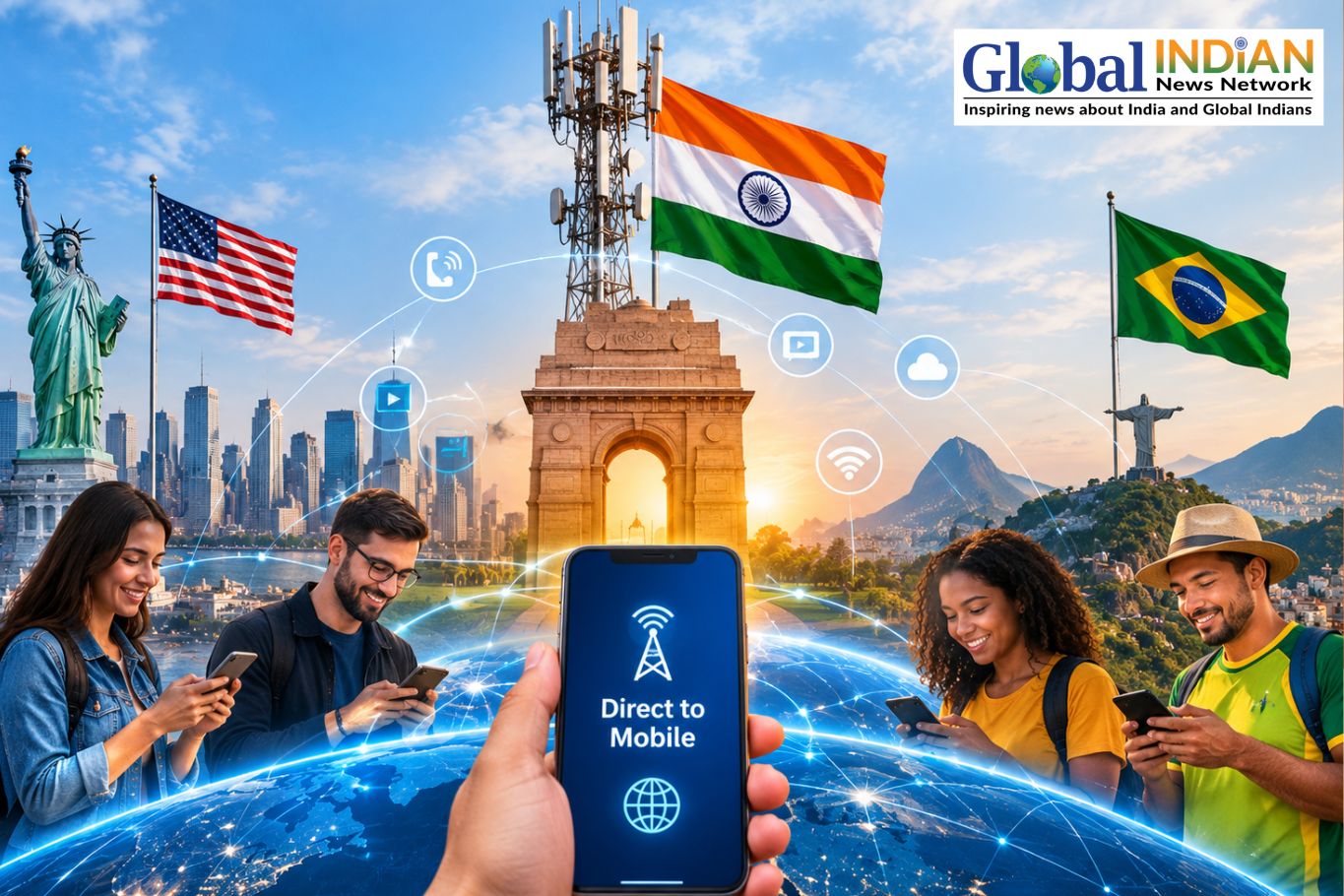
 India could play a pivotal role in taking Direct-to-Mobile (D2M) broadcasting from an emerging technology to a globally scalable service, according to broadcasting experts from the United States and Brazil. Speaking at the International Broadcasting Convention (IBC) 2026 in Amsterdam, industry leaders highlighted India’s enormous consumer market, expanding electronics manufacturing capabilities and semiconductor ambitions as potential drivers of the next stage of D2M development.
Raymundo Barros, chief technology officer of Brazilian media company Globo and chairman of the Brazilian Digital Television Forum, said cooperation among India, the United States, South Korea and Brazil could create the market scale necessary to make compatible broadcast technologies commercially sustainable.
Brazil’s experience offers a possible blueprint. The country chose ATSC 3.0 as the foundation for its next-generation television platform while incorporating additional developments in areas such as codecs and MIMO transmission. Its DTV+ service is now being introduced, with broader deployment expected in the coming years.
Barros suggested that lessons from Brazil’s television industry could also be applied to mobile devices. If India encourages major international manufacturers to participate in its D2M ecosystem, the resulting demand could help address one of the technology’s biggest challenges: achieving sufficient device scale.
Mark Aitken, president and senior vice president of ONE Media/Sinclair in the US, similarly identified India as a potential catalyst. He said manufacturers need greater certainty before committing resources to emerging technologies, and India’s market could provide the scale needed to encourage investment.
The potential application extends well beyond traditional television sets. D2M technology could be incorporated into smartphones, tablets, notebooks and even feature phones, allowing consumers to receive broadcast content without relying on mobile data or a SIM card.
That model could be particularly significant in India, where affordability and broad access remain important factors in digital connectivity. D2M-enabled devices could offer consumers another way to access television content while reducing reliance on mobile data networks.
Aitken also pointed to India’s semiconductor initiatives and electronics-manufacturing policies as possible factors in accelerating adoption. Greater policy certainty could encourage chipset developers, device companies and broadcasters to coordinate investments around D2M-compatible products.
Beyond consumer access, the discussions highlighted the strategic value of terrestrial broadcasting. Unlike distribution that depends entirely on commercial mobile networks, terrestrial infrastructure can provide countries with an additional and more independent channel for delivering information and entertainment.
The challenge now is turning technical progress into a functioning commercial ecosystem. Broadcasters, telecom companies, chipset makers, device manufacturers and policymakers will need to align their interests and create enough market certainty to support widespread deployment.
With its scale and growing technology capabilities, India could therefore become a central force in connecting D2M initiatives across major global markets and shaping the future of broadcast-to-mobile services.